Hidden Remodel Costs That Derail 2026 Budgets
Every home remodel begins with excitement and a clear vision. New finishes, improved lighting, and a space that functions as intended all contribute to the appeal. Yet many projects encounter unexpected expenses that erode the original budget. These issues are often predictable with careful preparation.
The following sections outline five key areas where costs commonly arise. Each includes practical steps to identify and manage them in advance.
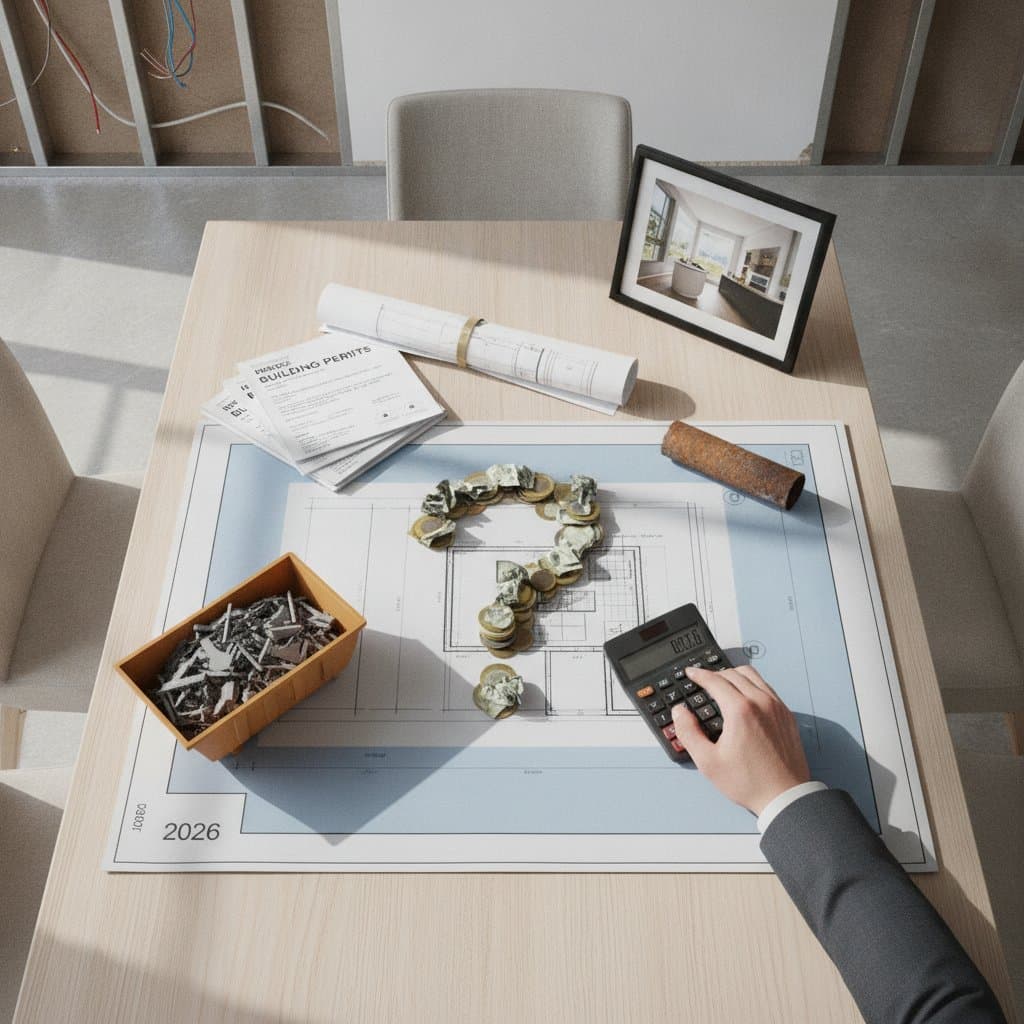
Account for Permit and Inspection Fees
Municipal fees represent a frequent omission in remodel budgets. These charges differ by location and project scope. One homeowner expanding a bathroom discovered that application, plan review, and inspection costs exceeded one thousand dollars.
Contact the local building department at the planning stage. Request a written list of required permits for the specific work involved. Structural, electrical, and plumbing tasks each trigger separate approvals. Some jurisdictions base fees on project value rather than square footage. Early clarification prevents approval delays and unplanned expenses.
Evaluate Structural Corrections
Open floor plans often require removal of load bearing walls. Homeowners may not anticipate the added expense of beams, engineering, and reinforcement. In one project, merging a kitchen and dining area increased total costs by nearly ten percent.
Consult a structural engineer before finalizing layout changes. The review determines whether support elements are necessary. Engineered beams must satisfy load and deflection requirements. Installation typically involves temporary shoring and inspector coordination. This step secures the desired space without later financial surprises.
Address Material Price Fluctuations
Supply chain conditions and inflation cause material prices to change over time. Budgets prepared months ahead can fall short when orders are delayed. One client who postponed a tile purchase by two months paid almost twice the original amount.
Secure pricing through early orders and written supplier agreements. Store materials in a dry, secure location until needed. Most suppliers limit quote validity to thirty days. Confirm these terms prior to commitment. This approach maintains control over both cost and schedule.
Plan for Post Construction Repairs
Work on one area can affect adjacent spaces. Repairs such as repainting or floor patching are frequently overlooked. After a wall removal, ceiling texture in the neighboring room no longer matched, requiring complete refinishing.
Inspect surrounding areas before finalizing the budget. Require the contractor to list restoration tasks explicitly in the agreement. Matching finishes often means blending across entire surfaces rather than isolated patches. Flooring transitions may need extra trim or refinishing. The result is a cohesive appearance instead of visible repairs.
Include Utility Upgrades
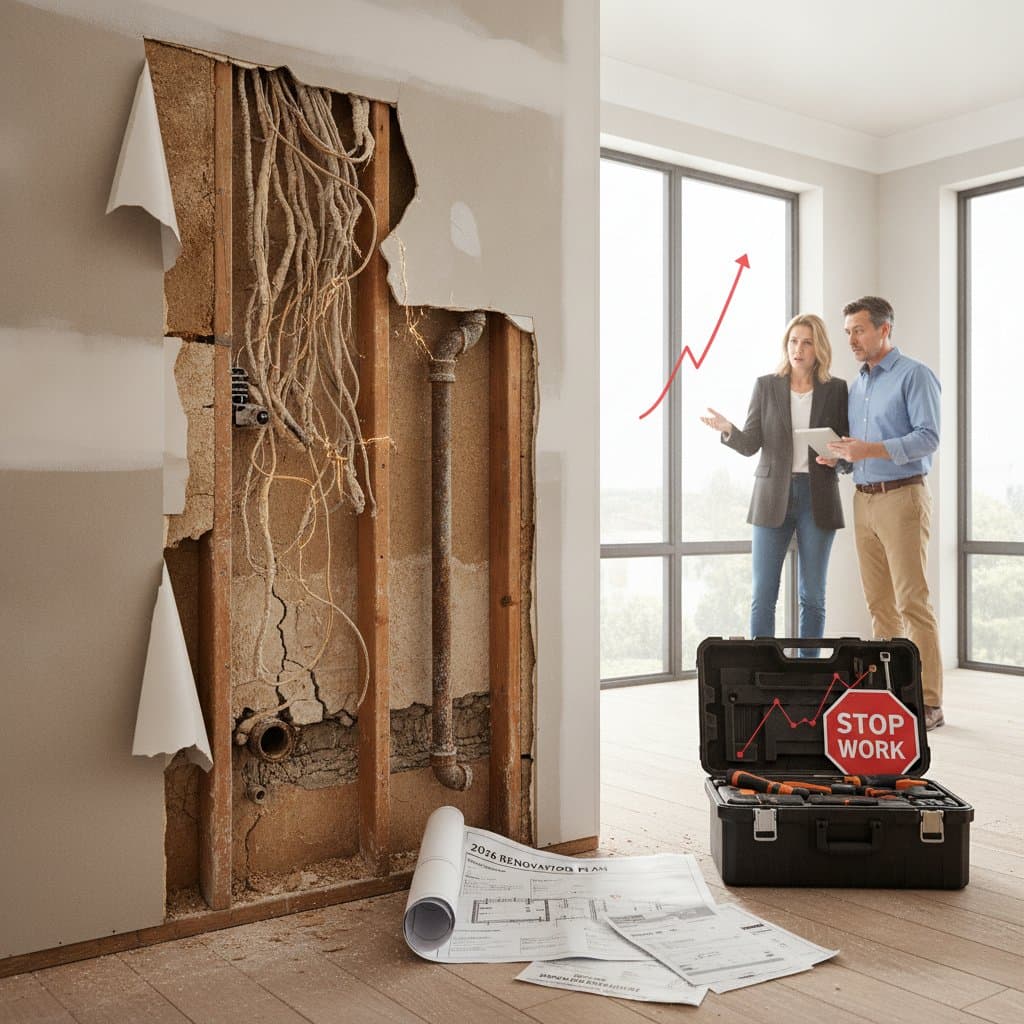
Older homes frequently lack sufficient electrical or plumbing capacity for modern fixtures. Adding a spa tub, for example, can reveal that the existing panel cannot support the load. This situation leads to an expensive service upgrade.
Assess current utility systems during the design phase. Identify any required panel, pipe, or wiring improvements. Incorporate these items into the initial cost estimate. Proactive evaluation avoids mid project interruptions.
Protect Your Renovation Investment
Addressing these five areas in advance supports both budget accuracy and project continuity. Written documentation, professional reviews, and early coordination reduce the likelihood of unexpected charges. The completed space then meets expectations without financial strain.