
2026 Must-Haves for Flood-Proof Bathroom Remodel
Recent design data from leading home remodeling platforms indicates a significant increase in searches for flood-proof bathroom ideas. Homeowners now prioritize comprehensive resilient systems over basic waterproofing to avoid expensive repairs. Designers integrate aesthetics and engineering to produce serene environments that serve as protective enclosures. This article examines the most popular flood-resistant bathroom remodels from prominent design networks, featuring seamless floors, intelligent cabinetry, and durable finishes that maintain elegance amid rising water levels.
Individuals residing near coastal areas understand how precise design decisions influence outcomes during adverse weather. A personal bathroom renovation demonstrated that resilience enhances beauty through thoughtful material selection and spatial planning. The following design strategies establish the foundation for contemporary flood-proof bathrooms.
1. Seamless Flow
In a Charleston townhouse bathroom with a river view, Mara Ellison Interiors applied continuous microcement flooring paired with marine-grade baseboards to seal potential entry points for water. The flooring spans from the shower area to the vanity without grout lines, ensuring a watertight seal and promoting visual continuity. The subtle gray shade enhances light reflection, expands the perception of space, and conceals minor wear. This method safeguards against underfoot moisture while delivering spa-inspired minimalism suitable for modern or transitional interiors.
2. Elevated Fixtures
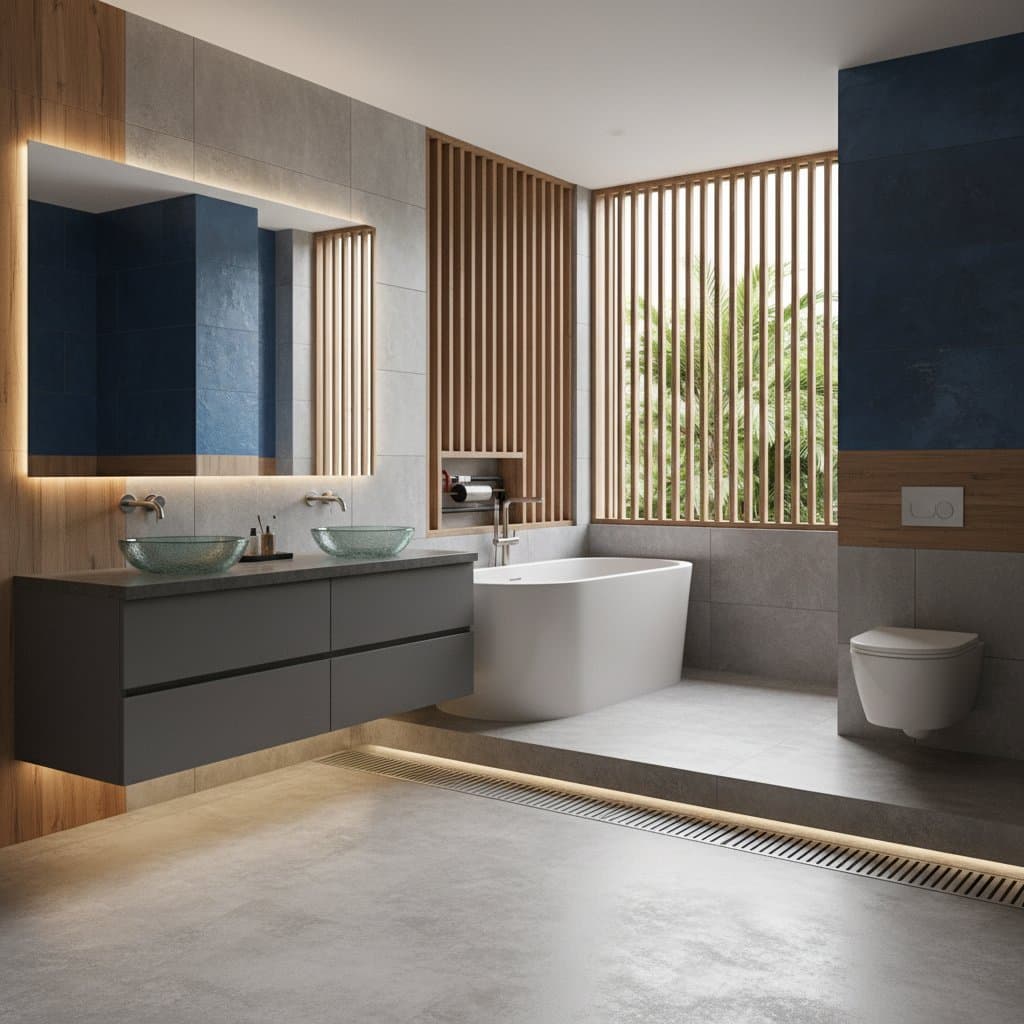
Troy Beck Design Studio elevated fixtures in a Galveston coastal condo by installing wall-hung toilets and floating vanities above a sealed porcelain slab floor. This elevation simplifies cleaning and prevents floodwater accumulation near cabinets. Walnut veneer introduces warmth, complemented by matte brass faucets that evoke nautical elements. The layout promotes airflow and accessibility, resulting in an airy atmosphere with reduced vulnerability to severe weather and minimal visual obstruction.
3. Smart Drainage
Aria Lopez Design incorporated a linear trench drain along the rear wall in a Miami-area cottage renovation, combined with slip-resistant porcelain planks. The system directs water to a reinforced sump pump concealed under the floor. Neutral sand-toned tiles align with coastal aesthetics while enabling superior functionality. This setup eliminates standing water during storms and integrates as a refined, bespoke feature rather than a mere utility.
4. Waterproof Walls
Harrison + Co. Studio utilized fiberglass-reinforced wall panels resembling natural stone in a Seattle basement bathroom. Silicone-sealed joints provide resistance to humidity and full submersion. The dove-gray color harmonizes with blackened steel fixtures for a sophisticated, atmospheric effect. These panels replicate marble texture without vulnerability to distortion or discoloration, easing upkeep and shielding structural walls from concealed leaks.
5. Resilient Storage
Claire Dupont Interiors constructed cabinetry from marine-grade plywood coated in polyurethane lacquer for a New Orleans family home. The vanity suspends on concealed brackets above the floor, with aluminum-lined drawers. These components withstand swelling and separation in high-humidity conditions. A muted sage green finish complements the French-Creole style, while rear ventilation ensures circulation to avert moisture buildup and prolong durability.
6. Protective Thresholds
Jared Lang Studio installed stainless steel floor thresholds at the bathroom-hallway junction in a Savannah modern farmhouse. The half-inch raised edge functions as a containment barrier for water. Matte steel aligns with brushed nickel hardware and a pale oak vanity. This element delineates wet and dry areas, bolsters flooring integrity, and provides discreet flood defense ideal for understated protection.
7. Ventilated Design
Studio Valen emphasized ventilation in a Santa Barbara hillside remodel with ceiling-mounted vents and moisture sensors linked to a smart home network. Fans activate automatically during humidity surges to facilitate drying. Lime plaster walls naturally regulate moisture absorption and release, inhibiting mildew growth. The creamy finish adds warmth to the minimalist arrangement, aligning with wellness principles and adapting to fluctuating climates.
8. Nonporous Finishes
Liam Torres Interiors replaced traditional tile with solid-surface quartz panels in a Houston loft renovation, extending from floor to ceiling with seamless joints. The glossy pearl finish amplifies light, fostering a luxurious ambiance in compact spaces. Nonporous properties resist bacteria, supporting hygiene in flood-vulnerable locations. The outcome merges health-oriented design with precise architectural execution.
9. Backup Systems
Marina Keller Design embedded backflow valves and water sensors under the vanity in a Tampa suburban project. Valves block sewer backflow during floods, and sensors deliver mobile alerts to owners. Charcoal ceramic tile floors pair with white oak cabinetry for a blend of technology and natural elements. This foundational layer unites aesthetic appeal with robust security.
10. Light and Reflection
Reed Interiors employed backlit mirrors and high-gloss porcelain panels in a Philadelphia penthouse bathroom to distribute light evenly. Reflective surfaces mask underlying waterproof membranes. Gentle lighting promotes tranquility, and the finish aids in detecting condensation or leaks promptly. This combination enhances modern style while bolstering protective measures through strategic illumination.
11. Flood-Resistant Doors
Westbridge Design Group fitted fiberglass panels with compression gaskets as entry doors in a Key Largo coastal bungalow. A pale driftwood finish integrates with the interior scheme. Rubber seals at the base deter water entry during intense rainfall. The construction imparts a custom nautical character, prioritizing security without an industrial appearance.
12. Elevated Electricals
Riley & Main Design positioned outlets and switches above typical flood levels in a Baton Rouge apartment, finishing walls with washable acrylic paint in pearl tones. Matte black fixtures unify the palette. This adjustment safeguards electrical components without disrupting spatial harmony and allows straightforward lower-wall maintenance.
Integrating Resilience into Your Remodel
Effective flood-proof designs avoid an industrial aesthetic by harmonizing sensory appeal with enduring utility. Cohesive materials, intelligent mechanisms, and purposeful configurations yield bathrooms that endure challenges yet provide rejuvenation. Designers who incorporate vintage elements and custom sealing techniques recognize that resilience stems from innovative exploration.
Approach your remodel holistically by evaluating drainage, wall treatments, fixture elevations, and airflow as interconnected components. Select finishes that resonate personally, as longevity depends on daily enjoyment.