
Why Mudroom Remodels Unlock Stunning Kitchen Flows
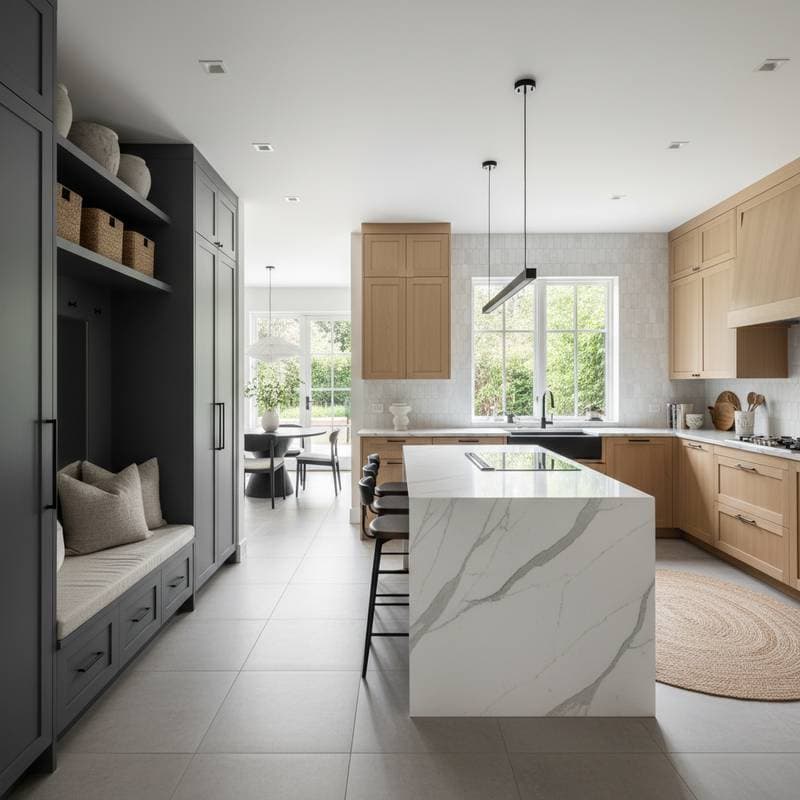
Home layouts shape daily experiences. Some designs facilitate effortless movement, while others introduce unnecessary obstacles and disorder. The connection between mudroom and kitchen often receives little attention, yet optimizing this link yields a more serene and productive living space. A targeted mudroom remodel enhances kitchen functionality without necessitating extensive renovations.
This approach focuses on integration rather than isolation. By aligning these areas, homeowners gain immediate improvements in accessibility and aesthetics. The strategies outlined below provide practical guidance for achieving such harmony.
1. Establish a Purposeful Layout
Problem: Disorganized mudroom layouts lead to chaos that spills into the kitchen.
Context: Entryways frequently serve multiple roles, from gear storage to quick cleanups, overwhelming adjacent spaces.
Solution: Designate zones for specific activities, such as a boot tray near the door and shelving for outerwear.
Technical Detail: Allocate at least 4 feet of clear pathway width to prevent bottlenecks. Position storage units along walls to maximize open floor space.
Benefit: This organization keeps mess contained, allowing the kitchen to remain a dedicated area for meal preparation and social interaction.
2. Control the Transition Zone
Problem: Abrupt transitions between mudroom and kitchen interrupt natural movement and visual continuity.
Context: Narrow doorways or uneven steps in older homes create feelings of confinement.
Solution: Expand openings to a minimum of 36 inches, or opt for open cased arches in place of solid doors.
Technical Detail: Ensure floor levels align seamlessly, with uniform baseboards and trim to blend the spaces.
Benefit: Enhanced passages promote better accessibility and expand the perceived size of the kitchen area.
3. Select Durable Materials
Problem: Standard flooring and surfaces wear quickly under heavy use, leading to maintenance issues that affect the kitchen.
Context: Mudrooms endure exposure to water, dirt, and frequent traffic from outdoor activities.
Solution: Install waterproof vinyl plank or porcelain tile flooring paired with easy-clean wall materials like painted beadboard.
Technical Detail: Choose materials with a minimum 20-mil wear layer for longevity. Incorporate groutless options to simplify upkeep.
Benefit: Resilient choices reduce cleaning demands, preserving the kitchen's pristine condition over time.
4. Integrate Smart Storage
Problem: Lack of dedicated storage turns mudroom items into kitchen counter invaders.
Context: Everyday essentials like bags, produce, and correspondence accumulate without proper containment.
Solution: Blend visible hooks for quick access with hidden cabinetry for less-used items.
Technical Detail: Fit upper cabinets at 16 inches deep for bulk storage and base drawers for footwear organization. Embed USB charging ports within enclosed units to manage devices discreetly.
Benefit: Systematic storage eliminates visual clutter, freeing kitchen surfaces for essential tasks.
5. Optimize Lighting Strategies
Problem: Dim or inconsistent lighting in the mudroom casts shadows into the kitchen, complicating navigation.
Context: Natural light may not reach transitional areas, especially in deeper home designs.
Solution: Layer ambient, task, and accent lighting with recessed cans and under-cabinet strips.
Technical Detail: Aim for 200-300 lux illumination at floor level. Install motion-sensor fixtures to activate during entry.
Benefit: Well-lit transitions improve safety and create an inviting atmosphere that extends into the kitchen.
6. Manage Airflow and Odor Control
Problem: Stagnant air in mudrooms allows moisture and scents to infiltrate the kitchen.
Context: Damp apparel and animal accessories generate persistent odors beyond surface cleaning.
Solution: Incorporate a compact exhaust fan or integrate HVAC vents directly into the mudroom.
Technical Detail: Target six air changes per hour in active zones. Use antimicrobial filters to capture particles effectively.
Benefit: Fresh circulation maintains kitchen air quality and safeguards floors from excess humidity.
7. Incorporate Multifunctional Elements
Problem: Single-purpose designs limit adaptability in high-traffic zones.
Context: Mudrooms must accommodate shifting needs, from family staging to hobby storage.
Solution: Select benches with built-in cubbies or fold-down ironing boards for versatile use.
Technical Detail: Ensure elements support up to 300 pounds for durability. Align heights with standard counter levels for continuity.
Benefit: Flexible features support evolving routines, enhancing kitchen efficiency without added square footage.
8. Plan for Growth and Daily Change
Problem: Static designs fail to accommodate family or lifestyle shifts.
Context: Initial setups for children often evolve into utility or food storage extensions.
Solution: Build in modular components, such as adjustable shelving and removable partitions.
Technical Detail: Use track systems for repositionable units. Reserve 20 percent of space for future adaptations.
Benefit: Scalable planning ensures long-term relevance, keeping the kitchen-kitchen dynamic responsive to life changes.
Achieving Enduring Home Harmony
Effective mudroom-kitchen integration prioritizes utility over extravagance. Clean entry protocols, robust construction, and thoughtful organization yield tangible gains in daily operations. Navigation becomes intuitive, maintenance simplifies, and the overall environment promotes tranquility. Such designs reflect real-life patterns, delivering sustained value through practical enhancements.