
7 Kitchen Remodel Mistakes to Avoid in 2025
Kitchens vary widely in style, from modern minimalism to cozy farmhouse vibes. However, enduring designs rely on proven principles that prioritize function alongside aesthetics. As an architect with experience leading numerous remodel projects, the author has observed patterns in what succeeds and what leads to frustration. These seven common errors, starting with the often-overlooked work triangle, offer guidance to craft a kitchen that performs reliably and remains appealing over time.
1. Ignoring the Work Triangle
Problem: Homeowners frequently overlook the classic work triangle, which connects the sink, stove, and refrigerator. This leads to inefficient movement, wasted steps, and a layout that disrupts cooking flow.
Context: In one project, a client positioned the refrigerator far from the sink and stove, turning meal preparation into a marathon. The result was constant backtracking and fatigue during daily use.
Solution: Aim for a triangular path where each leg measures 4 to 9 feet, with no more than 26 feet total perimeter. Adjust for islands or peninsulas by ensuring clear pathways around key zones.
Technical Detail: The ideal setup keeps the sink central, with the stove and refrigerator at equal distances. Use floor plans to measure distances before installation, accounting for door swings and traffic patterns.
Benefit: This arrangement streamlines tasks, reduces physical strain, and creates a more intuitive space for multiple users, enhancing overall kitchen efficiency.
2. Overloading with Upper Cabinets
Problem: Homeowners often fill every wall space with upper cabinets in pursuit of maximum storage. This approach creates a cluttered, top-heavy appearance that diminishes the sense of openness.
Context: The author once transformed a wall lined with upper cabinets into a single open shelf paired with an extended backsplash. The room immediately appeared larger while retaining essential storage.
Solution: Integrate deep base drawers with targeted upper cabinets. Opt for tall pantry units to handle bulk items instead of overhead stacking for everyday goods.
Technical Detail: Full-extension drawer glides provide superior access and capacity compared to fixed shelves. A 24-inch-deep base drawer stores double the volume of a standard 12-inch wall cabinet, simplifying retrieval.
Benefit: The design yields a brighter, more welcoming atmosphere with practical storage that supports routine activities rather than merely occupying space.
3. Inadequate Lighting Strategy
Problem: Remodels commonly rely on a single overhead fixture, resulting in shadows over workspaces and an uneven ambiance that hampers visibility during food prep.
Context: A project featured elegant cabinetry but dim counters due to insufficient under-cabinet lights. Clients struggled with chopping vegetables safely and accurately.
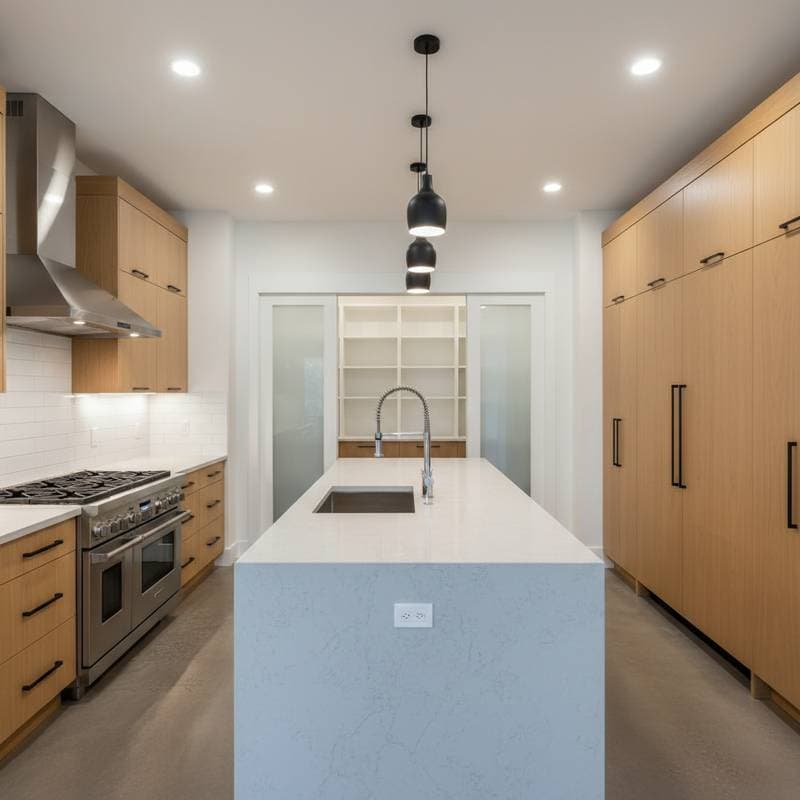
Solution: Layer lighting with recessed ceiling fixtures for general illumination, pendants over islands for focused tasks, and LED strips under cabinets for precision work.
Technical Detail: Select warm 2700K to 3000K bulbs to mimic natural light without glare. Install dimmers on all circuits to adjust intensity from bright task lighting to soft evening glow.
Benefit: Proper layering ensures safe, versatile illumination that adapts to cooking, dining, and entertaining, while energy-efficient LEDs lower long-term costs.
4. Choosing Trend Over Timelessness
Problem: Projects chase passing fads like glossy surfaces or dramatic dark cabinets, which soon appear outdated and require premature updates.
Context: One homeowner selected vibrant cabinet colors that initially dazzled but later conflicted with new furnishings, necessitating a full repaint within two years.
Solution: Build on neutral bases like natural wood tones, crisp white, or subtle grays. Add personality through changeable elements such as bar stools, floor mats, or tile accents.
Technical Detail: Apply satin or matte finishes to cabinets for durability against smudges and scratches. Select heat- and stain-resistant surfaces like quartz or properly sealed granite for counters.
Benefit: Neutral foundations allow easy personalization and maintain a contemporary feel as styles evolve, extending the kitchen's relevance.
5. Underestimating Storage Needs
Problem: Plans often allocate insufficient space for pots, utensils, and pantry staples, leading to cluttered counters and frustrating searches during meals.
Context: A compact remodel skimped on pull-out organizers, forcing stacked pots in deep corners. Unloading the dishwasher became a daily puzzle.
Solution: Incorporate specialized features like corner lazy Susans, spice racks inside doors, and adjustable shelving in pantries to maximize accessibility.
Technical Detail: Soft-close mechanisms prevent slamming, while dovetail joints in drawers ensure longevity. Allocate 20 percent of cabinet space to customizable inserts for evolving needs.
Benefit: Thoughtful organization keeps essentials at hand, clears surfaces for prep, and simplifies maintenance, fostering a calmer cooking environment.
6. Skimping on Ventilation and Electrical Planning
Problem: Emphasis on visuals neglects airflow and outlet placement, causing lingering smells and appliance limitations that disrupt routines.
Context: A stylish update included no external venting for the hood, trapping cooking fumes indoors. Remediation involved invasive ductwork alterations.
Solution: Install exterior-venting hoods and space outlets every four feet along counters. Include USB ports and dedicated circuits for high-wattage devices.
Technical Detail: Hoods should exhaust at least 100 cubic feet per minute per linear foot of cooktop. Comply with codes requiring GFCI protection near sinks for safety.
Benefit: Effective venting maintains fresh air and clean surfaces, while robust electrical setup supports modern gadgets without interruptions.
7. Neglecting Durable, Low-Maintenance Materials
Problem: Selections prioritize initial cost savings over resilience, resulting in frequent repairs from scratches, stains, or wear in high-traffic areas.
Context: Budget flooring in a family kitchen chipped under foot traffic within months, undermining the entire aesthetic and requiring early replacement.
Solution: Choose resilient options like porcelain tiles for floors, solid-surface counters, and stainless steel appliances that withstand daily demands.
Technical Detail: Look for materials with high abrasion ratings, such as Mohs scale 7 for floors. Seal natural stone annually to prevent etching from acids in foods.
Benefit: Sturdy choices reduce upkeep time and expenses, preserving the kitchen's condition and value for years of heavy use.
Applying Choices to Everyday Use
Effective kitchen design balances form and function to support seamless daily interactions. Consider how layout influences meal assembly, cleanup efficiency, and social moments. Test plans by simulating routines, from grocery unpacking to hosting dinners, to confirm the space aligns with lifestyle needs and delivers sustained satisfaction.