
Embracing Biophilic Design: The Leading Trend in Home Remodeling
A thoughtfully designed home conveys vitality from the moment one enters. Certain spaces evoke sterility, while others instantly soothe the senses. This distinction frequently stems from the degree to which a residence links to the natural world. Biophilic design, a philosophy rooted in human psychology, environmental science, and wellness, extends beyond mere decoration to embed nature within the home's core framework.
Following years of minimalist aesthetics and artificial surfaces, residents now seek solace in organic textures, diffused illumination, and vibrant foliage. True integration demands more than potted plants; it requires embedding natural elements into the building's form and operations. Architects apply ten foundational principles to achieve effective biophilic remodels, combining intentional aesthetics with feasible building techniques. These guidelines ensure homes not only look inviting but also function as restorative environments.
1. Maximize Natural Light
Problem: Dim interiors rely on artificial lighting, which strains eyes and disrupts circadian rhythms.
Context: During a living room renovation, a client expressed frustration with constant lamp use despite large windows.
Solution: Prioritize expansive windows, skylights, or light wells to capture sunlight throughout the day. Orient rooms to follow the sun's path, and use sheer curtains or fritted glass to diffuse harsh rays without blocking views.
Technical detail: Install low-E glazing to minimize heat gain while preserving light transmission, and integrate automated shades for glare control.
Benefit: Abundant natural light elevates mood, reduces energy costs, and fosters a sense of openness and vitality.
2. Connect Indoor and Outdoor Flow
Problem: Traditional homes isolate interiors from exteriors through solid barriers or narrow entries, limiting environmental engagement.
Context: In a kitchen project, the homeowner desired the sensation of outdoor presence during meal preparation.
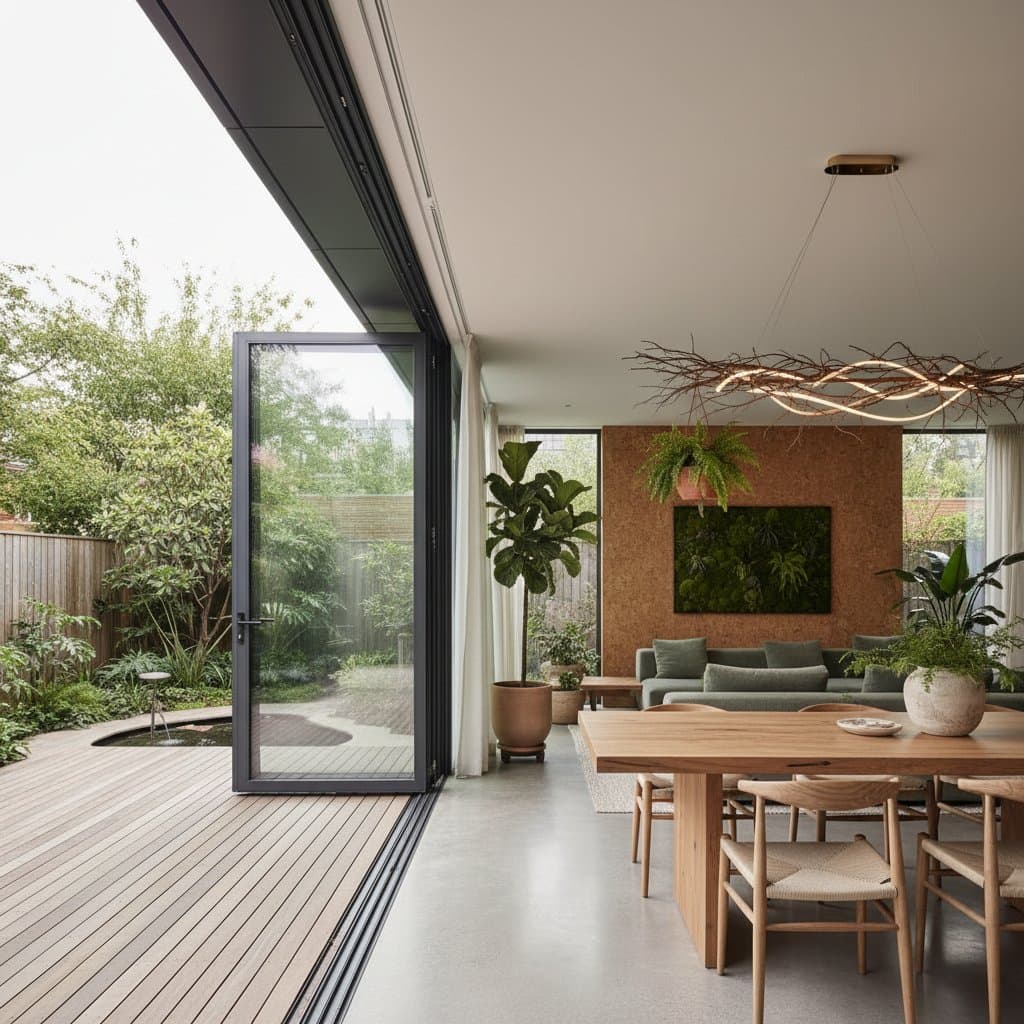
Solution: Incorporate wide sliding glass doors or bi-fold panels that lead to terraces or gardens. Select continuous flooring options, such as porcelain tiles or polished concrete, that span both areas seamlessly.
Technical detail: Employ flush sills with integrated weather seals and sloped thresholds to prevent moisture entry and ensure accessibility.
Benefit: Such connections expand perceived space, enhance air circulation, and deepen the bond with surrounding landscapes.
3. Incorporate Living Greenery
Problem: Static decor fails to provide the dynamic benefits of actual plants, such as air purification and humidity regulation.
Context: A bedroom remodel transformed when vertical gardens replaced bland wall art, instantly improving air quality.
Solution: Embed green walls, built-in planters, or living roofs using native, low-water species. Position greenery near high-traffic zones for maximum impact without obstructing flow.
Technical detail: Utilize hydroponic systems or self-watering reservoirs with UV-resistant liners to support plant health and simplify irrigation.
Benefit: Living elements purify air, regulate temperature, and introduce calming movement, elevating overall comfort.
4. Use Natural Materials Authentically
Problem: Imitation surfaces like vinyl wood or faux stone degrade quickly, lacking the tactile appeal of genuine alternatives.
Context: Clients frequently opt for budget laminates expecting durability, yet discover they lack warmth and repairability.
Solution: Select authentic options such as salvaged timber, natural stone, or terracotta where feasible. For cost constraints, apply thin natural overlays on focal points instead of full synthetic coverage.
Technical detail: Apply vapor-permeable sealants to allow material breathing, thus avoiding trapped moisture and structural damage.
Benefit: These materials develop unique patinas, forging a profound, earthly connection that endures.
5. Harness Natural Ventilation
Problem: Overreliance on HVAC systems creates stale air and high utility bills, disconnecting homes from fresh breezes.
Context: A sunroom addition succeeded by channeling prevailing winds, eliminating the need for constant fans.
Solution: Design operable windows, vents, or atriums to facilitate cross-breezes. Stack ventilation uses warm air rising to draw in cooler flows from below.
Technical detail: Fit insect screens and dampers to control airflow, paired with ceiling fans for enhanced circulation without noise.
Benefit: Natural airflow improves indoor air quality, lowers energy use, and infuses spaces with refreshing scents from outside.
6. Integrate Water and Sound
Problem: Modern homes overlook nature's auditory aspects, resulting in echoey voids or intrusive mechanical hums.
Context: Adding a courtyard fountain to a remodel shifted the ambiance, drowning out urban sounds and promoting tranquility.
Solution: Introduce subtle water features like bubbling walls or shallow basins. Complement with sound-absorbing elements such as fabric panels, thick carpets, or softwood ceilings.
Technical detail: Opt for recirculating pumps with quiet motors and floor protectors to maintain efficiency and prevent leaks.
Benefit: These elements induce relaxation, mask distractions, and render the home a sanctuary for mental recharge.
7. Align with Seasonal Rhythms
Problem: Static designs ignore environmental shifts, leading to discomfort during weather changes.
Context: A family room update incorporated adjustable shading, adapting effortlessly to summer heat and winter chill.
Solution: Use adaptable features like retractable awnings, thermal curtains, or multifunctional spaces that evolve with seasons. Plant deciduous species for natural summer shade and winter sun.
Technical detail: Integrate smart sensors for automated adjustments, ensuring energy-efficient responses to temperature fluctuations.
Benefit: Seasonal harmony maintains comfort year-round, reducing reliance on artificial climate control.
8. Design with Natural Patterns and Forms
Problem: Superficial nature motifs, such as patterned fabrics, ignore deeper structural imitation of organic shapes.
Context: Replacing rigid lines with flowing contours in a hallway eased a client's sense of confinement.
Solution: Infuse architecture with biomorphic elements: sinuous partitions, leaf-like sconces, or tessellated floors echoing natural fractals.
Technical detail: Employ CNC-machined components or 3D-printed accents for accuracy in replicating complex, durable forms.
Benefit: Organic geometries soothe the psyche, providing layered visual interest that feels innate rather than imposed.
9. Foster Biodiversity
Problem: Monoculture landscaping around homes limits ecological support and aesthetic variety.
Context: Transforming a barren yard into a pollinator habitat not only beautified the property but also attracted beneficial wildlife.
Solution: Create layered planting zones with diverse natives, including trees, shrubs, and ground covers. Add bird feeders or insect hotels integrated into the design.
Technical detail: Use permeable paving and rain gardens to manage runoff, supporting soil health and water retention.
Benefit: Biodiversity enhances resilience, draws positive interactions with nature, and enriches the sensory experience.
10. Make Maintenance Part of the Design
Problem: Overlooking upkeep leads to decline in natural features, undermining long-term appeal.
Context: Remodels thrive when access points for care are built in, preventing neglect of intricate elements.
Solution: Design with serviceability: modular green modules, wipeable surfaces, and hidden utility panels. Select resilient finishes that improve with use.
Technical detail: Incorporate corrosion-resistant hardware and modular assemblies near moist or vegetated zones for straightforward repairs.
Benefit: Proactive maintenance allows the design to evolve gracefully, accruing character and longevity.
Sustaining Biophilic Harmony in Daily Life
Implementing biophilic principles transforms a house into a nurturing haven. Residents experience heightened well-being through reduced stress and improved focus. To sustain this, regularly assess how natural elements perform and adjust as needs change. Over time, these homes not only endure but inspire a deeper appreciation for the environment, blending human habitation with the world's rhythms.