
Why Half of Outdoor Kitchens Need Costly Rebuilds
Outdoor kitchens enhance backyard living, yet statistics reveal that nearly half require significant rebuilds within a decade. Harsh weather, subpar materials, and overlooked design elements contribute to this issue. Homeowners face unexpected expenses that diminish the joy of these spaces. This article explores the root causes and provides practical strategies to create a lasting outdoor kitchen.
Common Pitfalls Leading to Rebuilds
Many outdoor kitchens fail due to environmental exposure. Sun, rain, and temperature fluctuations degrade unprotected surfaces quickly. For instance, untreated wood warps under moisture, while standard countertops crack from freeze-thaw cycles.
Poor installation exacerbates these problems. Foundations that shift or plumbing not suited for outdoors lead to leaks and structural issues. Builders often prioritize aesthetics over durability, resulting in spaces that look appealing but perform poorly.
Neglected maintenance seals the fate of many setups. Accumulated debris clogs drains, and unsealed joints allow water infiltration. Over time, these oversights accumulate into major repairs costing thousands.
Key Statistics on Failure Rates
Industry surveys indicate that 48 percent of outdoor kitchens undergo rebuilds within eight years. Coastal areas report higher rates due to salt air corrosion. Inland regions suffer from extreme heat or cold, pushing the average rebuild cost to $15,000 or more.
2025 Outdoor Kitchen Costs Breakdown
Building costs in 2025 reflect rising material prices and labor demands. A basic setup starts at $10,000, covering essential appliances and counter space. Mid-range projects reach $25,000, incorporating custom features like built-in grills and sinks.
Luxury installations exceed $50,000, with high-end finishes and smart technology. Regional differences play a role; urban areas add 20 percent premiums for accessibility, while rural spots benefit from lower labor rates.
Hidden expenses often surprise owners. Permits average $500, and utility connections add $2,000 to $5,000. Factor in ongoing maintenance, which totals 5 percent of the initial investment annually.
Selecting Weatherproof Materials for Durability
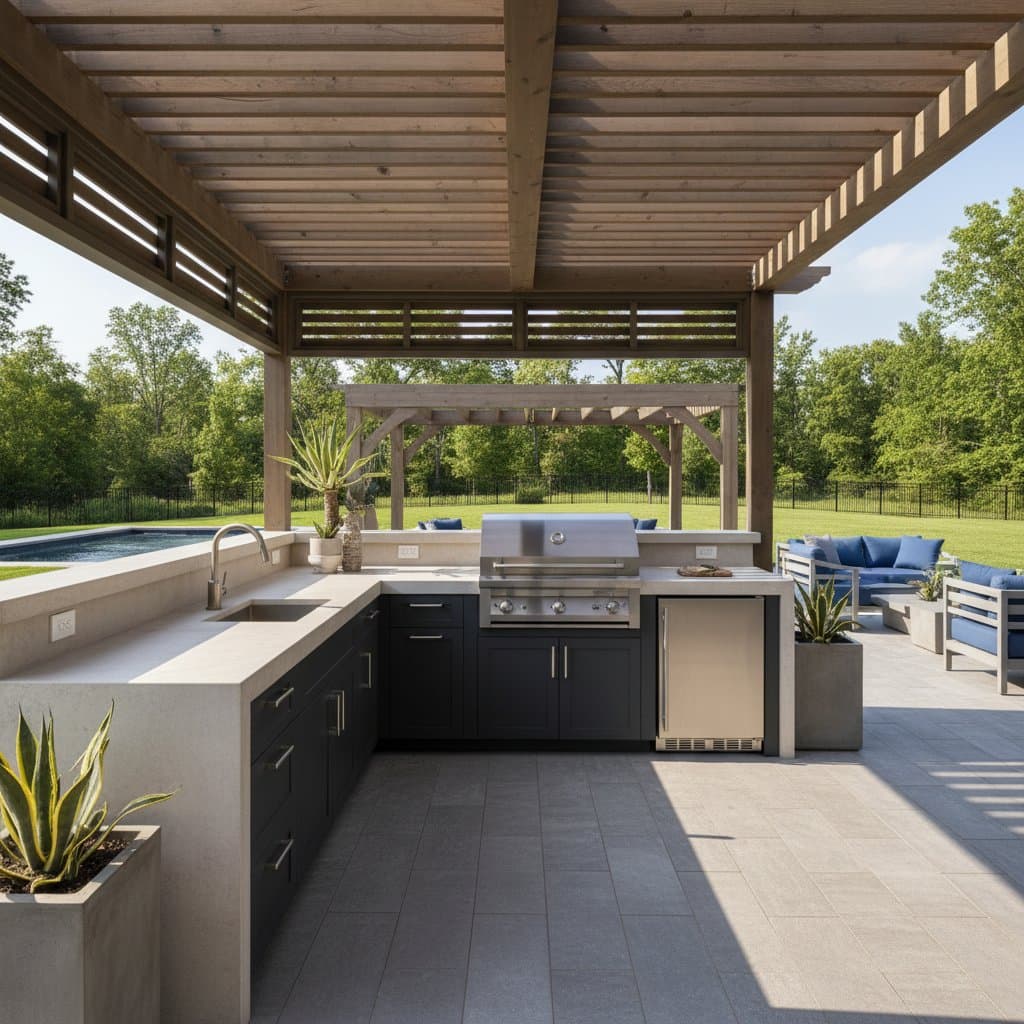
Durable materials withstand the elements and reduce rebuild risks. Stainless steel remains a top choice for counters and cabinets due to its rust resistance. Powder-coated aluminum offers lightweight strength without the weight of steel.
Natural stone like granite or quartz provides elegance and resilience. These surfaces resist stains and heat, though sealing prevents porosity issues. Concrete countertops, when properly reinforced, endure impacts and weather shifts.
For flooring, porcelain tiles mimic wood or stone while repelling water. Composite decking avoids the rot common in traditional lumber. Each option balances cost and longevity; stainless steel setups last 20 years with minimal upkeep.
Material Comparison Table
| Material | Durability Rating | Average Cost per Sq Ft | Maintenance Level |
|---|---|---|---|
| Stainless Steel | High | $50-$80 | Low |
| Granite | High | $60-$100 | Medium |
| Concrete | Medium-High | $40-$70 | Medium |
| Porcelain Tile | High | $20-$50 | Low |
Smart Design Principles to Avoid Costly Errors
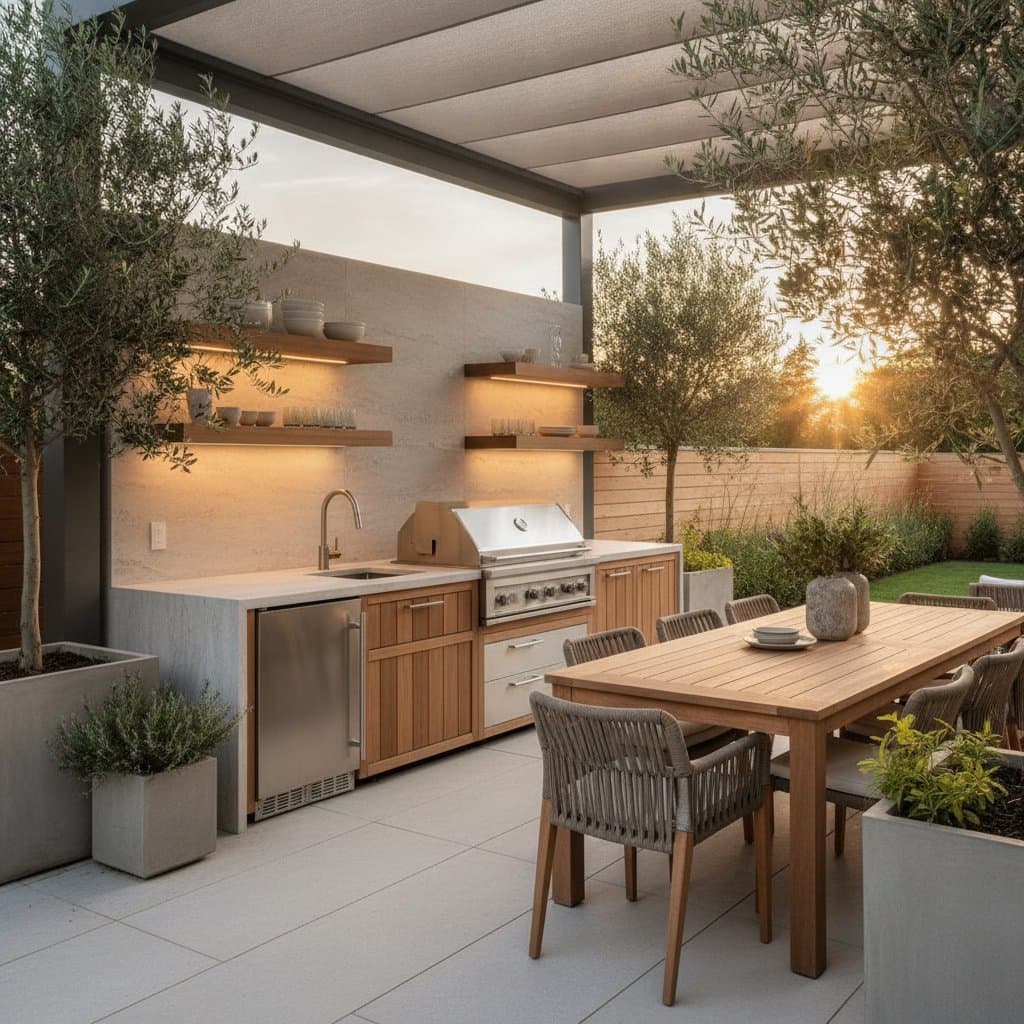
Effective design starts with site assessment. Evaluate sun exposure, wind patterns, and drainage to position the kitchen optimally. Elevated platforms prevent flooding, while shaded areas protect from UV damage.
Integrate functionality with flow. Place cooking zones near seating to encourage gatherings, but ensure adequate ventilation reduces smoke buildup. Modular layouts allow future expansions without full overhauls.
Incorporate storage solutions that seal against pests and moisture. Weather-resistant cabinetry with locking doors preserves utensils and keeps the space tidy. Thoughtful lighting enhances usability into evenings without compromising safety.
Budgeting Strategies for a Sustainable Build
Establish a realistic budget by prioritizing essentials. Allocate 40 percent to materials, 30 percent to labor, and 20 percent to appliances. Reserve 10 percent for contingencies like weather delays.
Shop strategically for savings. Bulk purchases on weatherproof items lower per-unit costs, and off-season builds reduce labor fees by 15 percent. Compare contractors for transparent quotes that detail warranties.
Financing options ease upfront burdens. Home equity loans cover larger projects, while phased construction spreads payments. Track expenses with spreadsheets to stay within limits and avoid debt.
Step-by-Step Budgeting Process
- Assess needs: List must-have features versus nice-to-haves.
- Research prices: Gather quotes from multiple suppliers.
- Factor regional costs: Adjust for local material availability.
- Build in buffers: Add 15 percent for unforeseen issues.
- Review annually: Plan for maintenance to extend lifespan.
Essential Maintenance Routines
Regular care prevents the need for rebuilds. Clean surfaces weekly with mild soap to remove residues that corrode materials. Inspect seals and joints monthly, reapplying caulk as needed.
Seasonal tasks include draining water lines before winter and covering appliances during off-months. Professional inspections every two years catch issues early, saving on repairs.
Educate household members on proper use. Avoid dragging heavy items across floors and store chemicals away from food areas. These habits extend the kitchen's life by years.
Achieving Long-Term Value Through Informed Choices
A well-planned outdoor kitchen boosts property value by up to 10 percent. Focus on durable elements and proactive care to enjoy years of use without interruptions. Consult local experts for tailored advice that fits your climate and lifestyle. With these strategies, your backyard becomes a reliable retreat rather than a renovation headache.