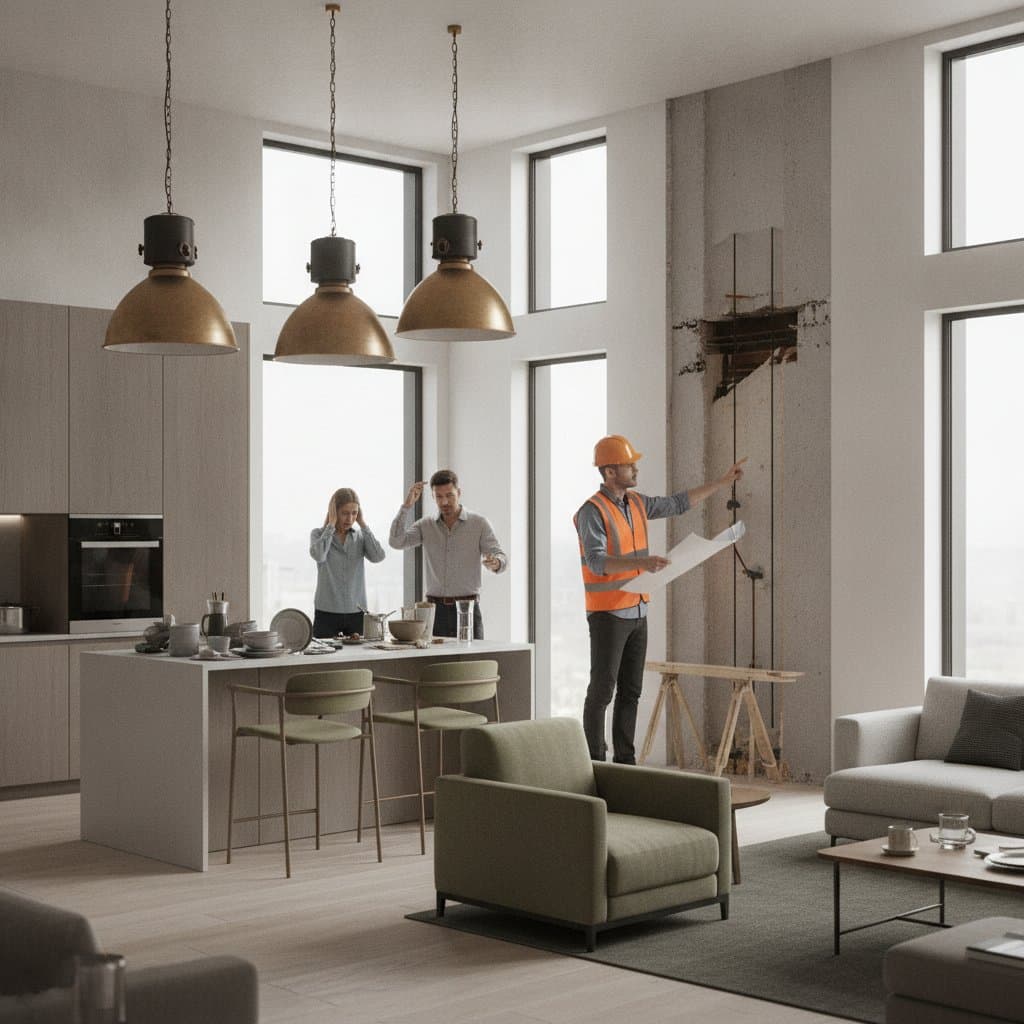


Smart Wall Removal for 2025 Open Kitchen Layouts
Imagine stirring a pot of pasta while conversing with guests in the adjacent living room, as the aroma of garlic butter wafts through a sunlit, expansive area. This vision captures the appeal of an open kitchen, yet achieving it often involves demolishing a wall that might support the ceiling above. Effective planning and a practical budget transform this idea from a mere fantasy into a functional reality.
A national remodeling survey reveals that almost half of homeowners desire an open kitchen configuration, but only one-third proceed with the project. The gap arises because television design programs portray wall removal as straightforward, while actual implementation involves significant financial and structural challenges. This article outlines an intelligent approach to wall removal that preserves your renovation budget and prevents unintended structural issues.
Identifying Load-Bearing Walls
Determining whether a wall bears structural weight represents a critical first step, potentially saving thousands in repairs. A load-bearing wall sustains the load from elements above, such as floors or the roof. Incorrect removal can cause sagging or collapse in the kitchen area.
Consider these methods to assess a wall:
- Examine the direction relative to floor joists: Walls perpendicular to the joists often support weight, as parallel walls typically do not.
- Inspect the basement or crawl space below: The presence of beams, posts, or foundation elements directly under the wall signals load-bearing status.
- Engage a structural engineer for evaluation: Professionals use tools like blueprints or on-site inspections to provide definitive confirmation.
Contractor Eli Vasquez of BuildRight Renovations notes, "Even if a wall appears insignificant, never assume safety without verification. I have encountered cases where homeowners damaged what they believed was ornamental, only to discover it supported half the roof."
Selecting Structural Supports and Their Cost Implications
The choice of replacement support influences both aesthetics and expenses in open kitchen projects. Different beams and systems accommodate varying spans and budgets, ensuring stability without compromising design.
Review these common options:
- Laminated Veneer Lumber (LVL) beams provide strength at a moderate cost, though they often remain exposed for visibility.
- Steel I-beams deliver superior support for broader openings with minimal depth, justifying their higher price through durability.
- Flushed beams integrate seamlessly into the ceiling plane, offering a polished finish but demanding additional installation effort.
To optimize costs, integrate structural modifications with other upgrades. For instance, align beam installation with ceiling refinishing or recessed lighting additions. Engineer Nathan Cole of FrameSmart Consulting advises, "Homeowners who plan ahead frequently merge structural tasks with cosmetic improvements, reducing overall expenses by coordinating multiple tradespeople."
Beyond initial selection, factor in permitting fees, which vary by location and can add several hundred dollars. Always obtain necessary approvals before demolition to avoid fines or delays.
Hidden Costs and Budget Management Strategies
Wall removal extends beyond materials and labor, encompassing unforeseen expenses that derail many projects. Electrical rewiring, plumbing adjustments, and HVAC rerouting often emerge during demolition, increasing the total by 20 to 30 percent.
Develop a comprehensive budget by allocating funds across categories: 40 percent for structural work, 30 percent for utilities, 20 percent for finishes, and 10 percent as a contingency. Consult local contractors early for accurate estimates based on your home's age and layout.
Track progress with a detailed timeline that includes milestones like engineer consultations and permit submissions. This approach minimizes surprises and keeps the project on schedule, typically spanning four to eight weeks for a standard kitchen opening.
Design Advantages and Long-Term Value
The investment in an open kitchen yields tangible benefits that extend to daily living and property worth. Enhanced natural light circulation brightens the entire home, while improved flow facilitates effortless entertaining and family gatherings.
Open layouts foster connectivity, allowing cooks to engage with others without isolation. Resale markets favor these designs, with many buyers prioritizing them in older homes.
Realtor Sophie Nguyen of Coastal Realty Partners observes, "Buyers gravitate toward open kitchens for their sense of unity with the living areas. Modest investments in such renovations can recoup up to 70 percent of costs upon sale."
Additional perks include easier cleaning and maintenance, as open spaces reduce dust accumulation in enclosed corners. Customize with islands or peninsulas to define zones while preserving openness.
Steps to Execute Your Open Kitchen Project
Proceed methodically to ensure success. Start by documenting your current layout with photographs and measurements, then schedule a structural assessment within the first week.
Next, gather quotes from at least three licensed contractors, emphasizing those experienced in load-bearing modifications. Review contracts for clear scopes, timelines, and payment schedules to protect your interests.
During construction, maintain communication with your team to address issues promptly. Post-completion, inspect all work for code compliance and functionality before final payments.
Realizing the Transformative Impact
An open kitchen reshapes home dynamics, blending cooking, conversation, and relaxation into a cohesive environment. This evolution eliminates the constraints of traditional boxed-in designs, promoting a more vibrant lifestyle.
Homeowners who navigate the process thoughtfully report heightened satisfaction and utility. Share your insights or upcoming plans to contribute to collective knowledge, fostering more efficient and cost-effective renovations for everyone.