
Why Biophilic Kitchens Connect You to Nature Daily
Imagine entering your kitchen each morning, where sunlight pours through expansive windows, the aroma of fresh herbs lingers, and natural textures envelop the space. This serene environment embodies biophilic kitchen design, which links your home to the natural world. Homeowners increasingly adopt this approach to foster well-being, integrate beauty with practicality, and infuse tranquility into a high-traffic area.
Biophilic kitchens extend beyond simple additions like plants or wooden accents. They cultivate harmony through light, texture, color, and materials, rendering everyday tasks invigorating rather than hurried. Regardless of whether you reside in an apartment or a spacious family dwelling, you can craft a kitchen that anchors itself in nature while suiting your daily needs.
Defining Biophilic Kitchen Design
Biophilic design rests on the principle that humans thrive when linked to nature. In kitchens, this translates to incorporating organic materials, abundant natural light, and dynamic living features into a unified setting. The result proves both practical and immersive, engaging sight, touch, and scent.
Three core principles define a biophilic kitchen:
- Natural materials and textures that anchor the environment.
- Access to light and vistas that uplift mood and vitality.
- Living components that introduce motion and life.
These elements elevate the kitchen from a mere cooking zone to a rejuvenating haven that promotes health, innovation, and interpersonal bonds.
Incorporating Natural Materials for Warmth
Consider the surfaces you interact with daily: countertops, cabinets, and flooring form the kitchen's tactile base. Opt for wood, stone, or clay to instill warmth and genuineness. These choices develop patina over time, enhancing their appeal.
Select solid wood for cabinetry or butcher block for counters to add depth and ease. Varieties such as oak, walnut, or ash offer robust tones and longevity. For constrained budgets, wood veneers or bamboo provide comparable authenticity.
Incorporate granite, soapstone, or marble for countertops to evoke earth's solidity. Their inherent veining delivers visual intrigue absent in manufactured options. Pair handmade ceramic tiles or terracotta floors for a textured, artisanal feel beneath your feet.
Achieve equilibrium by blending wood cabinets with stone surfaces and subdued metal fixtures. This prevents overwhelming visuals and promotes cohesive harmony.
Harnessing Light as a Central Element
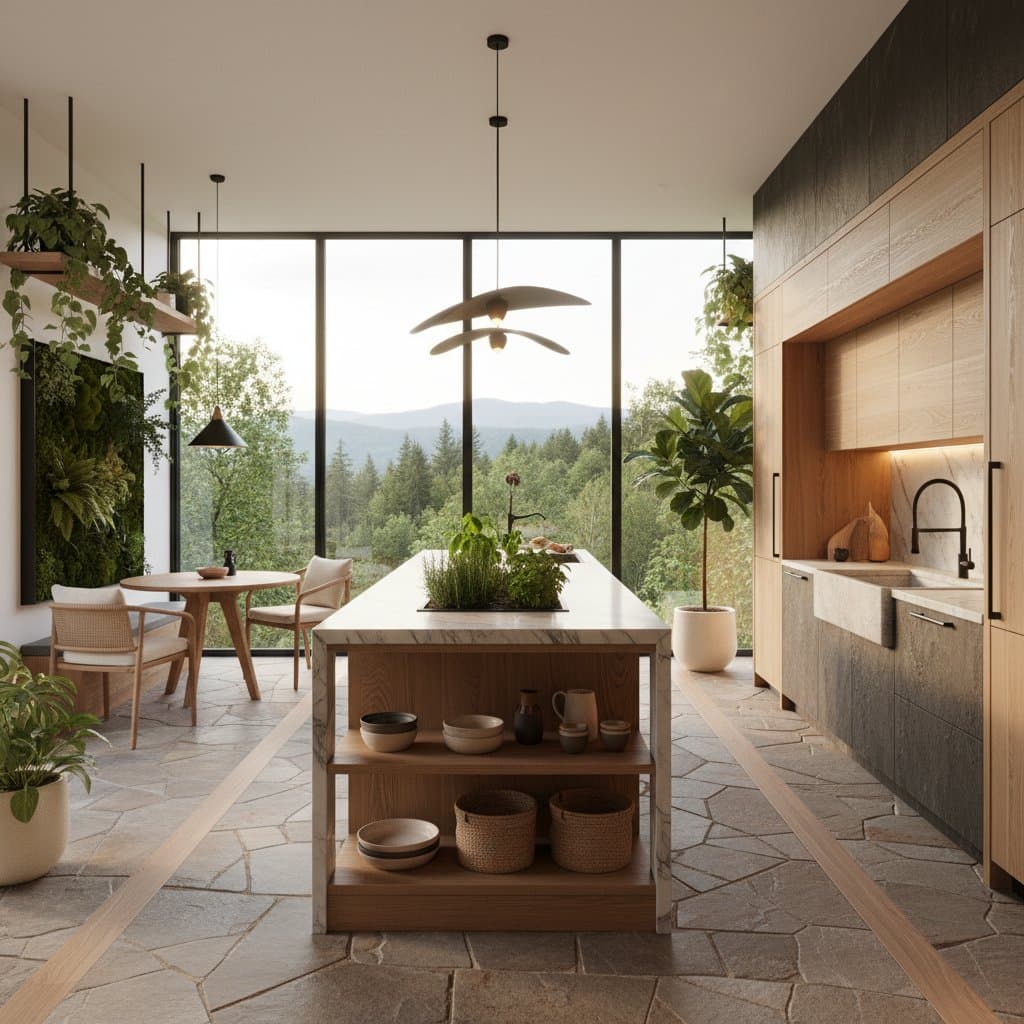
Light profoundly influences perception of color, texture, and volume in biophilic design. Prioritize natural illumination by installing large windows, glass doors, or skylights to draw daylight inward, fostering openness and outdoor linkage.
When structural changes prove unfeasible, employ reflective elements like glossy tiles, glass backsplashes, or light-toned counters to distribute brightness. Site preparation zones adjacent to windows to capitalize on daytime rays.
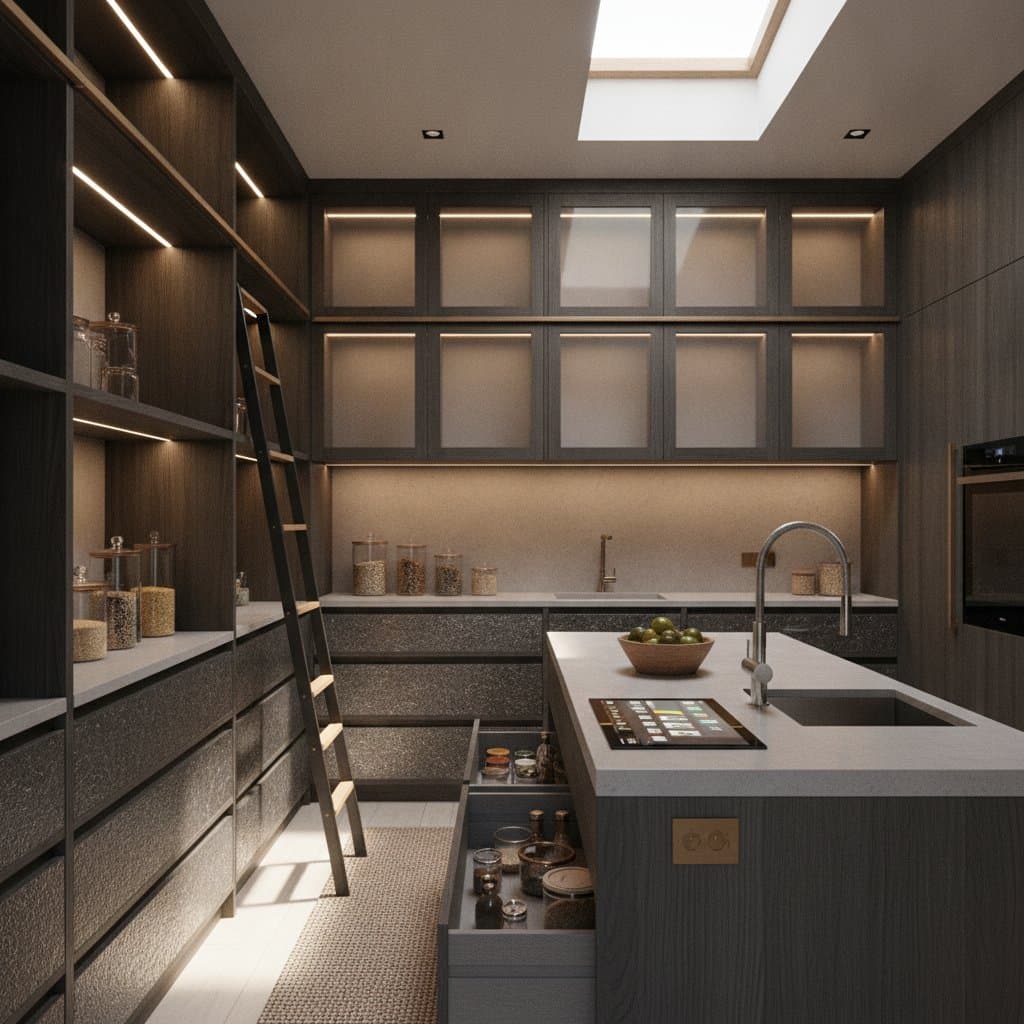
Layer evening illumination with warm LED under-cabinet strips and island pendants. This setup sustains usability while evoking twilight's softness. Aim to replicate light's diurnal cycle, aiding circadian alignment from dawn to dusk.
Integrating Living Elements for Vitality
Living features forge the strongest tie to nature, infusing motion and sensory delight through plants, herbs, or water accents.
Install herb gardens on windowsills with pots of basil, thyme, or mint; these flourish in light and elevate culinary tasks with their scents. Suspend trailing plants such as pothos or string of pearls to temper edges and introduce height.
Add a tabletop fountain or floating flower bowl for water's soothing murmur. These elements underscore the space's dynamism, turning maintenance like watering or trimming into meditative practices that deepen attachment.
Selecting Nature-Inspired Color Schemes
Draw color inspiration from landscapes: forests, waterways, and rock formations. Employ subdued greens, soil-like browns, neutral beiges, and profound blues to evoke serenity and seamlessness. These tones complement organic materials seamlessly.
Establish cohesion with a primary hue layered by accents; for instance, pair warm oak cabinets with sage walls and ivory tiles. Favor matte or satin finishes to facilitate light's subtle diffusion, yielding an innate glow.
Steer clear of high-gloss or jarring contrasts, which disrupt the organic flow.
Optimizing Layout for Seamless Function
Aesthetic appeal demands practical execution. Biophilic kitchens facilitate intuitive navigation, mirroring nature's fluid paths across preparation, cooking, and dining zones.
Adopt open wood shelving in place of enclosed cabinets to minimize clutter and highlight textures. Incorporate rounded island edges or arched openings to echo natural contours.
Define zones akin to ecological niches: one for cooking, another for socializing, and a third for repose. Such organization streamlines interactions, sparking spontaneous dialogue and enhancing meal preparation.
Embracing Sustainability for Lasting Harmony
Biophilic principles align inherently with eco-conscious practices. Select renewable, non-toxic options and efficient systems to safeguard the planet and indoor health, extending nature's equilibrium.
Apply low-VOC paints, sealants, and adhesives to purify air quality. Install LED lighting that conserves energy while simulating daylight.
Utilize reclaimed wood beams, recycled glass tiles, or salvaged stone for distinctive, waste-reducing flair. Equip with filtered range hoods and operable windows to ensure fresh circulation.
These decisions reinforce the design's ethos, yielding a kitchen that operates in environmental synchrony.
Cultivating Sensory Engagement
Biophilic kitchens transcend visuals, stimulating touch, sound, and aroma to convert routines into restorative experiences.
Blend sleek stone with woven baskets or linen drapes for textural variety and solace. Choose noise-dampening cork floors or cushioned fabrics to preserve quietude.
Infuse scents via herbs, timber, and botanical cleaners for a subtly healing ambiance. Multisensory immersion grounds occupants, fostering presence over mere functionality.
Extending Views to the Outdoors
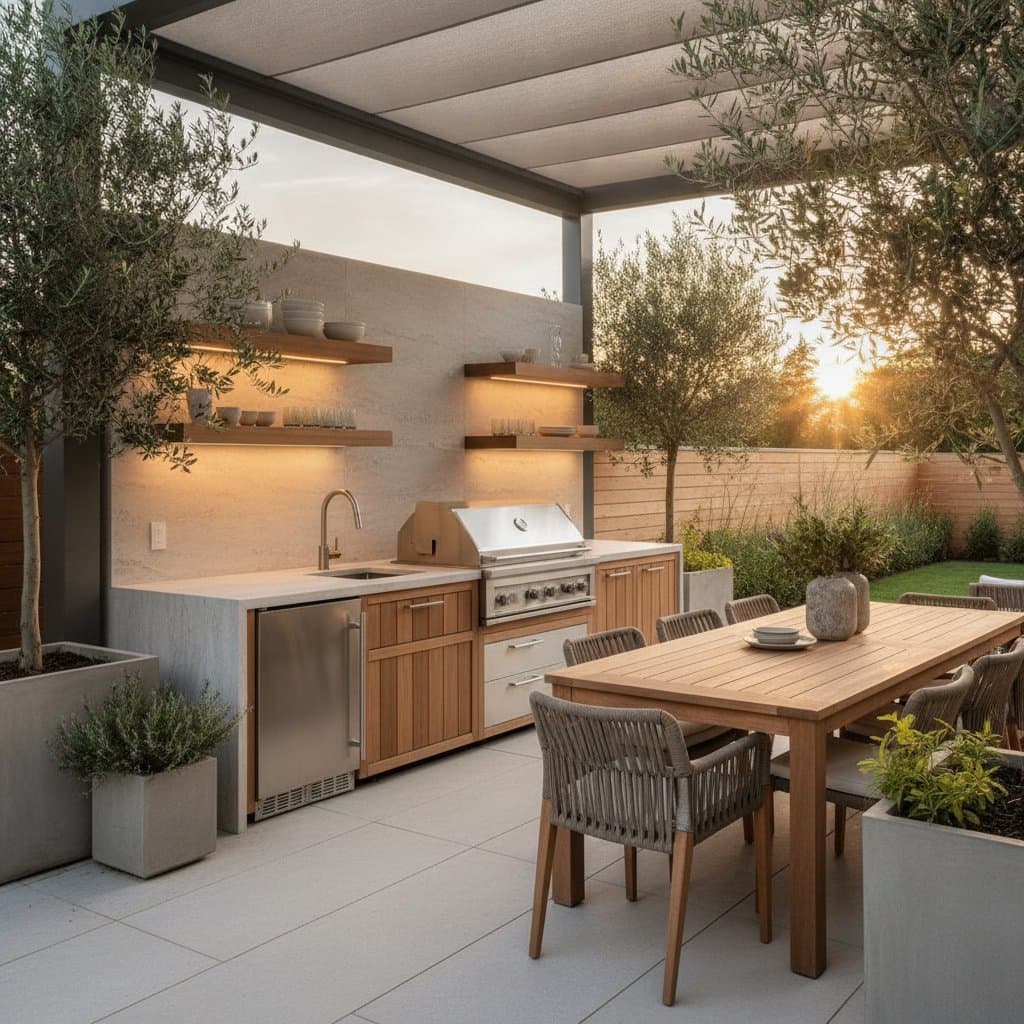
Capitalize on exterior orientations by framing gardens or patios with expansive glass. This dissolves indoor-outdoor boundaries, even in modest settings.
In city dwellings, erect living walls or position windows to capture nearby foliage. Expanding sightlines to verdant elements reduces tension and amplifies spatial perception.
Subtly Incorporating Technology
Natural focus notwithstanding, technology enhances biophilic kitchens when concealed. Recessed appliances, integrated refrigeration, and induction surfaces preserve sleek profiles.
Deploy smart controls for lighting and climate that emulate natural cycles, such as gradual morning brightening. Prioritize enhancements that bolster ease without eclipsing organic essence, ensuring timeless appeal.
Personalizing Your Biophilic Space
Tailor the design to your nature affinities, whether seaside palettes, woodland grains, or arid neutrals. Infuse personal artifacts like artisanal ceramics, foraged branches, or home-cultivated herbs to imbue uniqueness.
Biophilic kitchens adapt to evolving lives; as flora expands and surfaces mellow, they chronicle your narrative.
Sustaining the Natural Connection
With completion, immerse in your biophilic kitchen's influence on routines. You might extend meals or invite breezes more readily, embodying the design's aim: equilibrium between domesticity and ecology.
Preserve vitality by rotating plants for balanced exposure, conditioning wood routinely, and curbing excess to spotlight innate qualities. Gradually, the space acquires a cherished, inhabited luster.
This approach transcends trends, addressing desires for enveloping warmth, illumination, and sincerity. Through integrated elements, it nurtures home and health, affirming nature's subtle potency in life's core.