
The Actual Expenses of Refacing Kitchen Cabinets
Kitchen design preferences evolve rapidly, yet the desire for an attractive, practical kitchen at a reasonable price persists. Cabinet refacing appears as an efficient alternative, delivering a renewed appearance without the expense of complete replacement. True costs emerge in the specifics of materials, labor, and preparation. Grasping these elements enables informed decisions that harmonize budget, longevity, and aesthetics.
1. Define Refacing Precisely
A frequent misconception equates refacing with installing entirely new cabinets. Refacing preserves the original cabinet boxes and replaces only the doors, drawer fronts, and visible surfaces with fresh veneer or laminate. This approach reduces material and labor demands, but success hinges on the structural integrity of the existing boxes. Inspect for issues such as particleboard degradation from moisture exposure; otherwise, the investment yields short-term results at best. Begin with a thorough evaluation of build quality to confirm suitability.
2. Evaluate the Existing Framework
Homeowners frequently bypass this critical assessment, which dictates refacing feasibility. Boxes constructed from solid plywood or hardwood endure for years under new facings, whereas inferior particleboard deteriorates quickly. Test stability by tapping side panels for resonance and pressing to detect flexing or bulging. A sturdy base accommodates fresh applications and averts subsequent repairs. Proceed only if the foundation demonstrates resilience.
3. Select Superior Doors and Drawers
Exposed elements shape the overall aesthetic, demanding high-quality selections. Opt for solid wood or durable thermofoil over budget medium-density fiberboard, which warps in steamy environments. These premium options withstand humidity and maintain finishes over time. Incorporate soft-close hinges and smooth-glide drawer systems for enhanced usability at a reasonable additional expense. Strategic investments here elevate everyday convenience and resale potential.
4. Determine Precise Material Expenses
Costs fluctuate based on finish types and build methods. Authentic wood veneers command higher prices than laminates but provide richer grain and simpler future refinishing. Laminates excel in stain and scratch resistance for high-traffic areas. Materials typically account for approximately 50 percent of the project total, with labor, site preparation, and accents comprising the balance. Request itemized quotes to identify genuine opportunities for cost reduction.
5. Account for Labor and Site Preparation
Inadequate preparation undermines even the finest materials. Technicians must degrease, sand, and align surfaces prior to veneer application to prevent adhesion failures like bubbles or delamination. Experienced teams allocate sufficient time for these steps, ensuring seamless results. Labor rates mirror expertise levels; selecting the lowest bidder risks callbacks that inflate long-term outlays. Prioritize contractors with proven track records in detailed workmanship.
6. Incorporate Hardware and Accents
Refacing presents an ideal occasion to modernize pulls, knobs, and hinges. Outdated hardware diminishes the impact of refreshed doors. Invest in durable finishes such as brushed nickel or matte black, which enhance contemporary appeal without excessive cost. Allocate funds for complementary elements like toe kicks, molding, or under-cabinet lighting. These additions unify the design and amplify the kitchen's polished character.
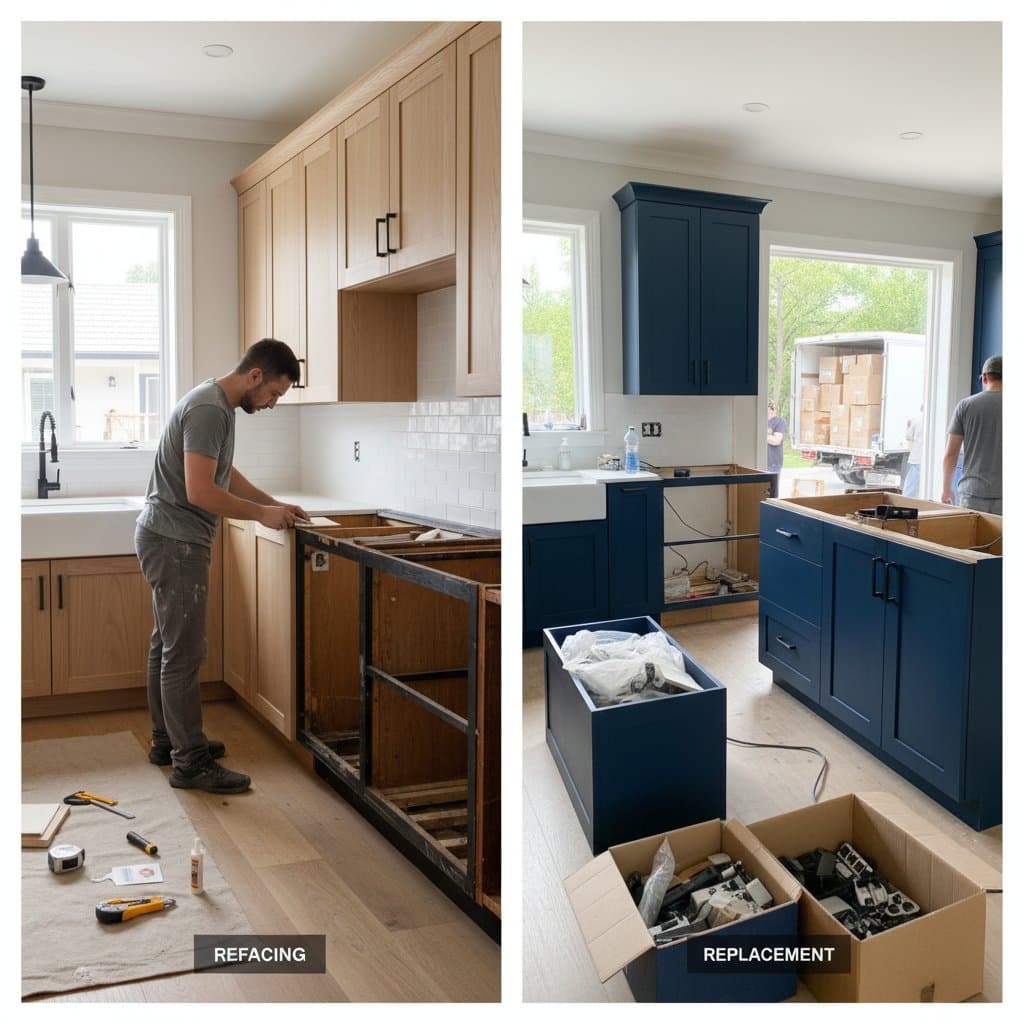
7. Weigh Refacing Against Full Replacement
Refacing generally equates to 40 to 60 percent of replacement expenses when configurations remain unchanged. Layout alterations, such as resizing units or rerouting utilities, shift advantages toward new installations. Obtain comprehensive bids for both approaches to facilitate direct comparisons. Modern stock cabinet systems may incur marginally higher upfront costs yet deliver superior organization and adaptability.
8. Consider Enduring Benefits
Optimal choices prioritize sustainability alongside immediate gains. Thoughtful refacing extends cabinet usability by 10 to 15 years through robust materials and precise installation. Routine care involves mild wiping and periodic hardware tightening. Executed effectively, this method yields a revitalized kitchen that rivals a full overhaul in freshness and efficiency.
Maximizing Your Kitchen's Potential
With refacing complete, experience the streamlined workflow and visual harmony. Success stems from deliberate planning that aligns form with function, ensuring lasting satisfaction and practical returns on investment.