
Quartz vs Porcelain Countertops: Insights into the 2025 Price Competition
Imagine embarking on a kitchen renovation project. You envision a countertop that enhances the space with elegance and functionality. Yet, the choice between quartz and porcelain surfaces introduces considerations of cost, performance, and long-term value.
Market analysis from recent home improvement studies indicates that countertops represent a significant expense in kitchen upgrades, often accounting for 10 to 15 percent of the total budget. The intensifying rivalry between quartz and porcelain manufacturers has sparked competitive pricing strategies. Homeowners now benefit from reduced costs without sacrificing quality.
This comparison explores key attributes of each material. Readers gain clarity on selecting the option that aligns with lifestyle needs and financial goals.
Understanding Material Composition and Appeal
Quartz countertops consist of engineered stone, blending approximately 90 percent natural quartz aggregates with resin binders. This composition yields a uniform appearance and robust performance. Porcelain slabs, derived from clay and minerals, undergo high-temperature firing to achieve density and refinement.
Both options appeal to modern design preferences. Quartz offers a wide array of colors and patterns mimicking natural stone. Porcelain provides large-format slabs that minimize seams, evoking the sophistication of high-end installations.
Homeowners appreciate the versatility of these materials. They suit various kitchen styles, from contemporary to traditional, while promising enhanced property value.
Durability Assessment: Strength and Resilience
Quartz surfaces rank high on the Mohs scale of hardness, typically at 7, which resists everyday scratches from knives or utensils. The non-porous nature prevents bacterial growth and eliminates the need for periodic sealing. Stains from spills like coffee or juice wipe away easily.
Porcelain achieves a hardness of 8 on the Mohs scale, surpassing quartz in resistance to abrasion. It excels in thermal stability, enduring direct contact with hot pots without damage. However, its thinner profile increases vulnerability to impact along edges.
Comparative Durability Factors
- Quartz demonstrates greater flexibility, reducing the risk of chipping during heavy use.
- Porcelain maintains color integrity under prolonged sunlight exposure, unlike some quartz varieties that may fade.
- Both withstand stains effectively, though porcelain shows superior performance against acidic substances like lemon juice.
Luis Ortega, a fabrication specialist at Stone Logic Interiors, notes, “Porcelain is incredibly tough against heat, but drop a heavy pan on the corner and you will see a chip. Quartz is more forgiving there.”
For households with active cooking routines or children, quartz provides reliable endurance. Porcelain suits precise, low-impact environments where aesthetic purity takes precedence.
Cost Analysis: Balancing Investment and Value
Average pricing for quartz countertops ranges from $50 to $120 per square foot installed, influenced by slab thickness and design complexity. Premium veined patterns command higher rates. Porcelain costs $40 to $100 per square foot, with advantages in larger slab availability that lowers seam-related expenses.
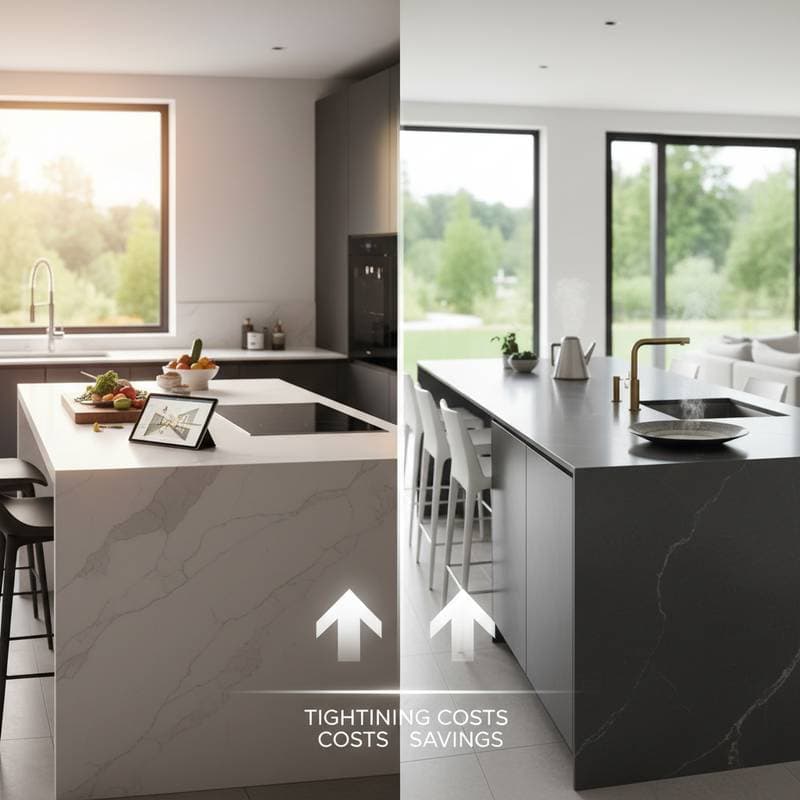
The 2025 market sees quartz prices stabilizing due to increased production efficiency. Porcelain benefits from innovative manufacturing, driving down material costs by up to 15 percent year-over-year. Total project expenses include fabrication, delivery, and edge treatments, which vary by region.
Long-term savings emerge from minimal maintenance. Neither material demands sealing, unlike natural stone alternatives, potentially saving $200 to $500 over a decade.
Installation Considerations: Process and Practicality
Quartz installation involves standard templating and cutting, accessible to most certified fabricators. Slabs measure about 2 centimeters thick, ensuring stability during handling. Seams blend with color-matched epoxy for a cohesive finish.
Porcelain requires specialized tools for precise cuts, as its density resists standard blades. Thinner slabs, often 1.2 centimeters, demand careful transport to avoid fractures. Skilled installers ensure level placement, critical for heat-resistant performance.
Maintenance Guidelines
- For quartz: Clean with a soft cloth and neutral soap; steer clear of abrasive cleaners to preserve the resin finish.
- For porcelain: Follow similar protocols, with added tolerance for steam cleaning in high-use areas.
Both surfaces resist UV degradation, supporting indoor and outdoor applications. Professional installation guarantees warranty coverage, typically spanning 10 to 25 years.
Aesthetic and Design Integration
Quartz replicates marble or granite veining with consistent patterns across slabs. This predictability aids in planning cohesive kitchen designs. Porcelain offers matte or polished finishes, including wood-like textures for unique visual interest.
Selection depends on desired ambiance. Quartz enhances warm-toned spaces with its subtle sheen. Porcelain delivers a minimalist, industrial vibe ideal for open-concept layouts.
Pairing with cabinetry and flooring amplifies impact. Samples viewed in natural light reveal true hues, preventing mismatched expectations.
Steps to Informed Decision-Making
Approach the selection process systematically to optimize outcomes.
- Obtain detailed quotes from multiple fabricators, specifying slab size, edge profiles, and sink cutouts.
- Inspect full slabs in showroom settings to evaluate pattern continuity and color accuracy.
- Assess lifestyle factors, such as cooking frequency and family dynamics, to prioritize durability traits.
- Calculate comprehensive costs, incorporating removal of old surfaces and complementary elements like backsplashes.
- Consult design professionals for integration advice, ensuring harmony with overall renovation vision.
Selecting the Right Countertop for Lasting Satisfaction
Quartz and porcelain each offer compelling advantages in the evolving countertop landscape. Quartz provides forgiving durability and broad accessibility. Porcelain impresses with thermal resilience and seamless elegance.
The 2025 price dynamics favor budget-conscious choices without compromise. Informed selection elevates kitchen functionality and aesthetic appeal. Homeowners achieve enduring value through materials that withstand daily demands while enhancing living spaces.