
2026 Outdoor Kitchen Remodel Costs and Layout Tips
Imagine stepping into your backyard on a warm evening. The scent of grilled vegetables mixes with fresh air while music plays softly. An outdoor kitchen turns this scene into reality by pairing outdoor living with full cooking capability. Whether the project involves a complete overhaul or targeted upgrades, clear cost awareness and layout choices produce a space that functions smoothly.
Factors That Shape Project Costs
Outdoor kitchen expenses depend on materials, overall size, chosen appliances, and the decision to hire professionals or complete portions independently. Define the primary use first. A full station with refrigeration, running water, and a pizza oven demands different resources than a compact grill station for occasional use.
Key cost drivers include the following items:
- Appliances and fixtures such as built-in grills, side burners, refrigerators, and sinks range from basic models to premium units. Stainless steel offers reliable durability and a clean appearance.
- Countertops made from granite, concrete, or porcelain slabs withstand outdoor exposure. Concrete can be tinted and finished to match surrounding design elements.
- Cabinetry constructed from powder-coated aluminum or marine-grade polymer resists moisture and requires minimal upkeep.
- Utility connections for gas, water, and electricity increase the total. Reusing existing lines during a remodel helps limit added expense.
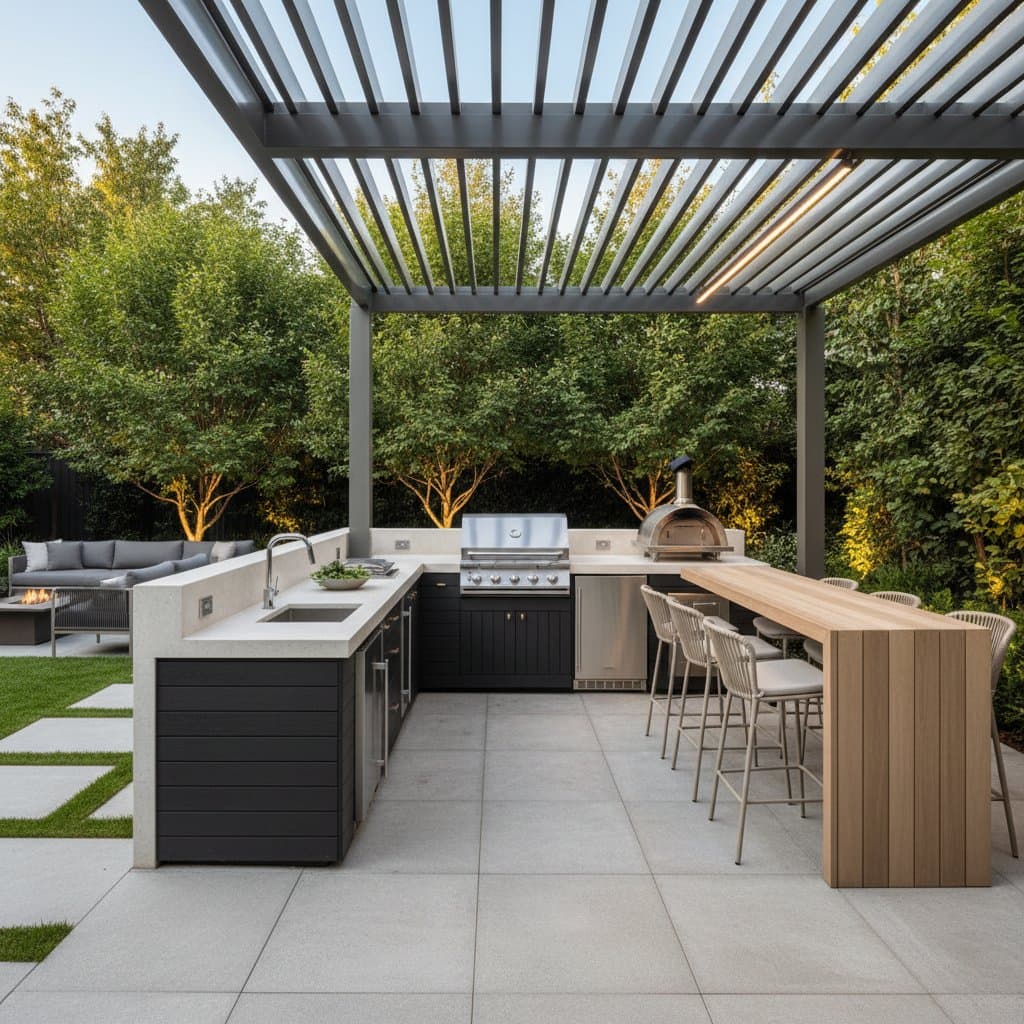
- Flooring and structural elements such as pavers, stone, or textured concrete form a stable surface. Adding a pergola or roof increases both comfort and overall investment.
A modest update may involve only surface replacements or appliance swaps. A full remodel that incorporates new utilities and structures requires greater resources. Early prioritization keeps the project aligned with available funds.
Layout Options That Support Daily Use
An effective outdoor kitchen matches the way cooking and entertaining actually occur. Arrange zones for preparation, cooking, plating, and serving so movement remains efficient. Maintain at least three feet of counter space between the grill and sink to allow safe passage.
Common configurations include these layouts:
- Straight-line designs suit narrow patios and function well when the outdoor kitchen extends an indoor cooking area.
- L-shaped arrangements supply extra workspace and create natural separation between cooking and preparation tasks.
- U-shaped plans accommodate multiple appliances plus storage and encourage conversation when a bar or seating area is added.
- Island layouts place the main cooking surface in the center so guests can gather around while food is prepared.
Select the shape that matches available space and the number of people who typically cook together.
Material Choices for Long-Term Performance
Outdoor kitchens face sun, rain, and temperature swings. Non-porous countertop surfaces such as granite or porcelain limit staining and color change. Stainless steel appliances and hardware resist corrosion. Brushed finishes on metal reduce visible fingerprints and glare.
Lighter surface colors reflect heat in uncovered locations. Covered areas allow darker tones or textured finishes that create a warmer atmosphere. Stone, brick, and composite cladding supply structural strength while adding visual interest.
Budget-Conscious Approaches That Preserve Quality
Reusing existing gas or water lines reduces both labor and material costs. Modular cabinet units deliver a built-in appearance at a lower price point than custom construction. Combining stone veneer with concrete counters achieves a premium look without matching the expense of solid slabs.
Lighting improves safety and ambiance. Solar fixtures illuminate paths and accent walls without requiring new electrical runs. String lights or recessed LEDs can highlight work areas when wired options are not feasible.
Ongoing Care and Future Adjustments
Regular maintenance preserves appearance and function. Clean stainless surfaces on a schedule, reseal stone or concrete surfaces annually, and protect appliances with covers during off-seasons. A modular layout permits later additions such as a smoker or beverage cooler as needs evolve.
Starting the Construction Process
List required features and establish a firm budget before contacting contractors. Prepare a simple sketch that shows appliance placement and traffic paths. Obtain multiple bids from specialists familiar with local codes. Thoughtful preparation yields an outdoor kitchen that remains comfortable and reliable for years.