2026 Mudroom Strategies: Layouts to Master Clutter
The latest Home Improvement Research Institute survey indicates that 42 percent of homeowners identify entryway organization as their primary storage issue. With custom cabinetry and built-in storage costs rising over 15 percent in most areas, the mudroom emerges as a key element in cost-effective renovations. This space now serves as a vital transition area that impacts home value, marketability, and everyday operations.
1. Pinpointing the Core Issue: Clutter and Its Financial Impact
Many homeowners overlook the economic burden of poor organization. Data from the National Association of Productivity and Organizing Professionals reveals that typical households lose approximately $2,800 each year on replacing misplaced items or purchasing extras. In the mudroom, shoes accumulate, coats spill over, and gear for seasons takes up limited room. Lacking a structured approach, even an aesthetically pleasing entry turns into a costly source of disorder.
Remodelers address this by designing areas that operate like efficient logistics centers. Each square foot must fulfill a specific role in managing movement, storage, and access.
2. The Professional Perspective
Experts in remodeling view the mudroom as a central utility and personal arrival point. Interior architect Lily Chen, AIA, from Formwise Design Group, states, “The mudroom establishes the rhythm of the home’s operations. When it underperforms, daily tension and time loss become evident.”
Contractors note growing interest in modular cabinetry and combined laundry setups. Michael Torres, a general contractor at Pacific Build Group with 18 years of experience, reports, “We have observed a 28 percent rise in demands for mudroom-laundry combinations. These integrated designs provide superior value per square foot, particularly in compact residences.”
This shift encourages homeowners to approach budgeting with greater precision, factoring in both build expenses and ongoing lifestyle demands.
3. Practical Layout Options
Effective mudroom designs adapt to the home’s layout, family dynamics, and routines. The following four strategies integrate utility, capacity, and affordability.
1. The Linear Control Station
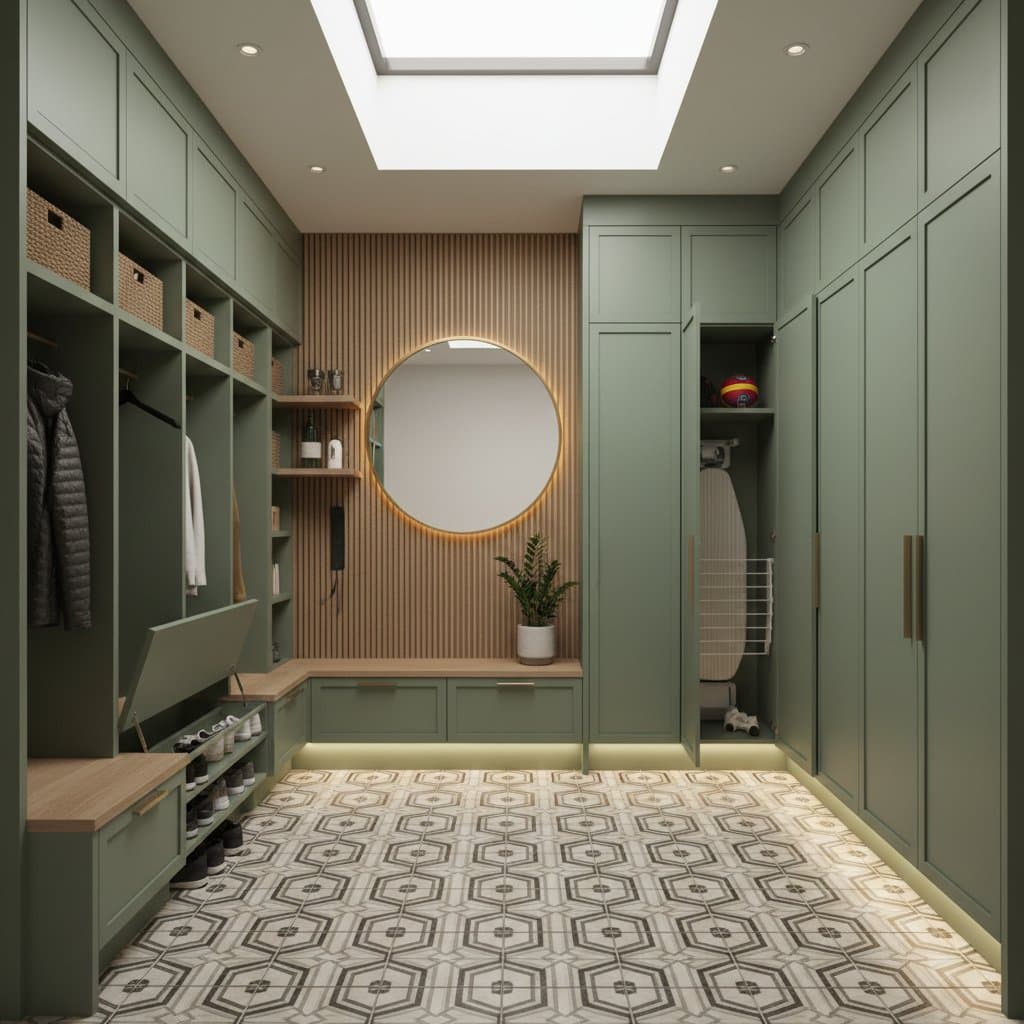
Suited to slender entryways, this design employs a single wall with cabinets reaching from floor to ceiling. Incorporate narrow lockers, upper cubbies, and a bench featuring under-storage drawers. Prefab options begin at $1,800, whereas bespoke versions surpass $5,000.
2. The Segmented Entry System
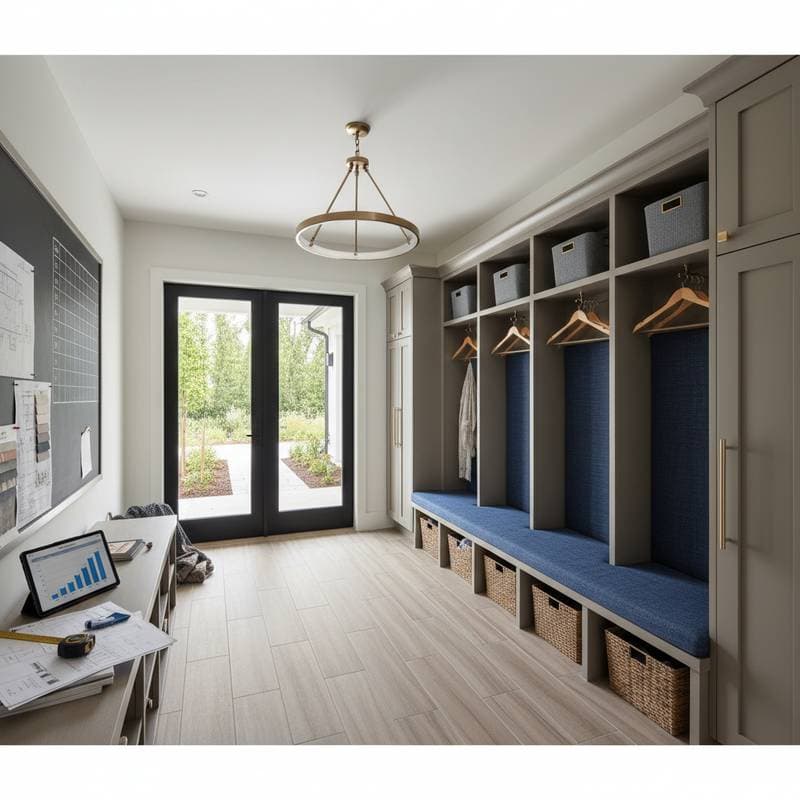
In properties with multiple access points like garages and back doors, divide storage into distinct zones to avoid bottlenecks. Dedicate each section to specific needs, such as hooks for outerwear or shelves for bags. Budget $3,500 to $7,000 for paired modular units with integrated features.
3. The Combined Laundry Center
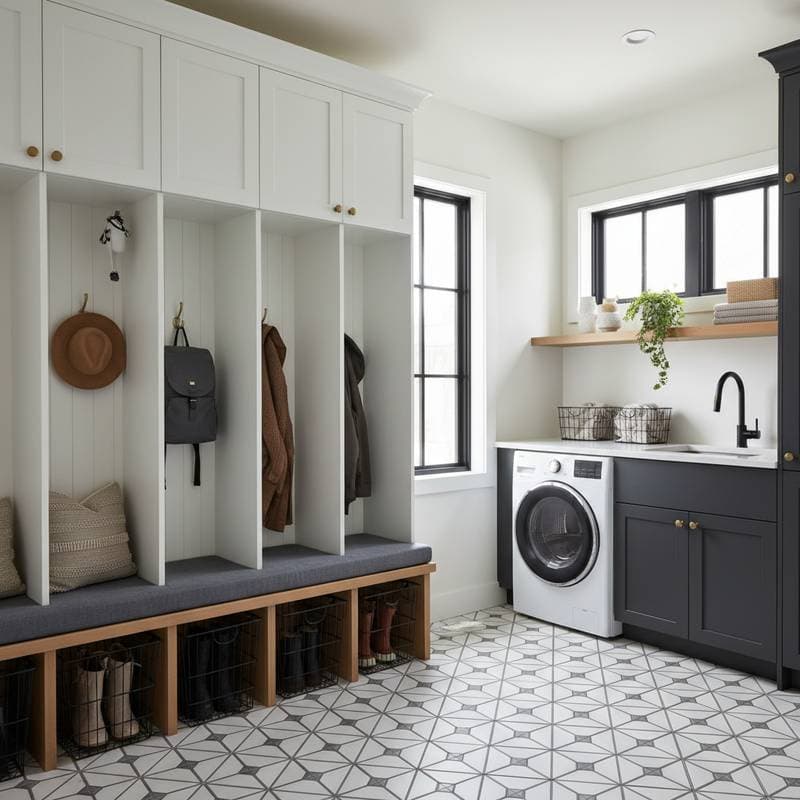
Merging laundry with mudroom elements minimizes plumbing and cabinet expenses. Add a counter for folding, a stacked washer-dryer unit, and enclosed spots for supplies. Total investment ranges from $6,000 to $12,000, influenced by material choices and infrastructure adjustments.
4. The Personalized Storage Array
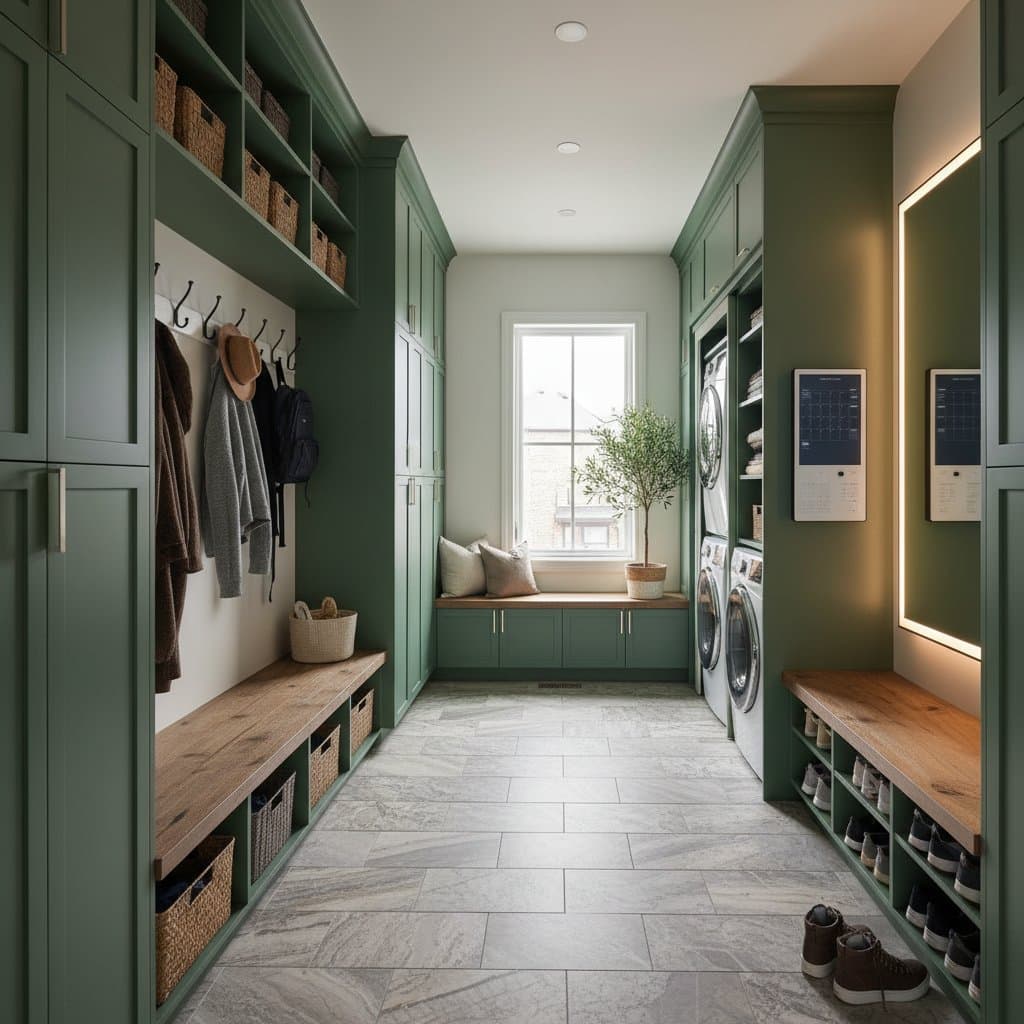
Optimal for bigger families, this setup allocates individual compartments with hooks, containers, and perches. Such personalization fosters responsibility and curbs routine disarray. Pricing spans $4,500 for adaptable assemblies to $10,000 for tailored woodworking.
4. Establishing a Cost Framework
Any renovation begins with a thorough expense outline. Remodeling Magazine’s regional figures show mudroom additions averaging $275 to $400 per square foot, not including premium surfaces. Updates within current spaces cost $3,000 for simple refreshes up to $15,000 for comprehensive overhauls.
Reserve 10 to 15 percent extra for unexpected outlays, such as wiring modifications or subfloor repairs. Project manager Lauren Vega of North Point Renovations notes, “Unanticipated expenses frequently emerge during wall openings or pipe diversions. Including buffer funds safeguards timelines and client satisfaction.”
5. Cost-Optimization Techniques
Value engineering reduces expenditures while preserving performance. Homeowners implement savings through targeted choices:
- Select resilient flooring like tile or vinyl to withstand dampness and debris, prioritizing longevity over luxury.
- Choose semi-custom cabinetry, where factory options replicate bespoke aesthetics at reduced rates.
- Install open shelving in high areas to lower fabrication needs without diminishing capacity.
- Position outlets thoughtfully near seating for charging devices or powering tools, preventing costly future alterations.
These methods enable expense management alongside a refined, effective environment.
6. Overseeing Project Schedules
Standard mudroom projects last three to six weeks, varying by scope. Setbacks commonly stem from supply delays or approvals. To stay on track, lock in designs prior to starting work and verify shipments in advance.
Expert supervision proves essential. Engage a certified contractor or coordinator to align subcontractors, verify regulations, and uphold deadlines. Regular updates, such as weekly reviews, identify problems early.
7. Selecting Qualified Experts
Project success hinges on assembling a capable group. Seek established design-build companies providing clear estimates and comprehensive agreements. Confirm credentials, coverage, and past work samples. Inquire about handling modifications and expense monitoring.
Interior designer Rachel Kim of HavenWorks Studio, with 12 years in layout expertise, recommends, “Clients deserve itemized estimates distinguishing labor, supplies, and planning charges. Clarity fosters confidence and eliminates budget shocks.”
Utilize resources like the National Association of the Remodeling Industry directory or local builder networks to identify vetted specialists.
Sustaining Long-Term Benefits
A thoughtfully designed mudroom yields tangible economic advantages. Properties featuring structured entries typically receive higher valuations and attract quicker buyers, per Redfin analyses. The area also curbs upkeep expenses by localizing grime and humidity, protecting other home surfaces.
Uphold this asset through routine tasks: conduct seasonal decluttering, apply protective sealants to floors, and examine hardware yearly. Modular elements allow adaptations as family requirements evolve, sidestepping complete redesigns.
Ultimately, the mudroom functions as a fiscal and functional cornerstone. Constructed with budgetary insight, specialist input, and pragmatic goals, it endures as a supportive feature for routine activities and asset appreciation.