Modular Cabinets Reduce Kitchen Remodel Costs
Rising cabinet expenses push many homeowners to reconsider their renovation plans. Cabinets represent 28 to 35 percent of total kitchen costs. This reality prompts a closer look at modular options versus custom builds.
Market data shows that modular systems deliver comparable style at lower prices. Homeowners gain predictable budgets and shorter project timelines. The following sections outline the key differences and practical steps for decision making.
Key Differences Between Modular and Custom Cabinets
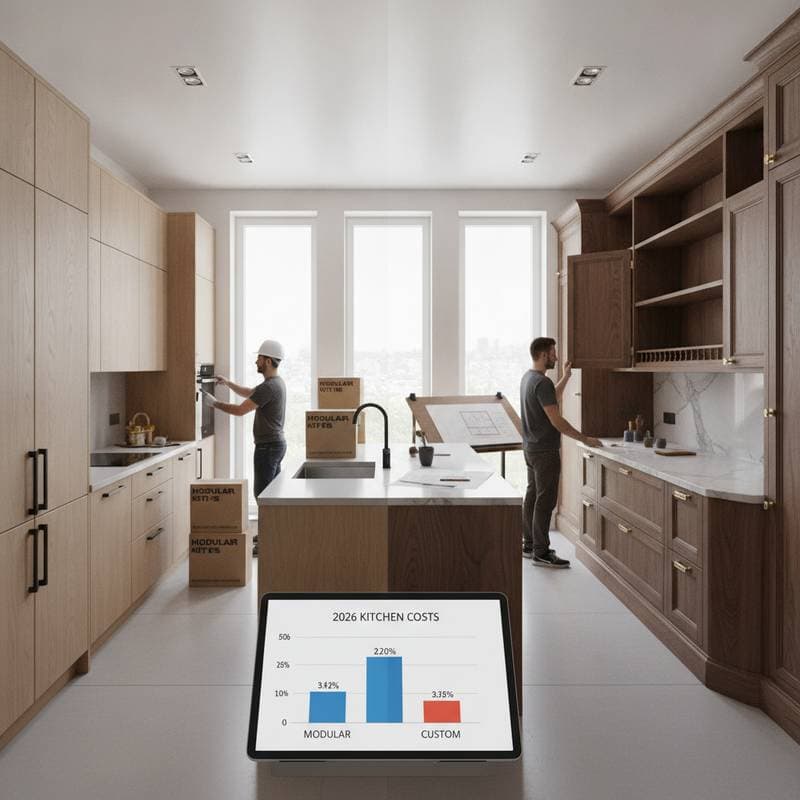
Modular cabinets arrive in standard sizes from the factory. They come preassembled or flat packed for rapid setup. Custom cabinets require on site construction to match exact room dimensions and unique details.
Martin Alvarez, a certified kitchen planner with thirty years of experience, notes that modular quality now rivals custom work in most cases. The choice often centers on personalization needs rather than durability alone. Custom work remains preferable for irregular layouts or specialized finishes.
Installed pricing illustrates the gap. Modular systems range from 120 to 250 dollars per linear foot. Custom cabinetry starts at 500 dollars per linear foot and can exceed 1,200 dollars with premium materials.
Real World Cost Examples
Basic modular installations for a small kitchen with laminate surfaces fall between 7,000 and 12,000 dollars. Mid range modular packages that include wood veneers and soft close hardware cost 13,000 to 18,000 dollars. Custom mid range projects typically run 20,000 to 35,000 dollars.
High end custom builds reach 40,000 dollars or more. Upgrading modular carcasses to plywood adds 15 to 25 percent to the base price yet keeps totals below equivalent custom work. Regional labor rates further influence final figures.
Installation Timelines and Labor Savings
Modular cabinets shorten installation by 30 to 50 percent. Factory finished parts mount directly after delivery. This reduction lowers hourly labor charges by several hundred dollars in most cases.
Custom projects require eight to twelve weeks from design approval to completion. Modular systems reach the same stage in two to three weeks once measurements are verified. Faster completion also reduces disruption to daily household routines.
Selecting Qualified Installers
Choose contractors certified by the National Association of the Remodeling Industry. Confirm that cabinet suppliers belong to the Kitchen Cabinet Manufacturers Association. During interviews ask about recent project volume, warranty terms, and written schedules.
Dana Rhee, a project coordinator, stresses direct communication between installer and supplier. This approach prevents measurement errors and schedule delays. For complex layouts consider adding a kitchen planner at 5 to 10 percent of the total budget.
Long Term Value and Maintenance
Kitchen upgrades recover 55 to 75 percent of costs at resale according to current market reports. Modular cabinets appeal to buyers who want updated function without luxury pricing. Custom cabinetry supports higher valuations in premium neighborhoods.
Modular parts allow individual replacement when damage occurs. Custom units often need full refinishing once wear appears. Homeowners planning to move within ten years typically achieve stronger returns with modular selections.
Protecting Your Cabinet Investment
Store all finish samples and warranty documents in a single file. Clean surfaces with nonabrasive products and inspect hardware once each year. Early replacement of worn hinges prevents larger structural issues.
Review supplier catalogs regularly for matching modular components. Maintain contact with custom builders for future refinishing needs. Consistent care extends service life and preserves resale value regardless of the system chosen.