Kitchen Walls Return: The Shift from Open Concepts
Data from leading design platforms indicates a significant increase in saved and pinned images of kitchens featuring defined walls, glass partitions, or enclosed configurations. The previously dominant open floor plan now transitions to more intimate and practical areas. Homeowners pursue superior sound management, privacy during cooking, and enhanced opportunities for material differentiation. This evolution does not dismiss openness entirely; rather, it reestablishes boundaries that streamline everyday routines.
As a designer and parent who enjoys cooking, I recognize this appeal. Family gatherings benefit from the ability to isolate the sounds of active cooking while maintaining a welcoming connection to the dining space. The examples below illustrate this equilibrium, demonstrating innovative and inviting reinterpretations of distinct kitchens.
1. Framed Clarity
In a renovated Brooklyn townhouse, designer Julia Harkins employed black steel-framed glass partitions to delineate the kitchen without fully isolating it. These panels extend from counter height to the ceiling, with narrow muntins that mirror the cadence of nearby windows. Materials consist of matte white oak cabinetry paired with honed Calacatta marble countertops.
The design approach assigns a unique character to the cooking area while permitting light to flow unimpeded. On a functional level, the partitions trap cooking odors and dampen ambient noise. The resulting visual effect delivers a sharp, architectural elegance that imparts loft-inspired refinement.
2. Warm Enclosure
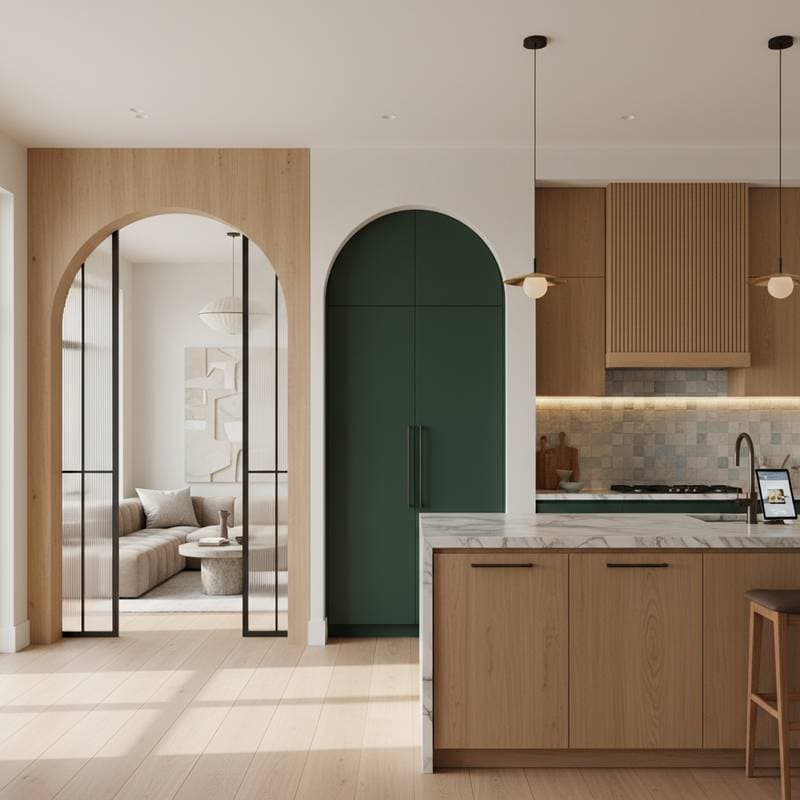
Mina & Co. Interiors transformed an open kitchen in a Seattle Craftsman home into a semi-enclosed sanctuary. A half wall crowned with fluted glass separates the cooking zone from the breakfast nook. Materials feature deep green cabinetry accented by aged brass hardware, fostering a sense of stability.
This strategy emphasizes comfort and visual serenity, forming a protective enclave for food preparation. It enhances practicality by concealing countertop disarray and permitting diffused daylight through the glass. The overall effect evokes the personal, multifaceted quality of vintage kitchens.
3. Hidden Harmony
Studio Kato Design integrated folding wooden panels in a minimalist Toronto condo to fully enclose the kitchen when desired. Materials combine pale ash veneer with embedded bronze pulls. In the closed position, the panels form a continuous wall surface.
The design intent centers on adaptability for social occasions. Practically, users conceal the kitchen post-meal to preserve tranquility in the living area. Visually, the setup appears streamlined and dynamic, converting a functional space into an artful expanse with minimal effort.
4. Textured Threshold
Arden Bloom Interiors crafted an arched plaster entryway in an Austin Mediterranean-style home, guiding access to a terracotta-tiled kitchen. Materials encompass hand-troweled lime plaster alongside glossy white Moroccan zellige tiles. This choice introduces substantial material texture and a transitional quality between spaces.
Functionally, the arch frames vistas while retaining moisture and heat within the cooking area. The sculptural and hospitable visual outcome channels the ambiance of a Mediterranean courtyard, enriching the home's character.
5. Soft Divide
Designer Leo Vasquez installed full-height linen drapery in a modern California bungalow to partition the kitchen from the living area. Recessed ceiling tracks enable the soft folds to move smoothly. Materials include bleached oak flooring complemented by brushed nickel fixtures.
The approach prioritizes versatility and tactile elements. Drapery retracts for communal events or closes for seclusion. This arrangement yields a peaceful, sensory visual layer that promotes subtle closeness.
6. Dual Identity
Haven Field Studio enveloped a kitchen in reclaimed barn boards within a larger dining expanse of a renovated Portland farmhouse. Materials comprise rough-sawn pine, leathered soapstone counters, and matte black fixtures. The method defines areas via textural opposition beyond mere walls.
Wood elements mitigate echoes and integrate storage solutions. The rustic yet polished visual presence endows the kitchen with distinct traits while preserving overall spatial unity.
7. Quiet Luxury
Ella Grant Interiors modernized a traditional enclosed kitchen in a New York apartment. Materials feature satin-finish walnut cabinetry and creamy limestone backsplash tiles. The strategy honors artisanal detail and minimizes sensory overload.
The layout provides ample storage and an intuitive cooking sequence. Visually, it conveys composure and opulence, establishing a sophisticated haven for routine activities.
8. Compact Genius
Atelier Rowan optimized a galley kitchen in a compact London flat through full enclosure, creating a gem-like enclosure. Materials involve glossy teal lacquer cabinets with polished brass accents. The design leverages the space's linear form for maximum efficiency.
Storage reaches ceiling height, and lighting supports precise tasks. The bold, vibrant visual result affirms that confined kitchens deliver both utility and delight.
Integrating Boundaries into Daily Home Life
The resurgence of kitchen walls extends beyond sentimentality. It mirrors contemporary preferences for divisions that foster concentration and ease. Such separations empower designers to innovate with materials, illumination, and sound dynamics in manners that open layouts constrain.
Elements like glass partitions, sculpted arches, or gliding panels enable residents to adjust their surroundings as needs evolve. For those who curate vintage cookware and dedicate time to baking, a delineated kitchen anchors the experience, transforming it into a focused creative domain rather than an exposed arena.