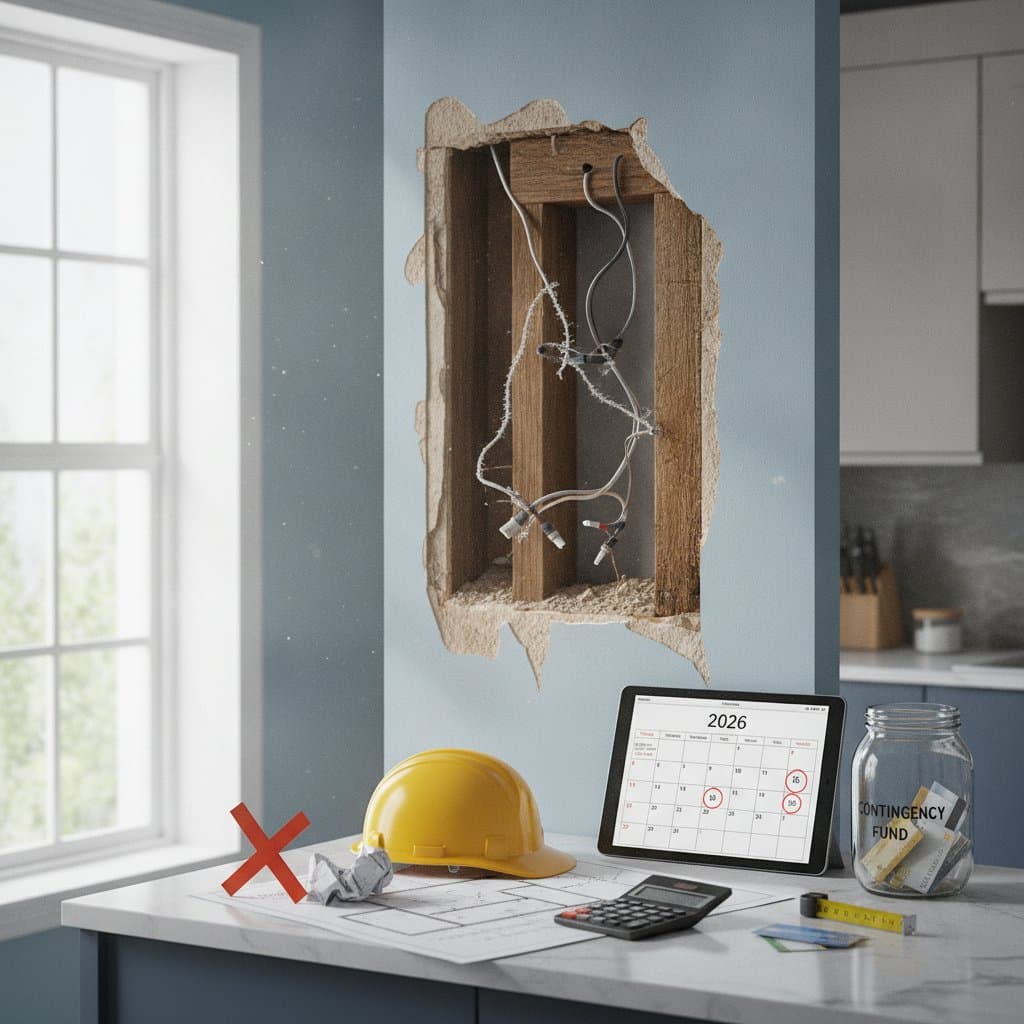
Avoid Hidden Remodel Costs That Disrupt 2026 Budgets
Recent data from design platforms indicates that nearly half of homeowners exceed their renovation budgets. Most overruns arise from expenses tied to structure, materials, or delays. Trends toward sustainable options, open spaces, and integrated technology increase project complexity and introduce new financial risks.
This guide identifies frequent sources of unexpected expenses. It also provides practical steps to maintain control whether the project involves a compact urban unit or a larger rural property.
Personal experience with gradual updates to a brick bungalow has shown how minor updates often expose wiring problems or insulation deficiencies. The sections below address common budget drains and outline methods to address them during planning.
Permit and Code Fees
Permit expenses accumulate faster than many anticipate. Electrical work, plumbing adjustments, and structural modifications typically require approvals. Omitting this step invites fines or interruptions once inspectors arrive.
Urban projects often face higher fees and longer review periods even for modest kitchen updates. Request a detailed permit list from the contractor during initial planning. Factor both fees and potential wait times into the overall schedule.
Proper documentation protects resale value. Buyers frequently ask for permit records on updated homes. Compliance also supports safer installations and improved airflow throughout the space.
Flooring Transitions
Floor installation encounters obstacles when subfloors prove uneven or room heights differ. Leveling compounds, additional underlayment, or custom thresholds become necessary to achieve a uniform surface.
Conduct a flooring assessment prior to ordering materials. This step reveals discrepancies in advance. Engineered oak and porcelain tile vary in thickness, so include transition strips in the material budget.
Level surfaces reduce trip risks and simplify routine cleaning. Continuous flooring lines also make rooms appear larger and convey a finished appearance.
Waste Removal and Cleanup
Debris disposal seldom appears in early estimates. Dumpster rentals, hauling charges, and final cleaning add several hundred dollars in most cases.
Include a dedicated cleanup item in every contractor bid. Some firms absorb the cost while others invoice separately. Reclaimed wood or concrete scraps may qualify for reuse programs that lower disposal fees.
An organized work area protects completed surfaces and maintains crew productivity. Clean rooms at project end allow finishes and textures to stand out clearly.
Unplanned Design Changes
Alterations made after work begins, such as new paint selections or tile layouts, generate additional orders and labor. These shifts produce waste and increase total charges.
Lock in all selections before demolition starts. Assemble a reference board with paint samples, tile fragments, and hardware pieces. Timeless choices like matte black fixtures and neutral wall tones limit the impulse for revisions.
Consistent decisions reduce miscommunication among trades. A unified palette improves visual continuity once the project concludes.
Design Consultation Fees
Professional design input prevents errors that exceed consultation costs. Allocate a fixed number of hours for reviews and adjustments from the outset.
Digital renderings and mood boards clarify intent before purchases occur. Designers identify layout conflicts and supply delays that homeowners commonly overlook.
Expert guidance refines scale, balance, and color relationships. Even compact areas gain a polished result under this direction.
Ongoing Care After Renovation
Successful projects continue to perform well long after completion. Maintain a checklist for filter replacements, grout maintenance, and system inspections. Retain contact details for each installer to simplify future service calls.
Protective measures such as furniture pads and regular vent cleaning extend the life of new surfaces. Consistent attention to seals and joints prevents premature deterioration.
Thorough preparation and clear contractor communication allow renovations to stay on schedule and within financial limits.