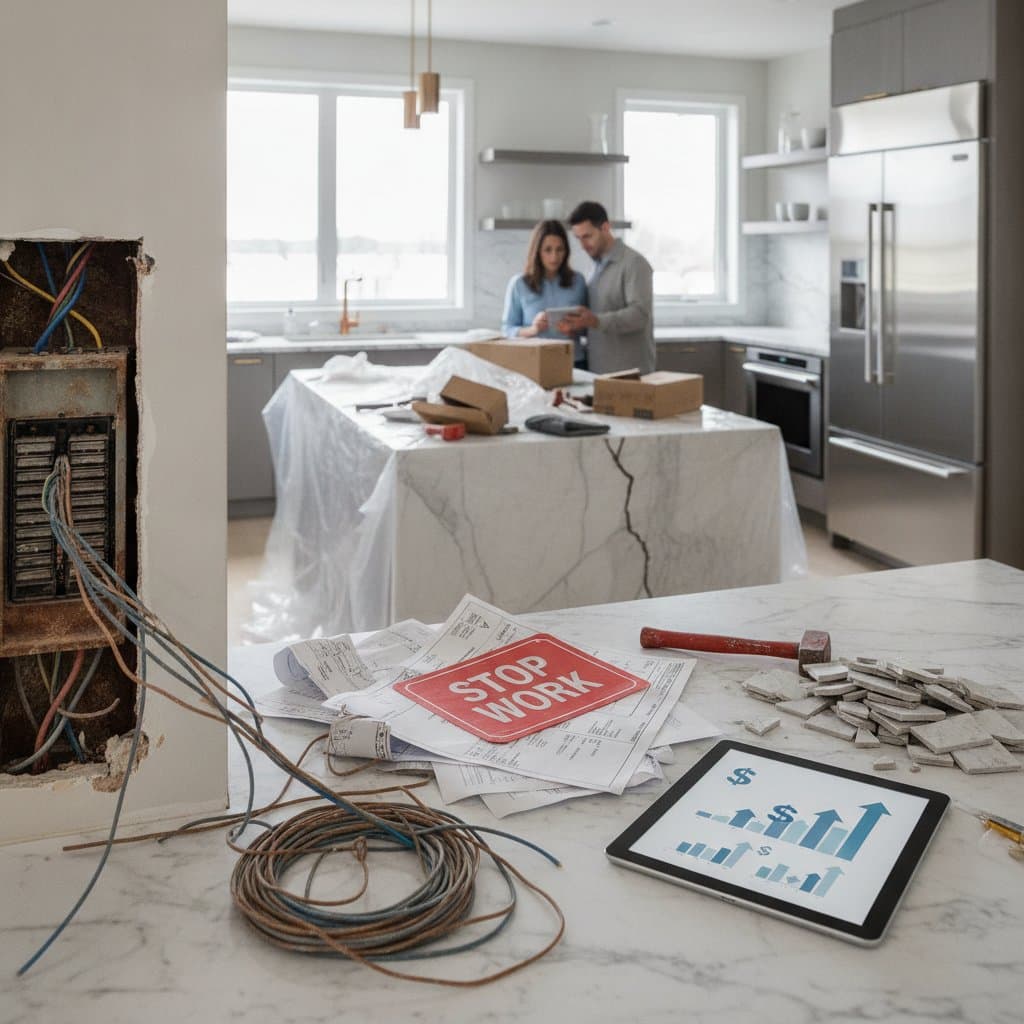


Hidden Kitchen Remodel Costs That Exceed Budgets
Most kitchen remodels exceed budgets due to hidden expenses like structural repairs, code upgrades, permits, and logistics. Unexpected costs from appliance installation to temporary living arrangements can add 15 to 25 percent. Planning contingencies, locking prices early, and clarifying professional fees help homeowners stay financially prepared.
Kitchen Remodel Hidden Costs That Catch Homeowners Off Guard
Only about one third of homeowners manage to keep their kitchen remodels within the original budget. The remaining majority experience cost overruns averaging 15 to 25 percent of their planned spending. These overruns rarely come from indulgent upgrades. They often result from hidden expenses, overlooked logistics, and underestimated professional fees.
1. The Cost of Unseen Structural Problems
Once walls or floors come down, reality often follows. Hidden water damage, outdated wiring, or structural framing issues can quickly inflate a budget. About 40 percent of kitchen remodels uncover at least one significant structural or systems issue once demolition begins.
Licensed contractor Maria Ortega of Ortega Construction Group said, "Even well maintained homes can hide plumbing corrosion or subfloor rot that only becomes visible during demolition. Clients should always hold back at least 15 percent of their budget for these surprises."
Actionable Tip: Always include a contingency line in your cost sheet. Allocate between 10 and 20 percent of your total budget for unforeseen issues. Treat this as a reserved fund, not as spending money.
2. Electrical and Plumbing Upgrades That Add Up
Older kitchens often fail to meet modern electrical or plumbing codes. Bringing these systems up to standard is rarely optional. Electricians may need to upgrade service panels or circuits to handle new appliances, while plumbers might replace undersized or aging supply lines.
Master electrician James Liu of BrightCore Electrical said, "Homeowners are often shocked to find that their electrical system cannot safely handle a double oven or an induction cooktop. The fix can easily run into thousands depending on access and load capacity."
Cost Range: Expect 1500 to 4000 dollars for electrical updates and 1000 to 3000 dollars for plumbing adjustments, depending on the age and layout of the home.
Budget Strategy: Request a pre renovation inspection from both trades before finalizing design plans. Their early input prevents mid project changes that strain both timeline and finances.
3. Permits, Inspections, and Compliance Fees
Permitting costs vary widely by region, but they are non negotiable for any remodel involving electrical, plumbing, or structural work. Many homeowners forget to include them in the initial estimate. Depending on local jurisdiction, permits for a full kitchen remodel can total anywhere from 500 to 2500 dollars.
Projects that skip permits often face resale penalties or insurance complications. Failing to document code compliance can reduce property value during appraisal.
Financial Tip: Ask your contractor to provide a complete permit estimate during the bidding phase. Confirm which permits are included in their fee and which require separate payment to the municipality.
4. Disposal, Delivery, and Storage Fees
Logistics costs rarely appear in glossy renovation budgets but can significantly affect the bottom line. Dumpster rentals, debris removal, and delivery charges for cabinets or stone slabs often add several hundred dollars. If your home lacks space to store materials safely, off site storage fees may also apply.
Project coordinator Ellen Marquez of ProManage Reno said, "Freight surcharges and storage fees can surprise homeowners who order materials far in advance. Always verify delivery schedules and holding fees, especially with custom cabinetry."
Budget Planning: Reserve at least 500 to 1000 dollars for disposal and logistics related costs. Ask suppliers if they offer consolidated delivery schedules to minimize separate trip fees.
5. Appliance Installation and Ventilation Adjustments
Installing appliances is rarely as straightforward as plugging them in. Built in ovens, cooktops, and range hoods often require additional framing, ductwork, or electrical wiring. Improper installation can void warranties or lead to expensive energy inefficiencies.
Professional appliance installation averages 200 to 500 dollars per unit, with kitchen ventilation modifications adding another 800 to 1500 dollars.
Cost Control: When comparing appliance packages, ask retailers for itemized quotes that include installation and venting costs. Discuss venting routes with your contractor early, especially if a range hood must vent through an exterior wall or roof.
6. The Domino Effect of Design Changes
Design revisions mid project can spiral costs faster than almost any other factor. Each change may trigger new material orders, labor adjustments, or timeline extensions. Even a minor shift in cabinet layout can require re cutting countertops or re routing plumbing.
Project manager Victor Hansen of Pacific BuildWorks said, "Clients often underestimate how one design tweak affects every trade. By the time design revisions are approved, you might be paying double labor for rework."
Budget Advice: Finalize every major design decision before demolition. Lock in specifications for cabinets, appliances, and finishes to minimize mid project delays. If changes are unavoidable, request written change orders that outline exact cost and timeline implications.
7. Finishing Touches and Minor Add ons
It is easy to focus on large costs like cabinets and countertops while missing the smaller but cumulative expenses. Under cabinet lighting, upgraded hardware, backsplash installation, and trim carpentry can together add thousands.
The average homeowner spends 12 to 18 percent more on finishing details than initially planned. These details often define the kitchen aesthetic but should be budgeted early.
Practical Step: Create a separate finish phase budget category. Include lighting fixtures, hardware, and decorative trim. Assign specific cost caps for each category to avoid impulse spending near project completion.
8. Temporary Living and Food Costs
When your kitchen is out of commission, daily life changes. Many homeowners underestimate the expense of eating out or setting up a temporary kitchenette. Even short remodels can stretch longer due to inspection delays or material shortages.
Families spend an average of 800 to 1200 dollars on food and temporary meal solutions during a kitchen remodel. Renting portable cooking equipment or small refrigerators adds to that total.
Budget Planning: Incorporate a living disruption fund into your financial plan. Prepare a temporary cooking area in advance with a microwave, hot plate, and small sink if possible. This reduces both stress and spending during construction.
9. Unexpected Material Price Fluctuations
Market volatility affects material costs, especially for lumber, steel, and imported tile. Contractors often quote based on current pricing, but by the time materials are ordered, prices can shift. Even modest increases across several materials can push a project over budget.
Supply chain consultant Daniel Ross of BuildMetrics said, "We see material prices fluctuate seasonally and regionally. Homeowners who lock in prices early or select locally stocked materials experience fewer financial shocks."
Cost Strategy: Confirm material pricing terms with your supplier. Request a written quote with a validity period. If possible, purchase and store non perishable materials before demolition begins to lock in costs.
10. Professional Fees Beyond Construction
Designers, engineers, and project managers often charge separate fees not included in contractor estimates. These professionals bring expertise that protects against costly errors, but their involvement must be factored into overall spending.
Interior designer Lara Chen of Structure Studio explained, "A kitchen remodel without a professional design plan often leads to inefficient layouts or code violations. Professional design fees typically pay for themselves through fewer change orders and better space usage."
Budget Breakdown: Expect design services to range from 5 to 10 percent of total project cost. Engineering assessments for load bearing walls can add 500 to 2000 dollars depending on complexity.
Protecting Your Renovation Investment
Budget overruns often trace back to underestimating soft costs, logistical expenses, and code compliance. Homeowners who plan for these from the start protect both their finances and project timelines. Before hiring a contractor, request detailed line item estimates that include contingency, permit, and logistics costs. Review all bids for clarity on what is included and what requires separate payment.
For long term protection, document every change order, inspection, and payment schedule. This creates a transparent record useful for both resale and warranty claims. Once the renovation is complete, schedule annual maintenance inspections to prevent future issues with plumbing, ventilation, and cabinetry alignment.
A kitchen remodel can be financially rewarding when managed with realistic expectations. By confronting hidden costs early, homeowners not only avoid budget stress but also achieve a renovation that truly pencils out.