
2025 Kitchen Remodel: Hidden Costs Exposed
The latest Home Improvement Market Outlook from the National Kitchen and Bath Association indicates that 42 percent of homeowners exceed their initial budgets during kitchen remodels, with average overruns of 18 percent. Labor shortages and material price fluctuations drive these hidden expenses. Homeowners must recognize that a kitchen remodel seldom matches the first estimate.
Kitchen renovations offer strong returns, recouping 50 to 75 percent of costs upon resale. Success requires proactive financial oversight, clear contractor communication, and insight into potential cost traps. This approach ensures a controlled project that delivers both aesthetics and fiscal responsibility.
1. Identifying Where Budgets Break
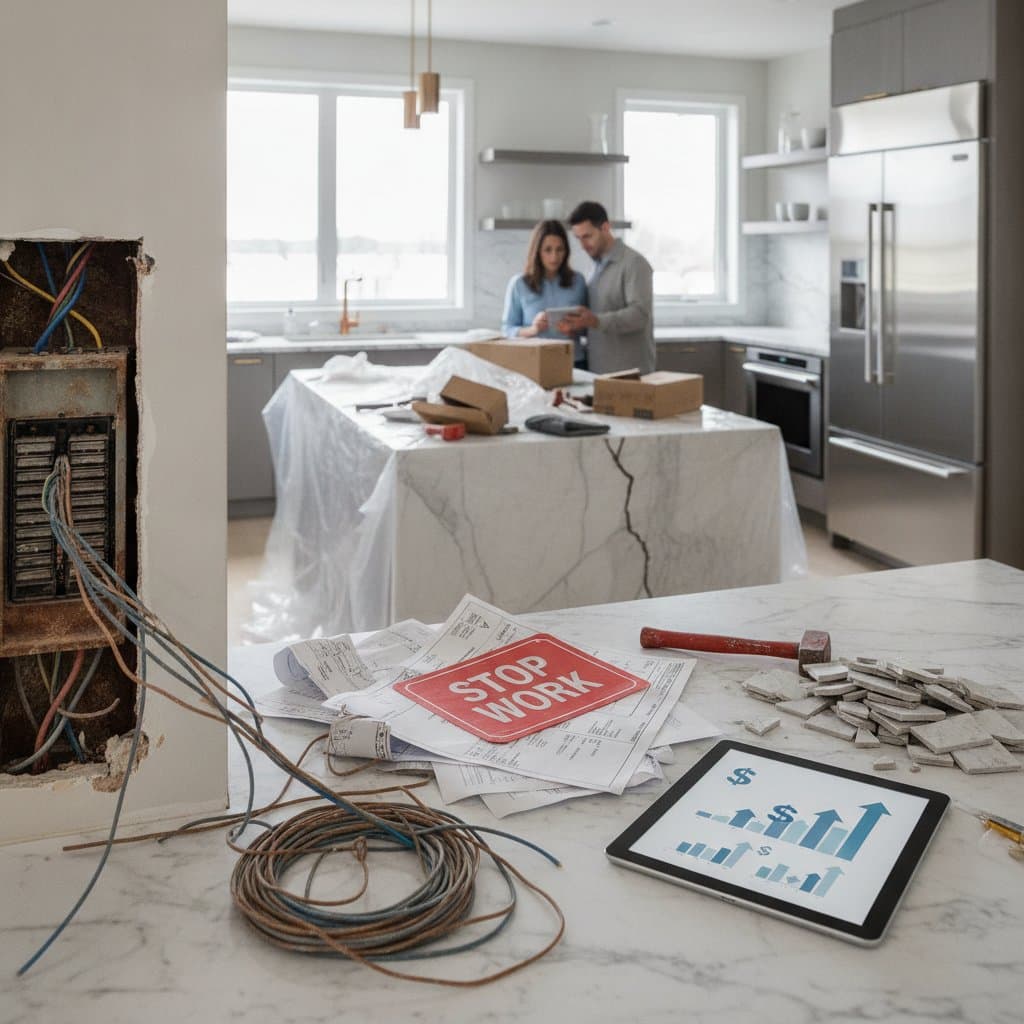
Projects start with promising plans, but demolition often reveals issues. Structural problems, outdated systems, and delays push expenses higher. The HomeAdvisor Cost Trends Survey reveals that 30 percent of kitchen remodels encounter unexpected repairs in electrical, plumbing, or structural elements.
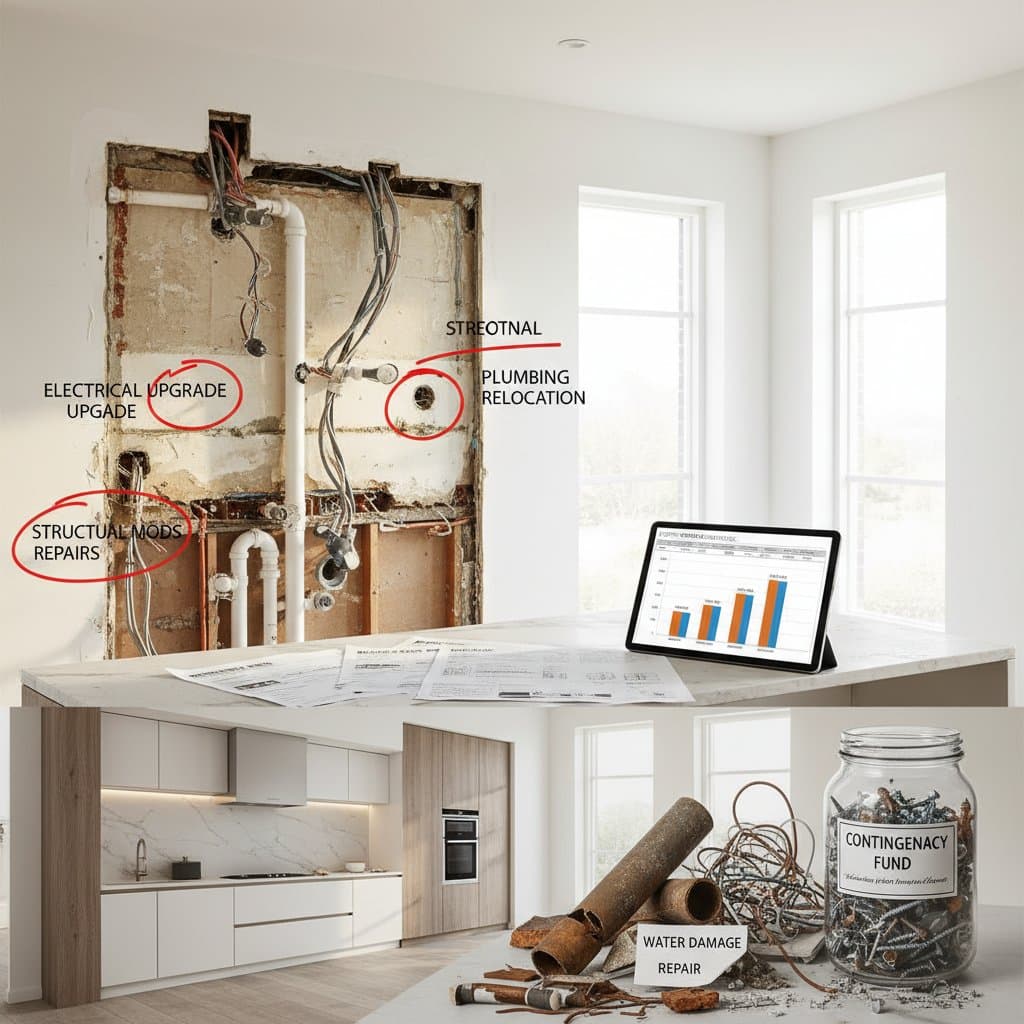
Common surprise expenses include:
- Electrical upgrades: Older setups lack capacity for modern appliances. Rewiring costs range from 1,200 to 3,000 dollars.
- Plumbing corrections: Concealed leaks or obsolete pipes add 800 to 2,500 dollars.
- Subfloor and wall repairs: Damage from water or rot increases expenses by 1,000 to 4,000 dollars.
- Permitting and inspections: Fees and re-inspections total 500 to 1,500 dollars, varying by location.
Licensed contractor Erin Patel, owner of BuildRight Renovations, states that homeowners underestimate concealed costs. Once walls open, safety codes and structural needs override design preferences. Patel, with 15 years in residential remodels, advises a 10 percent contingency for every project.
2. The Professional Context: Why Hidden Costs Proliferate
Hidden costs arise from broader industry pressures beyond homeowner control. Skilled labor scarcity drives up rates, and supply chain issues inflate material prices. The Remodeling Cost Index by BuildFax notes a 6 percent rise in kitchen materials, led by cabinetry and hardware.
Permitting complexities add further challenges. Local codes evolve, demanding extra paperwork or drawings. Expansions or changes may require energy efficiency or ventilation upgrades.
Architect Daniel Ruiz, AIA, principal at Ruiz Design Group, explains that cities update codes regularly. A basic electrical permit might now include energy verification. Early input from a design expert clarifies requirements before work starts.
3. Step-by-Step: How to Protect Your Budget from Hidden Costs
Effective planning shields against common pitfalls. These steps foster financial discipline throughout the process.
Step 1: Conduct a Pre-Construction Audit
Engage a general contractor or inspector to assess electrical, plumbing, and structural systems before design approval. This audit costs 300 to 700 dollars yet prevents larger outlays. It uncovers issues that could emerge during construction.
Step 2: Build a Realistic Contingency Fund
Allocate 15 to 20 percent of the budget for unforeseen needs. The Remodeling Finance Institute reports that under-10 percent reserves double the risk of overruns. View this fund as essential protection.
Step 3: Require Detailed Bids and Transparent Scopes
Obtain itemized proposals from three licensed contractors, detailing materials, labor, and allowances. Steer clear of vague fixture budgets, as they expand easily. A 3,000-dollar cabinet allowance can reach 5,000 dollars with custom additions.
Step 4: Include Change Order Protocols in the Contract
Document all plan modifications with cost estimates and approvals. This maintains accountability. Project manager Laura Kim, CPA and construction finance consultant, notes that change orders erode control. A sink shift might trigger plumbing and cabinet revisions; record all details.
Step 5: Monitor Spending Weekly
Insist on weekly expense reports from the contractor. Real-time tracking avoids final shocks. The Home Renovation Financial Council finds that weekly reviews help 40 percent of homeowners stay within 5 percent of budgets.
4. Cost Considerations: Understanding the True Price Structure
Mid-range remodels with semi-custom cabinets and new appliances run 45,000 to 65,000 dollars in urban areas. High-end versions surpass 90,000 dollars. These estimates often omit mid-project additions.
Hidden or underestimated costs often include:
- Appliance delivery and installation: 500 to 1,000 dollars.
- Lighting rewiring for LED conversions: 600 to 1,800 dollars.
- HVAC adjustments for new venting: 400 to 1,200 dollars.
- Debris removal and waste fees: 300 to 800 dollars.
- Temporary kitchen setup or dining costs: 400 to 1,000 dollars, based on duration.
Choices in materials influence stability. Natural stone countertops fluctuate per square foot due to sourcing and processing. Engineered quartz provides consistent pricing, though delays persist. Luxury vinyl plank flooring, at 4 to 7 dollars per square foot installed, offers reliability over hardwood.
5. Value Engineering Without Sacrificing Quality
Value engineering trims expenses while preserving function and style. It involves teamwork among designers, contractors, and owners to select efficient alternatives.
Strategies for practical value engineering include:
- Cabinetry: Pair custom uppers with stock lowers to cut fabrication by 25 percent.
- Countertops: Incorporate quartz remnants or recycled options for islands.
- Flooring: Use resilient materials in less-used areas, saving premium surfaces for high-visibility spots.
- Lighting: Blend recessed LEDs with pendants for effective, affordable layers.
Designer Carla Nguyen, NKBA-certified kitchen specialist, observes that top remodels blend vision with realism. A structured value engineering stage saves 10 to 15 percent without noticeable loss. She suggests requesting two material options per purchase.
6. Professional Resources That Protect Your Investment
Early involvement of experts averts expensive fixes. Each specialist contributes to budget vigilance when chosen wisely.
Key professionals include:
- General Contractor: Manages construction, trades, and finances. Confirm licensing, insurance, and references.
- Certified Kitchen Designer (CKD): Aligns layouts with ergonomics and codes.
- Construction Accountant or Project Finance Consultant: Monitors costs and projections.
- Home Inspector: Ensures quality at project end before payments.
During interviews, seek project examples, insurance proof, and overrun strategies. Favor contractors offering digital budget access for transparency.
7. Managing Timeline Delays and Their Financial Ripple Effect
Delays impose indirect costs like extended temporary setups. Each week adds hundreds in extras. Plan a two-week schedule buffer.
The Building Products Index highlights variable lead times for cabinets and tiles. Order essentials pre-demolition to steady timelines.
Project scheduler Ethan Morales, PMP, senior project manager at UrbanCraft Renovations, advises front-loading orders to cut costs and tension. Idle days raise labor waste and storage needs. He favors payments linked to milestones over dates.
8. Regional Market Differences to Watch
Labor and permits differ by area. High-demand cities command 20 to 30 percent higher electrician rates than rural zones. Transport affects cabinet and stone prices.
Gather local data from contractors or association guides. Multiple bids provide market insight.
9. Insurance, Warranties, and Post-Completion Costs
Post-remodel expenses emerge without forethought. Enhanced appliances raise premiums; new wiring demands policy updates. Warranties for appliances or cabinets add 400 to 1,000 dollars.
Budget for upkeep like countertop sealing or hood cleaning. Monitoring these sustains the project's value.
Securing Long-Term Returns
A well-managed kitchen remodel enhances daily life and property worth. By anticipating hidden costs and enforcing disciplined practices, homeowners achieve stunning results within financial bounds. This preparation turns potential pitfalls into controlled successes.