The Hidden Costs Wrecking Your Remodel Budget
Walk into any home improvement project and you hear the same story. The design looks great. The contractor seems confident. The numbers on paper appear manageable. Yet halfway through, the costs start creeping upward. What began as a confident remodel suddenly turns into a budget headache.
Hidden costs are not rare surprises. They are predictable results of overlooked details, outdated assumptions, and wishful thinking. After decades working with homeowners, the same missteps repeat across projects of every scale. These pitfalls can be avoided.
The following guidelines outline where remodel budgets commonly break down and how to prevent those losses before they occur.
Demolition and Disposal
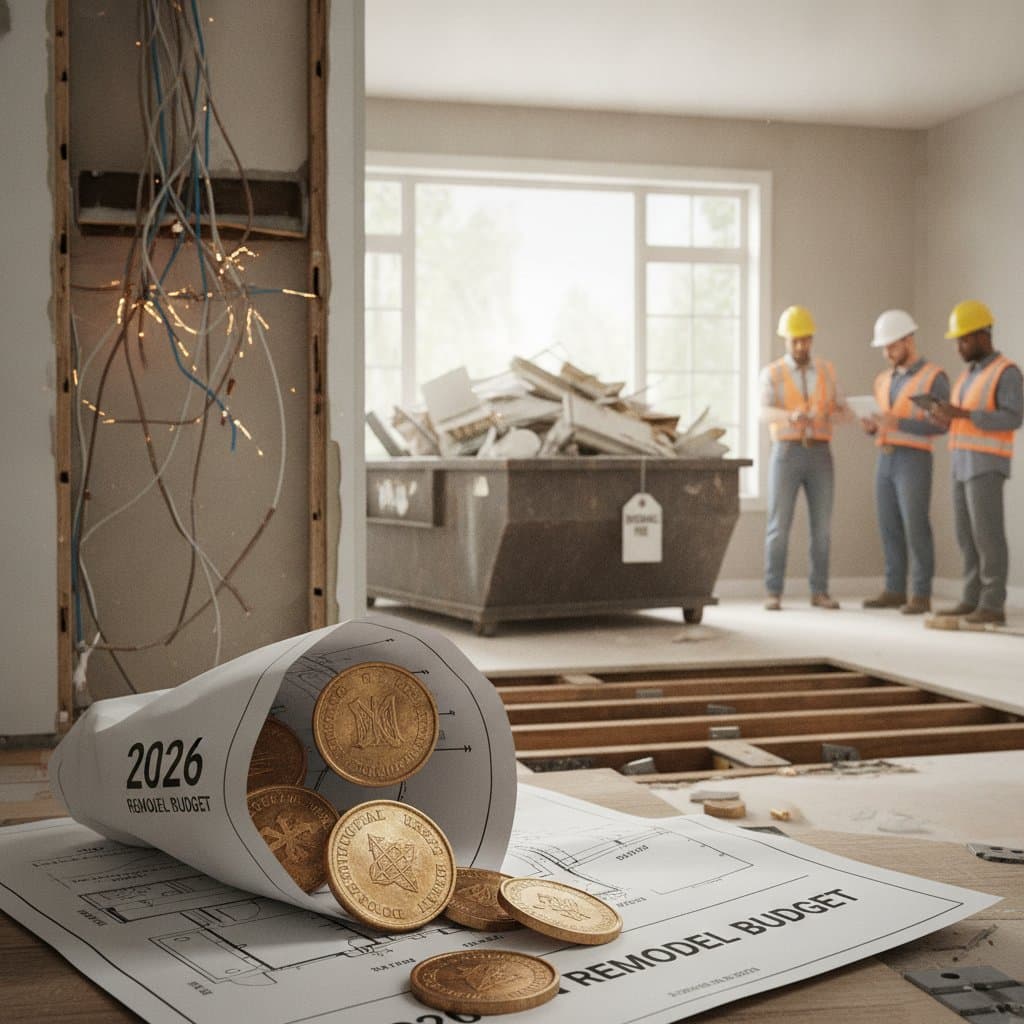
Many budgets ignore the hidden expense of taking things apart safely and legally. Removing an old bathroom may reveal layers of tile, multiple subfloors, or asbestos-backed vinyl. Disposal fees alone can reach hundreds of dollars. You still need to prep the area for new construction.
Request a detailed demolition line item from your contractor. Confirm that it includes disposal fees, hazardous material testing, and site protection. In older homes, test for lead paint and asbestos before demolition. Budget for protective sheeting, filtered ventilation, and haul-away charges per cubic yard of debris.
Proper planning prevents surprise charges and keeps your project compliant with safety regulations.
Code Upgrades
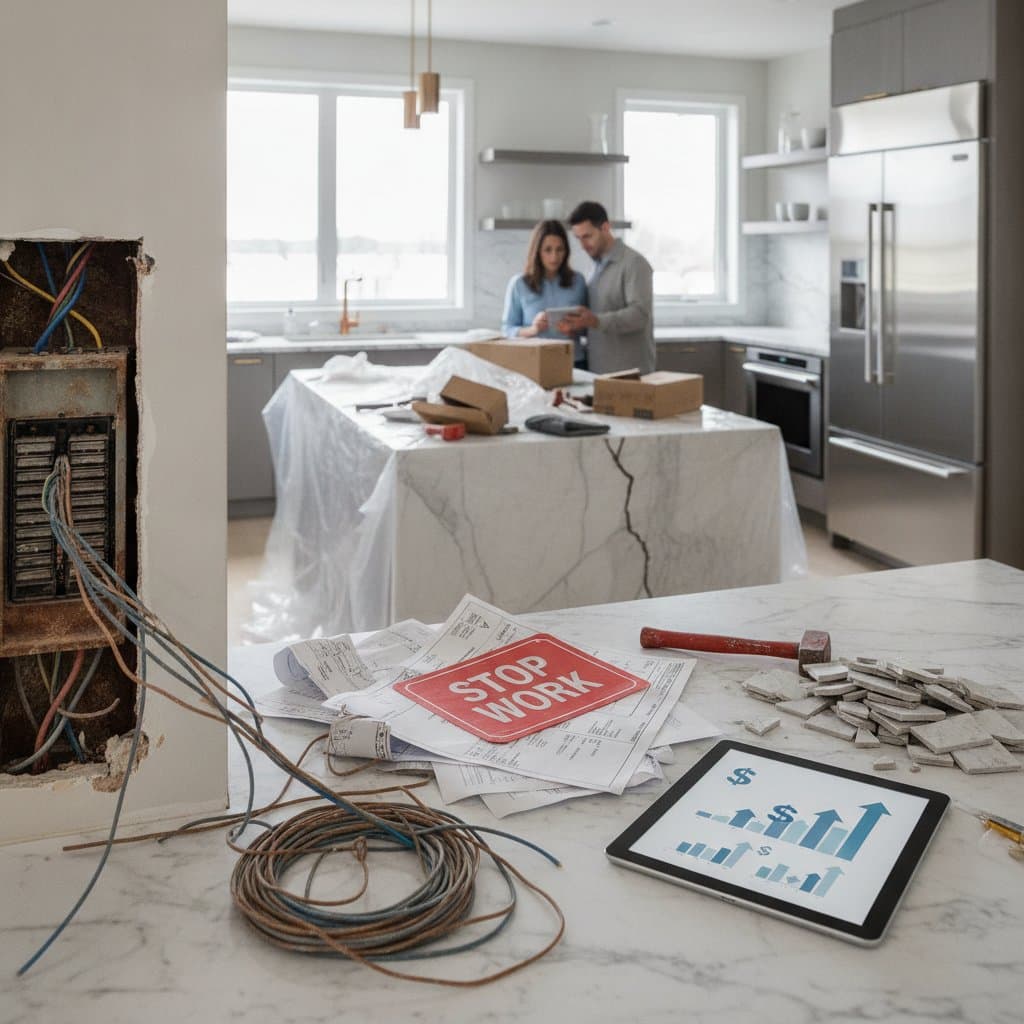
When you remodel, old systems often must be brought up to current building codes. Homeowners rarely budget for this step. A homeowner upgrades a kitchen without realizing the electrical panel must support new circuits for appliances. The inspector flags it, and the upgrade doubles the electrical cost.
Ask your contractor to identify all code-related updates before the permit application. Budget for new outlets, GFCI protection, smoke detectors, and ventilation requirements. Panels under one hundred amps often need replacement. Ensure bathroom exhaust fans vent outdoors, not into attics. Confirm stair railings meet current height and spacing rules.
Addressing compliance early prevents failed inspections and preserves your schedule.
Living Disruptions
Many owners underestimate the real cost of living through construction. Temporary housing, storage units, and eating out add up quickly. During a full kitchen renovation, one family planned to cook on a hot plate. After two weeks, they moved into a rental. That unplanned expense consumed their contingency fund.
Evaluate how long each phase will affect daily living. Plan alternative spaces for cooking, bathing, and sleeping before work starts. For projects lasting more than six weeks, include temporary kitchen setups or short-term rentals in your budget. Factor in cleaning services to manage dust migration.
Anticipating lifestyle costs protects both your comfort and your financial plan.
Maintenance and Final Detailing
The last phase of a remodel often gets rushed, leaving gaps in finishing, touch-up painting, or cleaning. Correcting those later costs more. A homeowner declined professional cleaning after construction, thinking they would handle it themselves. They later paid extra for refinishing scratched floors caused by leftover grit.
Include a line item for final detailing and professional cleaning. Schedule a walkthrough with your contractor to identify touch-ups before final payment.
Planning for the Unexpected
Every remodel involves surprises, but not every surprise must wreck your finances. Treat the budget as a living document, not a fixed list of numbers. Ask direct questions early. Require written detail in every line item. Keep a contingency fund for the unknowns that inevitably appear.