
Hidden Costs Breaking 2026 Kitchen Remodel Budgets
According to recent industry data, 42 percent of homeowners exceed their planned kitchen renovation budgets. The largest overruns stem from unanticipated structural repairs, material price fluctuations, and design changes after a project begins. Even modest kitchen remodels average 18 percent higher than initial estimates. These patterns confirm that hidden costs represent the primary threat to financial control during kitchen renovations.
Kitchen remodels deliver strong returns on residential property investments. Yet accurate forecasting remains difficult. The gap between expectations and final costs often arises from unseen conditions, incomplete project scoping, and shifting market prices. This guide identifies the expenses most likely to affect 2026 budgets and presents practical methods to forecast and control them.
Why Hidden Costs Escalate
Hidden costs typically arise from outdated infrastructure combined with market volatility. Older homes frequently contain plumbing and electrical systems that fail current safety codes. Once demolition begins, full replacement becomes necessary rather than simple repairs. Compliance expenses, including permits and inspections, can add several thousand dollars.
Material prices for cabinet hardware, lumber, and electrical components shift with regional supply conditions. A delay of two months can alter pricing by 10 percent. Professional remodelers address these risks through detailed pre-construction assessments and clear change-order procedures. Homeowners who skip inspections or accept incomplete proposals often face repeated cost increases once work starts.
Where Hidden Expenses Typically Emerge
Hidden costs generally appear in five main categories. Recognizing each category allows homeowners to build realistic projections.
Structural and Mechanical Upgrades
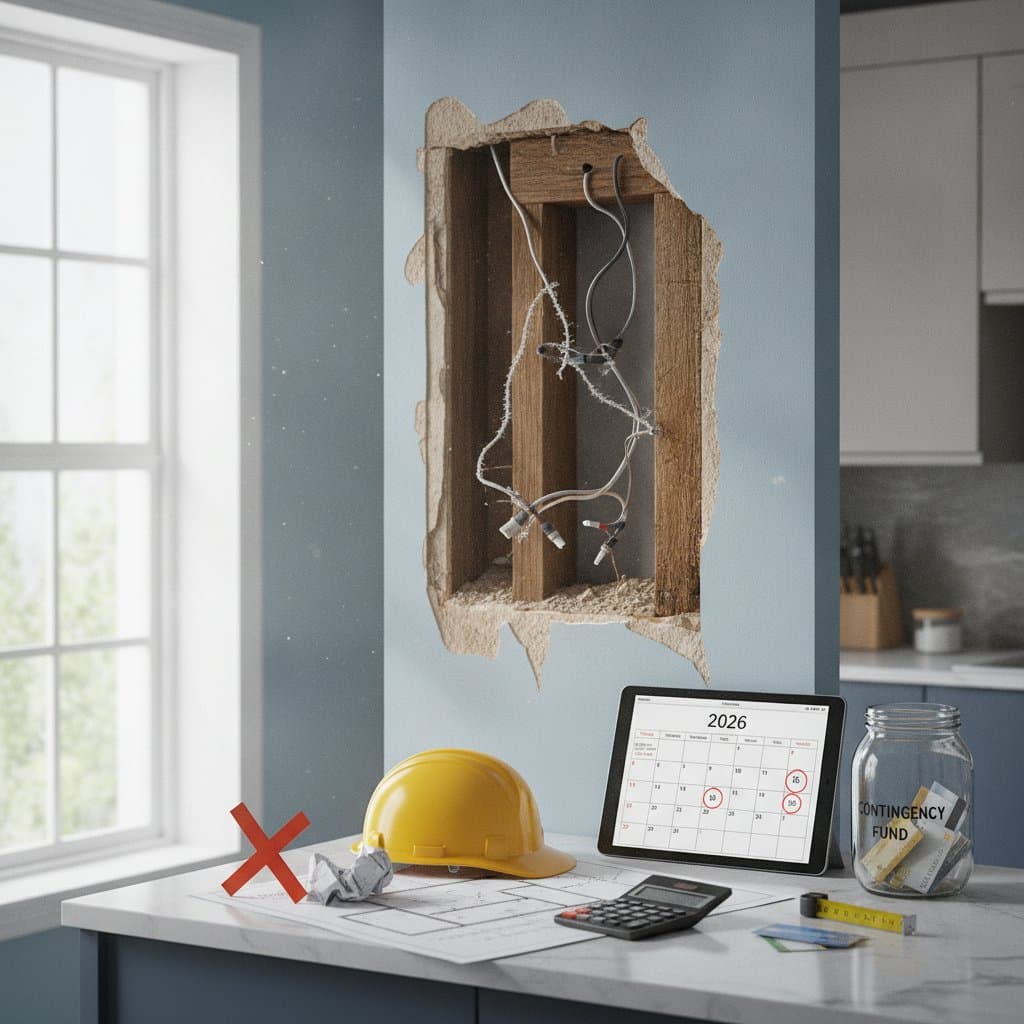
Rotten subfloors, termite damage, and outdated framing commonly appear during demolition. Rebuilding these elements ranges from 2000 to 8000 dollars depending on kitchen size. Electrical rewiring adds 3000 to 6000 dollars, while full panel upgrades reach 2500 dollars.
Plumbing and Ventilation
Galvanized pipes or inadequate venting often require complete replacement. Kitchen plumbing work averages 4000 to 9000 dollars. New ducting or range hood venting adds 1200 to 2800 dollars.
Permit and Inspection Fees
Permit costs range from 500 dollars in smaller communities to 3000 dollars in urban areas. These fees apply to structural, electrical, and plumbing work. Budgeting for them prevents delays and potential penalties.
Design Revisions After Construction Begins
Changes made after work starts disrupt the project sequence. Swapping materials or altering layouts triggers reordering fees, labor downtime, and material waste. Each change order raises total costs by an average of 8 percent.
Waste Disposal and Site Protection
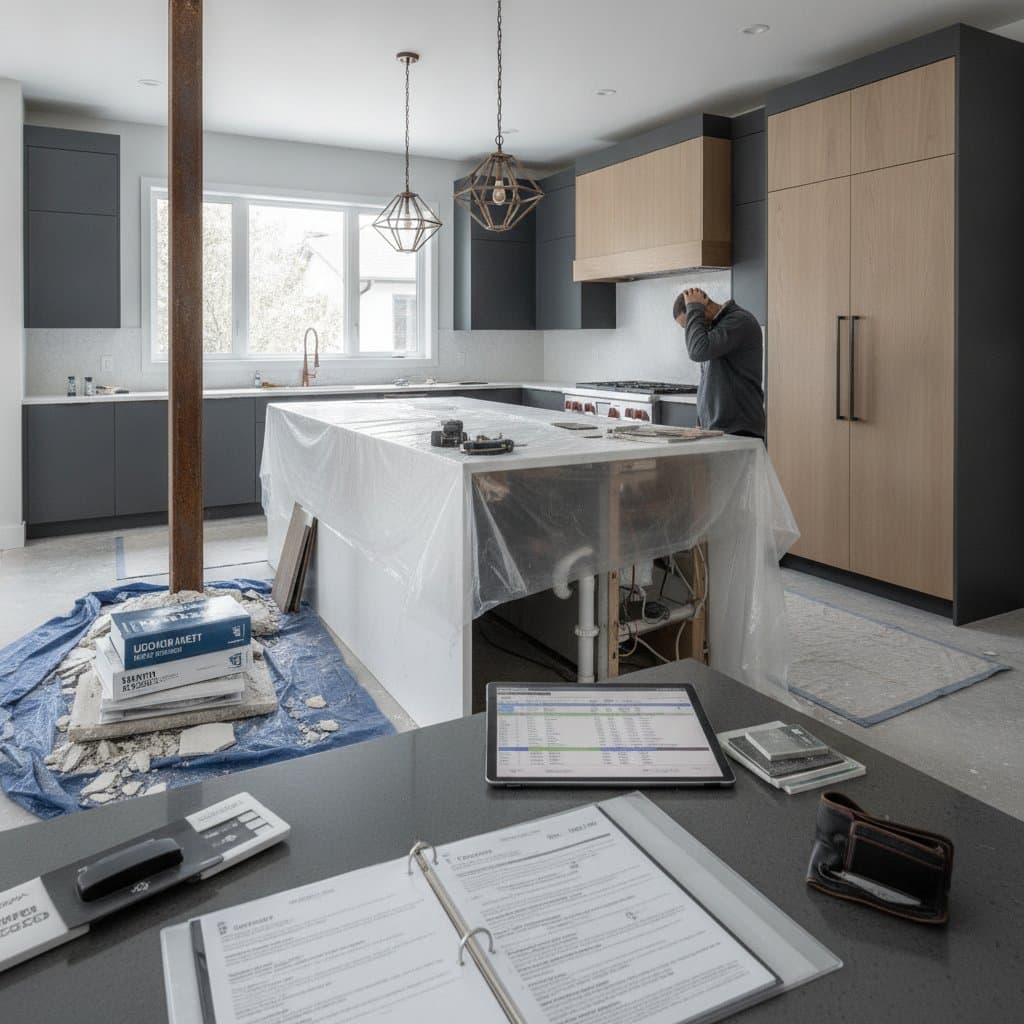
Dumpster rentals, debris removal, and protective coverings for nearby spaces add 800 to 1500 dollars. Base quotes rarely include these items, yet they remain essential for safety and compliance.
Advanced Risk Mitigation Strategies
Larger projects benefit from structured planning approaches that improve cost control.
- Apply value engineering by working with the designer and contractor to substitute lower-cost materials that maintain performance. Semi-custom cabinets can reduce spending by 25 percent.
- Require milestone-based payments tied to verified completion stages so funds release only after measurable progress.
- Track all contingency expenditures in a running log to allow mid-project adjustments without exhausting reserves.
- Obtain materials from at least two vendors to reduce exposure to price increases or supply delays.
Accurate forecasting before work begins eliminates most later financial stress. Modeling multiple cost scenarios in advance provides the clearest advantage.
Regional Market Factors Shaping 2026 Budgets
Material and labor conditions differ by location. Coastal markets often carry higher shipping charges and energy-related price increases. Inland regions may encounter labor shortages that extend schedules and add up to 12 percent in labor premiums. Homeowners should obtain current local data from builders associations to avoid underestimating both time and expense.
Protecting Your Remodel Investment
Request comprehensive pre-construction inspections that cover structural, electrical, and plumbing systems. Secure written quotes that list every anticipated line item and include a clear change-order process. Maintain a contingency fund equal to 15 percent of the base budget and review spending weekly. These steps convert unpredictable expenses into manageable line items and keep the project aligned with both financial and functional goals.