
Essential Principles for 2025 Pantry Design
Kitchens vary widely across homes, from sleek modern setups to warm rustic spaces. Regardless of style, the pantry serves as the backbone of kitchen functionality. Effective design ensures smooth daily operations, minimizes clutter, and adapts to future needs. The strategies outlined here draw from professional experience to create pantries that prioritize performance without sacrificing visual appeal. These approaches consider budget constraints, available space, and long-term usability.
Begin by assessing your kitchen's layout and storage demands. Measure the pantry area precisely, noting door swings, adjacent appliances, and traffic patterns. This foundational step informs all subsequent decisions, preventing common pitfalls like inaccessible shelves or inefficient zoning.
1. Maximize Vertical Space for Optimal Capacity
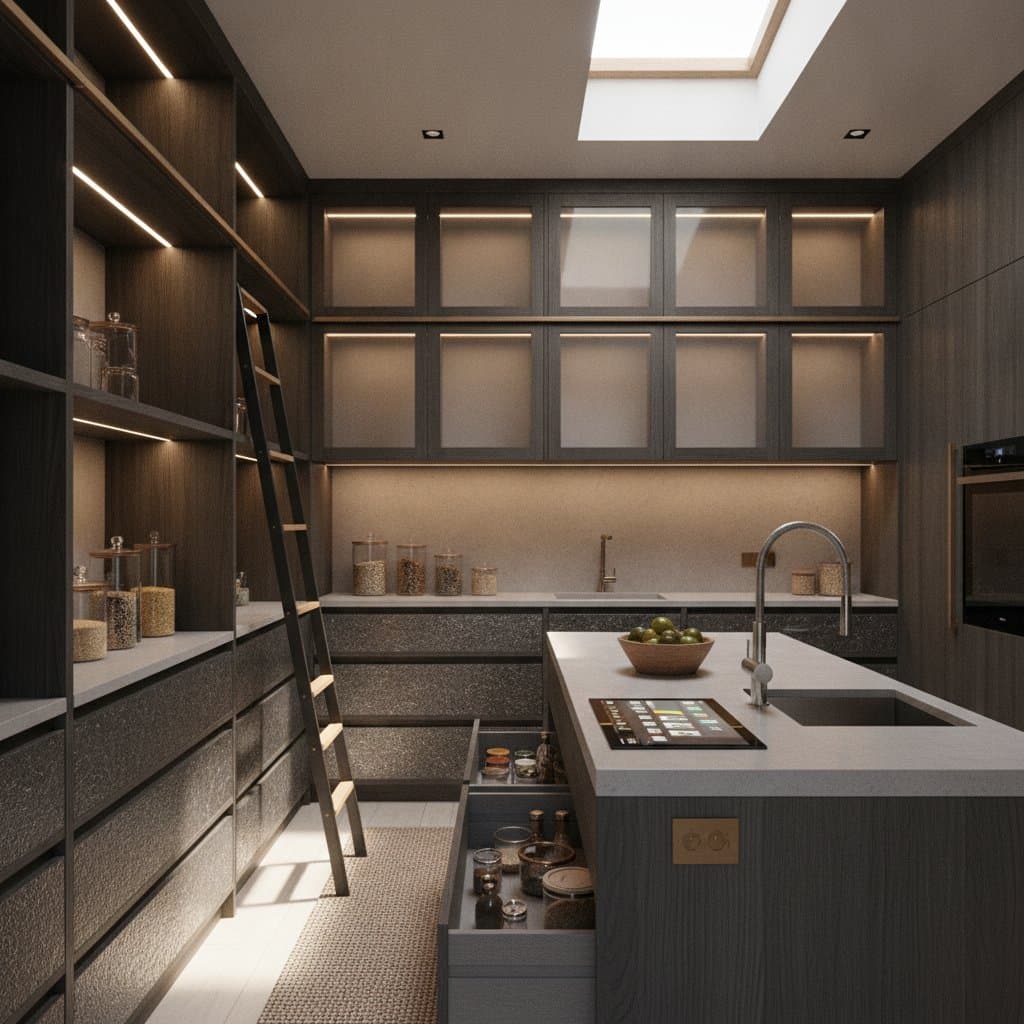
Many pantries underutilize the area above standard shelf heights, resulting in lost storage potential. This oversight often surfaces during remodels when items overflow onto counters. To address this, install full-height shelving that reaches the ceiling, paired with a retractable step stool or rolling ladder secured in a dedicated holder.
Reserve upper shelves for infrequently accessed items, such as seasonal bakeware or bulk supplies. Select uniform materials, like melamine or wood veneer, to maintain a cohesive look from floor to ceiling. Secure the structure by fastening brackets into wall studs at intervals of 24 inches or less. For extended vertical runs, add dividers every 36 inches to support heavier loads and prevent sagging.
This method increases storage by up to 30 percent in compact spaces, freeing up floor area for other uses. Homeowners report easier access to everyday essentials, reducing frustration during meal preparation.
2. Incorporate Strategic Zoning for Everyday Efficiency
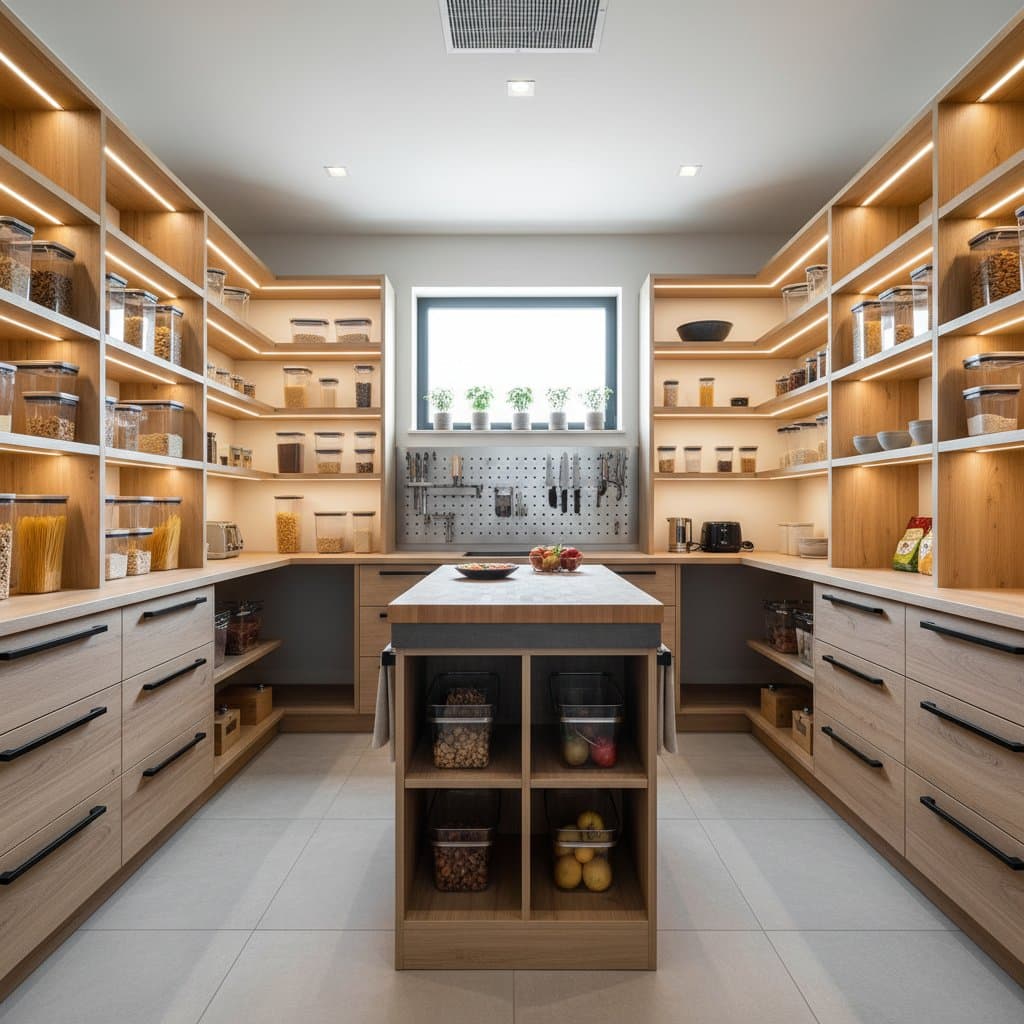
Without clear zones, pantries turn into catch-all spaces where items mix haphazardly. This leads to wasted time locating ingredients and inconsistent inventory management. Divide the pantry into dedicated areas: lower shelves for heavy pots and daily staples, mid-level for snacks and canned goods, and upper for lighter, less-used items.
Use adjustable shelving to customize zones based on family habits. For example, position baking supplies near the oven access point if baking occurs frequently. Label zones clearly with engraved tags or painted sections to reinforce organization. Ensure pathways remain at least 18 inches wide in walk-in pantries to allow comfortable movement.
Zoning streamlines routines, cuts down on clutter accumulation, and makes restocking intuitive. Families find that this setup supports healthier eating by keeping nutritious options at eye level.
3. Integrate Lighting to Enhance Visibility and Appeal
Inadequate lighting creates shadows that obscure contents and diminish the pantry's usability. Retrofitting lights after installation often involves disruptive wiring, escalating project expenses. Design lighting as part of the initial cabinetry plan to avoid these issues.
Install under-shelf LED strips for even illumination across all levels. Opt for motion-activated sensors at the entry to activate lights upon approach, conserving energy. Select bulbs with a 3000K color temperature to accurately display food hues without harsh glare. Route wiring through concealed aluminum channels, ensuring access panels for future maintenance.
Proper lighting not only speeds up item retrieval but also highlights design elements, making the space feel more inviting. Users appreciate the reduced eye strain and the polished finish that elevates the kitchen's overall ambiance.
4. Prioritize Airflow and Climate Control for Preservation
Enclosed pantries in energy-efficient homes trap moisture, accelerating spoilage of grains and spices. Musty conditions invite pests and complicate cleaning efforts. Build in ventilation from the outset to maintain a balanced environment.
For built-in units, add passive vents near the floor and ceiling to promote natural circulation. In larger walk-ins, connect a quiet exhaust fan to the HVAC system, activated by a humidity sensor set at 60 percent. Aim for two square inches of venting per cubic foot in passive setups, and select fans rated below 1.0 sone to minimize noise disruption.
Effective climate management preserves food quality, deters infestations, and keeps surfaces dry. This feature proves especially valuable in humid climates, extending the shelf life of pantry staples by weeks.
5. Select Durable Materials and Smart Accessories
Generic shelving and mismatched bins lead to disarray and premature wear. Inconsistent storage solutions hinder efficient packing and complicate visual inventory. Standardize with robust, modular components tailored to pantry demands.
Choose materials like powder-coated wire for airflow in produce areas or solid acrylic bins for sealed dry goods. Implement lazy Susans in corners for spices and square stackable jars for grains, all in sizes that align with shelf depths of 12 to 16 inches. Affix labels on multiple sides for instant recognition, using waterproof vinyl for longevity.
These choices optimize every cubic inch while resisting daily wear. The result is a tidy, professional space that simplifies maintenance and supports sustainable habits through better organization.
6. Ensure Aesthetic Integration with Kitchen Design
Isolated pantry designs disrupt the kitchen's visual harmony, making the space feel like an add-on rather than an integral part. Disjointed elements, such as mismatched hardware, draw attention away from functionality. Align the pantry with the surrounding kitchen through shared finishes and details.
Replicate cabinetry styles, from shaker doors to matte hardware, to create seamless transitions. Extend flooring materials into the pantry, allowing a quarter-inch expansion gap sealed by a low-profile strip. Select moisture-resistant options like sealed hardwood or luxury vinyl to withstand spills.
This cohesive approach transforms the pantry into a functional extension of the kitchen. Homeowners enjoy the enhanced flow and the subtle boost to property value from thoughtful detailing.
Maintaining Long-Term Pantry Performance
A well-designed pantry requires periodic attention to sustain its efficiency. Schedule quarterly reviews to rotate stock, clean shelves, and adjust layouts as needs evolve. Invest in pull-out drawers for deep storage to keep items reachable without strain.
Track usage patterns to refine zoning over time, ensuring the system adapts to dietary shifts or family changes. With these habits, your pantry remains a reliable asset, supporting daily life with minimal effort. The investment in quality design yields lasting convenience and reduced waste.