Biophilic Kitchens: Where Plants Boost Function Naturally
Walk into any kitchen and the most inviting examples share a quiet thread of natural life. Biophilic design brings plants, daylight, and organic textures into the heart of the home. The result is an attractive space that also functions better. These guiding rules will help you create a kitchen that breathes, works efficiently, and feels grounded in nature.
1. Let Natural Light Lead
Many kitchens rely on artificial lighting that flattens color and mood. Design around sunlight instead. Use reflective surfaces such as light quartz or satin finish tiles to bounce daylight deeper into the room. Keep upper cabinets minimal near windows or install glass fronts so light can pass through.
Better visibility for cooking follows, along with reduced energy use and a brighter workspace.
2. Treat Plants as Functional Features
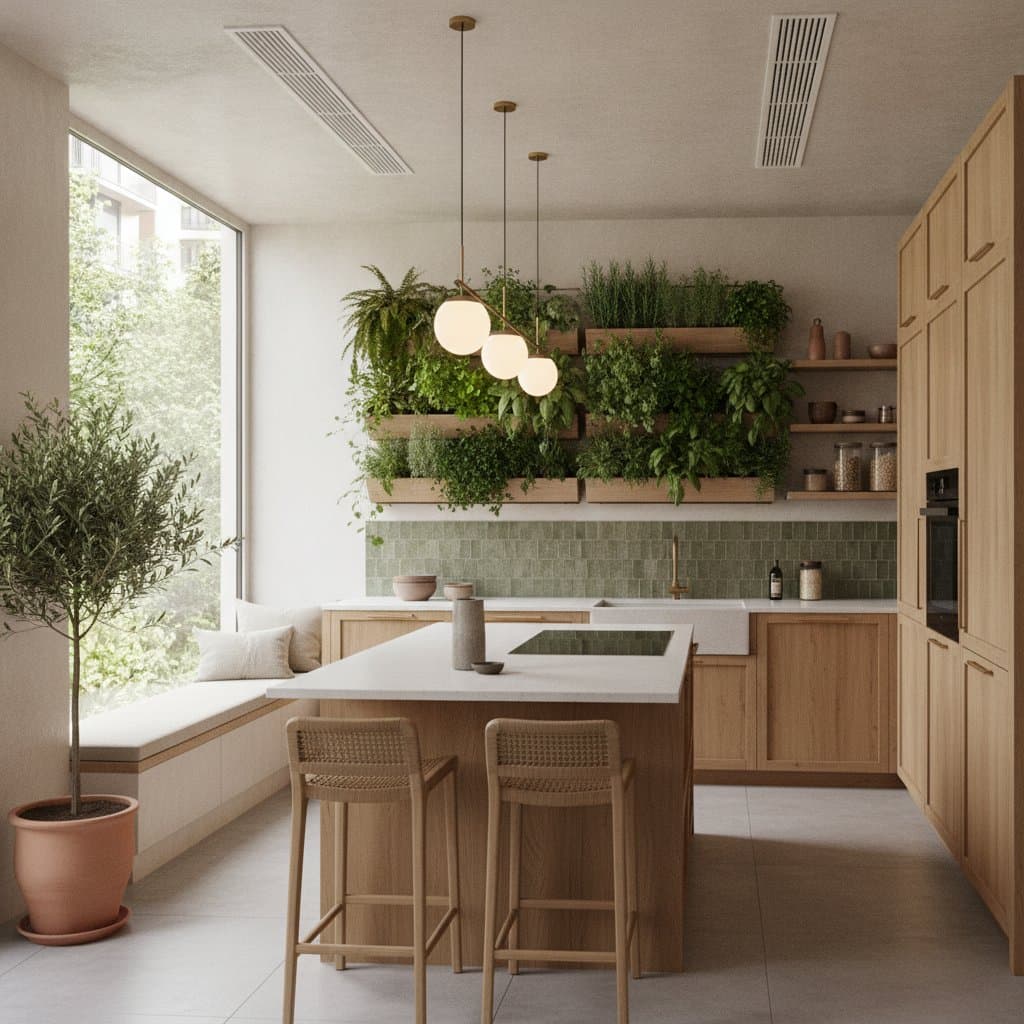
Homeowners often add plants as afterthoughts that crowd counters. Build planting areas in from the start. A recessed shelf above the sink, a hanging herb rack, or a narrow ledge along the window can hold thriving greens that remain easy to water and harvest. Supplement with grow lights where natural light stays limited.
Fresh herbs stay within reach while air quality improves and the space gains a lived in warmth.
3. Choose Natural Materials for Durability and Comfort
Synthetic finishes can feel sterile and wear poorly under daily use. Wood, stone, and clay tile age gracefully while regulating temperature and humidity. Seal wood surfaces with food safe oils and choose matte finishes to soften glare.
The surfaces last longer and provide a tactile richness that connects the cook to the space.
4. Plan a Living Wall for Structure and Impact
Vertical space often goes unused and leaves walls bare. A living wall system with modular pockets or hydroponic panels turns a blank wall into a thriving focal point. Select hardy species such as pothos or philodendron that handle fluctuating humidity. Install a drip irrigation line or an accessible water source.
Natural insulation and sound absorption appear along with a striking visual anchor.
5. Balance Order and Growth
Too many plants can overwhelm the kitchen and invite clutter. Limit vegetation to defined zones such as a single wall, window shelf, or island planter. Keep plant sizes proportional to surrounding cabinetry and fixtures.
The greenery then feels intentional and calming rather than chaotic.
6. Ventilate for Health and Longevity
Moisture from cooking and watering plants can cause mildew or warping. Include proper ventilation through range hoods, operable windows, and discreet vents near planting areas. Choose moisture tolerant materials such as marine grade plywood for structural elements.
Cleaner air results along with fewer maintenance issues and longer life for both plants and finishes.
7. Integrate Water Thoughtfully
Water features can create mess or damage if not planned correctly. Use sealed trough planters or built in drainage trays beneath plant groupings. Consider a filtered water line for easy refills.
Controlled hydration for greenery follows with less risk to surrounding cabinetry.
8. Connect Indoors to Outdoors
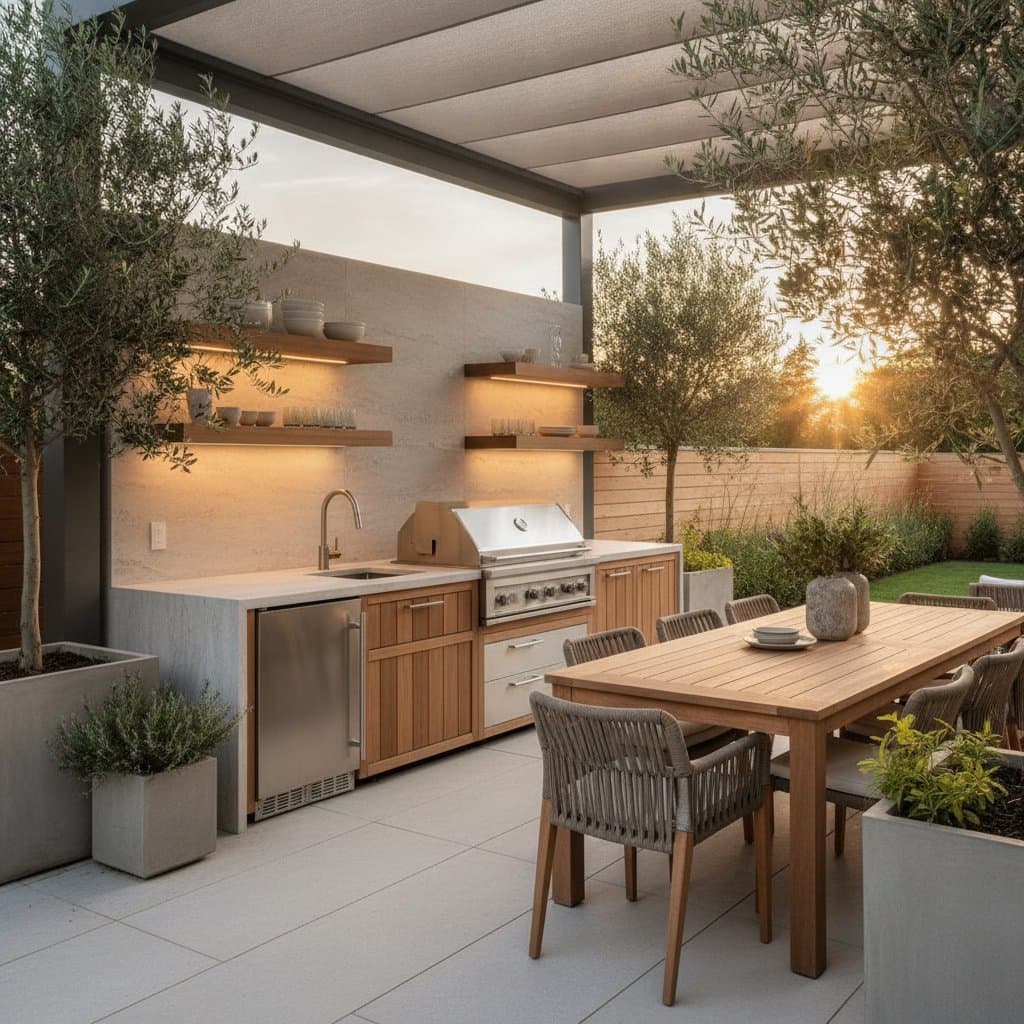
Kitchens often feel cut off from gardens or patios. Use large doors, pass through windows, or similar flooring materials to extend the cooking zone outward. Outdoor herbs or a vertical garden near the entry amplify the connection.
A greater sense of openness and an effortless flow between meal prep and dining appear.
Sustaining the Biophilic Kitchen
A biophilic kitchen supports life for both people and plants when light, air, and materials work together. The space becomes more than a workspace and delivers daily comfort rooted in nature.