
Introduction to Mudroom-Laundry Combinations in 2026
The Home Improvement Research Institute reports that 58 percent of homeowners intend to add or update utility spaces in the coming two years. Among these efforts, nearly one-third focus on integrating laundry and mudroom functions. Homeowners seek to stretch budgets, utilize every square foot effectively, and demand versatility from shared areas. A thoughtfully designed mudroom-laundry combination provides superior efficiency at a controlled cost, provided planners account for precise pricing, structured layouts, and expert recommendations.
This resource examines practical cost frameworks, design approaches, and proven strategies for a mudroom-laundry renovation that enhances convenience and yields strong returns on investment.
Benefits of Integrating Mudroom and Laundry Spaces
The effectiveness of a combined mudroom-laundry area hinges on optimized workflows. Merging these zones avoids duplicate plumbing installations, streamlines heating, ventilation, and air conditioning systems, and consolidates routine tasks. Families benefit from reduced disorganization and smoother daily operations.
Financially, the advantages prove compelling. The National Association of Realtors indicates that well-organized utility areas can elevate a home's perceived value by 3 to 5 percent. Prospective buyers value functional designs, and a mudroom-laundry setup demonstrates intentional planning paired with practicality.
"Homeowners no longer seek only visual appeal," states Jeffrey Morales, senior project estimator at Pacific Home Renovation Group. "They demand features that enhance household operations, especially in suburban areas where space commands a premium."
Detailed Cost Breakdown: Key Expense Drivers
Cabinetry and appliances represent obvious expenditures, yet concealed costs frequently disrupt financial plans. Grasping these elements fosters accurate budgeting.
Infrastructure Expenses Often Overlooked
- Plumbing Adjustments: Costs range from $1,200 to $5,000, influenced by relocation distance and site access.
- Electrical Enhancements: Expect $800 to $2,500 for additional circuits, receptacles, and illumination.
- Structural Floor Support: $500 to $1,800 applies when appliances surpass existing capacity limits.
- Ventilation Systems: $300 to $1,000 covers essential ductwork for humidity management.
Materials and Surface Selections
- Storage Units: Ready-made cabinets cost $150 to $250 per linear foot; semi-custom versions climb to $400 to $600.
- Work Surfaces: Laminate options begin at $25 per square foot, while quartz or solid materials average $55 to $85.
- Floor Coverings: Installed porcelain tile falls between $4 and $9 per square foot; luxury vinyl plank measures $3 to $6.
Appliance Investments
Modern energy-saving washer-dryer pairs span $1,200 to $3,000 based on size. Front-loading units permit overhead counter placement, effectively expanding usable area.
"Many overlook the full dimensions of appliances, including swing space for doors," notes Patricia Nguyen, certified interior designer at Urban Function Studio. "Such oversights lead to expensive modifications in surrounding cabinetry."
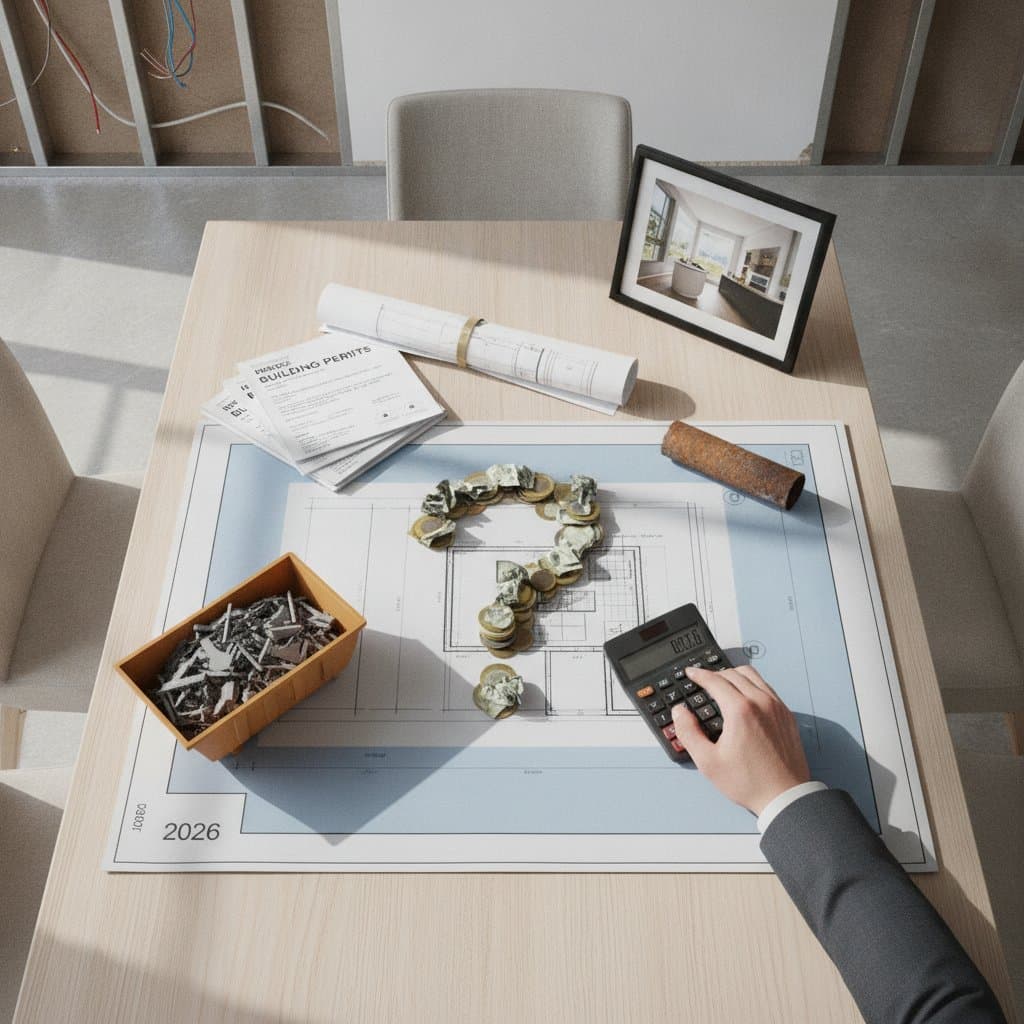
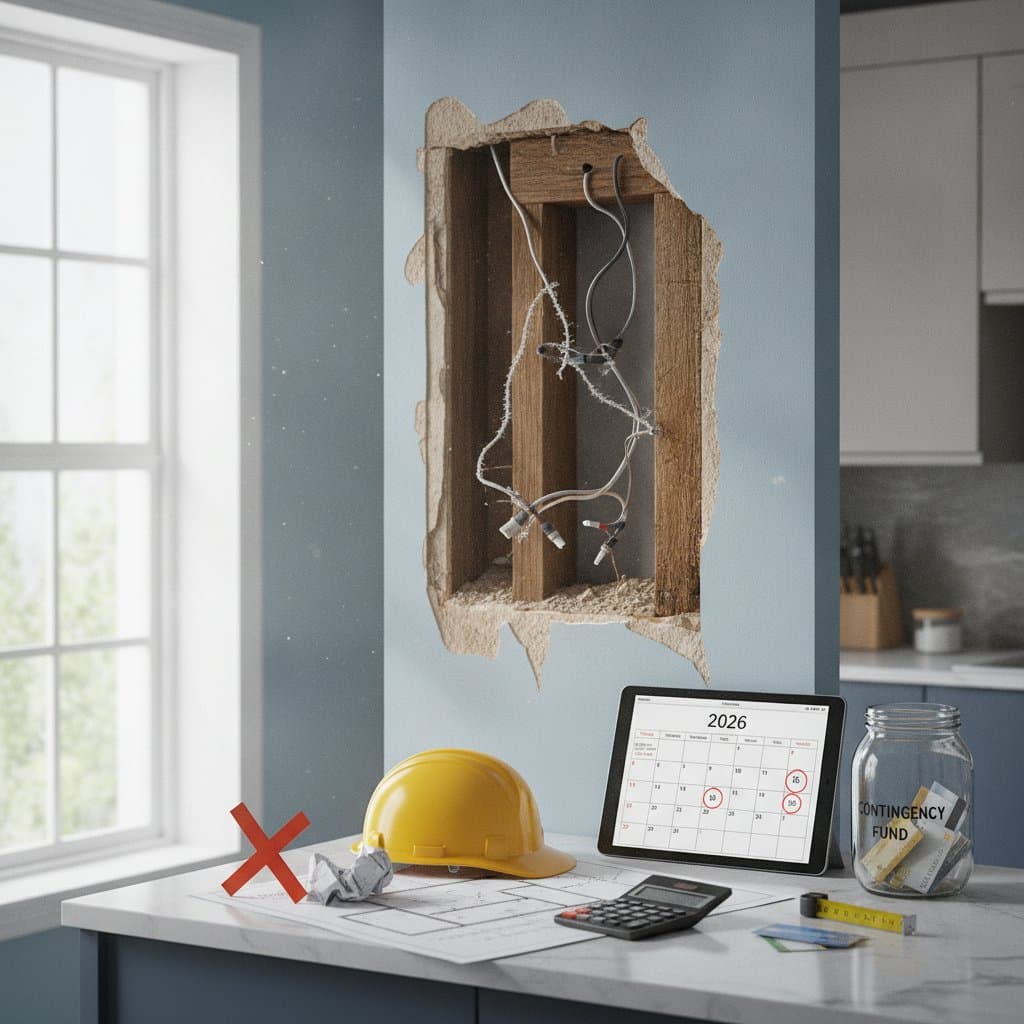
To refine estimates, calculate total square footage needs first. For a standard 100-square-foot space, base costs hover around $15,000 to $25,000, excluding luxury finishes. Factor in a 10 to 15 percent contingency for unforeseen issues like code compliance updates.
Optimizing Layouts for Efficiency and Flow
Strong layout planning forms the foundation of an effective mudroom-laundry integration. The objective involves facilitating smooth movement from exterior entry to cleaning zones while upholding safety and tidiness.
Essential Design Principles
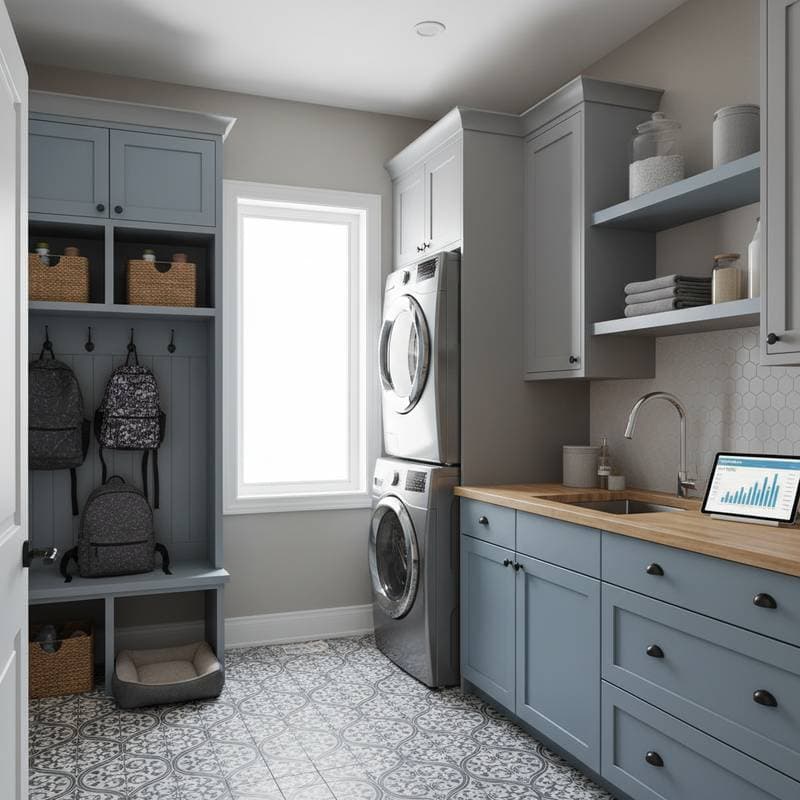
- Defined Areas: Use benches or dividers to isolate soiled entry paths from pristine laundry sections.
- Convenient Organization: Install hooks, compartments, and tall shelving for easy access to essentials.
- Sink Positioning: Place a utility basin adjacent to the washer to share lines and simplify maintenance.
- Folding Areas: Install counters over front-loaders to conserve room and support tasks.
- Resilient Surfaces: Select non-slip, water-resistant flooring to prevent accidents.
Target 80 to 120 square feet for balanced functionality without excess. Larger dimensions escalate expenses without equivalent benefits. Sketch initial concepts using graph paper or digital tools, then consult a designer to refine traffic patterns and ergonomics. This step prevents rework, saving up to 20 percent on labor.
Accounting for Regional Differences
Availability of supplies and workforce pricing differ significantly by location. In urban coastal regions, expert labor may surpass $80 hourly, compared to $50 to $60 in rural or inland markets. Shipping fees for equipment and fixtures vary with proximity to suppliers.
Secure bids from at least three regional specialists versed in local regulations. Review itemized proposals to spot discrepancies or omissions.
"Clear breakdowns during bidding avert nearly all conflicts," advises Marcus Hill, owner of Hill & Sons Contracting. "Request specifics on workforce, supplies, and administrative fees. Reluctance here signals a poor match."
Adjust budgets accordingly: add 15 to 25 percent in high-cost zones for permits and inspections, which can add $1,000 or more.
Steps for Successful Implementation
Initiate the project with defined objectives, reliable quotes, and validated designs informed by professionals. Resist unnecessary embellishments that raise prices without adding utility.
On limited funds, prioritize high-impact choices: retain current plumbing where possible, opt for adaptable storage systems, and stage improvements over time. These tactics deliver usability without financial pressure.
Document progress meticulously, monitor outlays, and inspect quality throughout. Engage a contractor with verifiable references and insurance to safeguard against delays.
Realizing Enduring Benefits
A mudroom-laundry combination, informed by thorough analysis, transparent pricing, and skilled oversight, generates tangible gains in livability and equity. Prioritize designs that endure rigorous use, promote longevity, and safeguard finances. Such spaces transform routine chores into efficient processes, elevating overall home performance.