2026 Checklist: Master Hidden Pantry Door Install
Interest in hidden pantry doors continues to grow on design platforms, where users save and share images of these seamless storage solutions. Homeowners value the mystery and minimalism that concealed entries bring to kitchens, maintaining an orderly and sophisticated appearance. These doors combine form and function by hiding the pantry behind cabinetry or wall panels while ensuring easy access. This guide details the process of planning, building, and finishing a hidden pantry door to integrate perfectly with any kitchen design, suitable for contractor-led projects or independent weekend renovations.
1. Vision and Planning
Develop a clear concept before purchasing materials or modifying walls. Determine whether the door will match surrounding cabinetry or blend as a wall panel. Sketch the full elevation, including hinge positions and clearances for adjacent appliances. Consider the door's swing direction to avoid interference with counters or lighting fixtures. Tape the outline directly on the wall to assess sightlines and overall flow, which helps prevent issues during framing.
2. Frame and Wall Preparation
Precision in framing forms the foundation of a reliable hidden door. Ensure the rough opening remains square and stable to avoid binding or uneven gaps in the future. Select kiln-dried lumber for all framing components and verify levelness at each step. Such errors often lead to misaligned reveals or noisy hinges over time. Reinforce the hinge side with double studs to support the weight of paneled or mirrored door fronts. If the pantry wall includes plumbing or electrical lines, reroute them prior to enclosing the space for a clear interior cavity.
3. Choosing the Door System
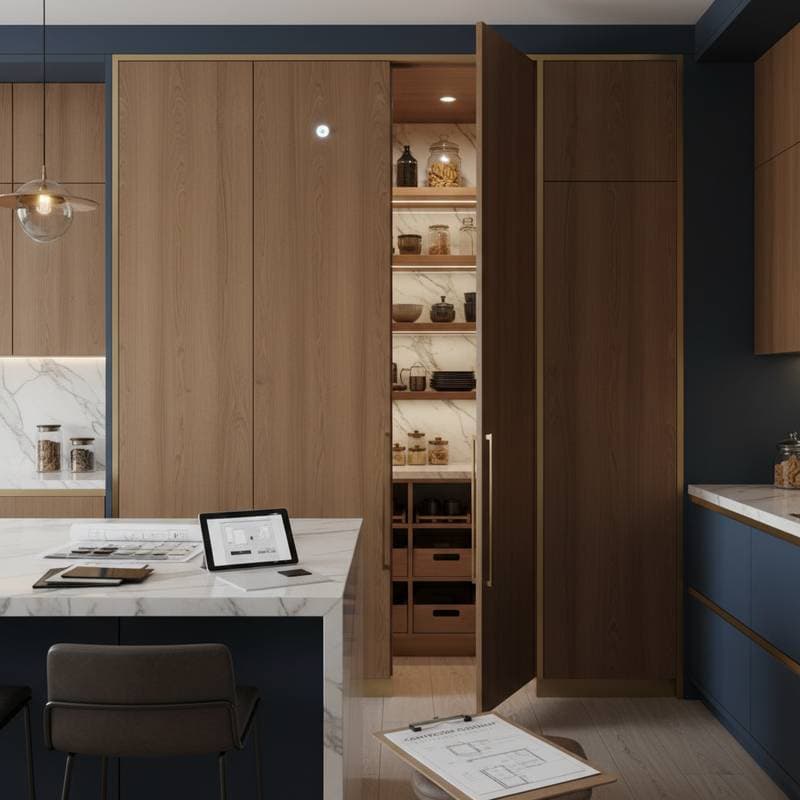
Select from two primary systems: pivot or concealed hinge. Pivot systems provide a smooth, architectural swing motion. Concealed hinge systems, like those offering a flush finish, align well with cabinet fronts. Coordinate the hardware finish with the kitchen's color scheme. For instance, brushed brass enhances walnut tones and creamy whites, whereas matte black suits deep green or navy cabinets. Focus on elements that camouflage the entry, ensuring hinges, handles, and reveals appear as deliberate design choices.
4. Material and Finish Selection
For doors styled as cabinetry, apply wood veneers or painted medium-density fiberboard panels to match existing surfaces. Favored options encompass satin lacquer in warm taupe hues and white oak rift-cut veneers. When adjoining a drywall surface, extend the identical paint color and sheen across the door face for complete invisibility. Incorporate magnetic catches or touch-latch mechanisms to forgo visible knobs. Opt for a soft-close magnetic latch that engages with a quiet, secure click, contributing to a polished operation each time.
5. Lighting Integration
Integrate lighting thoughtfully to enhance functionality, an aspect frequently underemphasized. Position motion-activated LED strips along the pantry ceiling or shelving edges. Wire the lights to activate via the door's hinge side for automatic illumination upon opening. In kitchens with limited natural light, choose a warm 3000K LED temperature to provide balanced illumination without a clinical effect. This setup not only illuminates contents but also underscores the feature's intentional design.
6. Concealing the Entry
Effective concealment relies on aligning the door with the kitchen's overall design vocabulary. Maintain continuous trim lines, uniform paint applications, and precisely placed hardware for seamless visual continuity. Employ a full-height cabinet grid to mask the opening in many layouts. Flat panels with subtle shadow gaps suit modern aesthetics, while shaker profiles integrate into traditional arrangements through symmetrical door and drawer patterns. Align crown molding and baseboards meticulously to complete the disguise.
7. Function Meets Flow
A hidden pantry door enhances kitchen efficiency by positioning storage near preparation areas without disrupting visual lines. Evaluate swing direction carefully: outward swings optimize interior space but demand unobstructed floor clearance, whereas inward swings support better circulation at the expense of shelf depth. Conduct thorough measurements and simulate the motion before finalizing. Install soft-close hinges to ensure gentle closure and eliminate abrupt impacts.
8. Finishing Touches
Refine transitions to elevate the installation from functional to exceptional. Extend cabinet hardware patterns across the door, apply paint evenly to all edges, and include a low-profile floor threshold for clear passage definition. For added luxury, line the pantry interior with tongue-and-groove cedar panels or matte porcelain tiles to facilitate cleaning. In rustic or coastal kitchens, pale whitewashed oak introduces inviting warmth. Minimalist spaces benefit from smooth lacquer or plaster applications.
9. Inspection and Adjustment
After installation, evaluate the door's swing, latch engagement, and alignment through multiple cycles. An ideal hidden door closes flush, operates without resistance, and avoids floor contact. Make incremental hinge adjustments to secure uniform reveals on every side. Apply felt bumpers or integrated gaskets to suppress subtle vibrations. Inspect edges by hand to detect and correct any abrupt transitions or inconsistent paint finishes.
10. Maintenance and Longevity
Consistent maintenance preserves the door's concealed appearance. Clean hinges with a dry cloth and lubricate them periodically, perhaps every few months. Monitor for paint chips or veneer separations near seams. For touch-latch systems, remove dust from magnets to sustain reliable closing force. Maintain a kit containing matching paint and a microfiber cloth for prompt repairs.
Integrating the Hidden Door into Daily Use
With the hidden pantry door installed, the kitchen evolves into a more serene and organized environment. Clutter remains out of sight, fostering a sense of calm, while the subtle reveal surprises and engages visitors. This balance of utility and appeal ensures the feature enhances both routine tasks and social moments, rewarding the effort invested in its creation.