
2026 Wet Room Checklist: Achieving Barrier-Free Excellence
A wet room offers an indulgent experience, evoking images of sleek tiles bathed in morning light, rising steam, and the absence of confining shower barriers. In practice, however, challenges such as misplaced towels, plumbing adjustments, and even a wary pet may arise. Pursuing this barrier-free, spa-inspired space requires ambition tempered by a thorough understanding of waterproofing principles.
Understanding Dream and Reality
The concept of a wet room appears straightforward: eliminate the shower step, install a drain, cover surfaces with tiles, and revel in the openness. This simplicity proves deceptive without careful planning, as inadequate preparation can lead to water seepage into adjacent areas or persistent dampness. The vision of a luxurious, open bathroom endures only through attention to structural integrity, precise slopes, and reliable sealants.
Consider the initial vision of Italian marble paired with a rainfall shower reminiscent of luxury hotels. A practical builder may highlight incompatibilities with existing Victorian-era plumbing, necessitating adaptations. Thus, the final wet room emerges as a harmonious integration of aspiration and feasibility, prioritizing essential membranes over ornate finishes.
Establishing the Waterproof Foundation
Success in wet room design commences well before tile installation. The foundational tanking system serves as an impermeable barrier to prevent water infiltration into walls and floors. View this layer as essential protection, akin to a robust enclosure for the space. Once applied, only designated drain components should penetrate it.
Key steps for waterproofing implementation:
- Examine subfloors thoroughly for cracks, level variations, or moisture damage prior to application.
- Coat floors and walls with a complete tanking membrane or liquid sealant, extending coverage to at least shoulder height in the shower area.
- Secure all joints, corners, and pipe penetrations using specialized waterproof tape or sealing collars.
- Permit full curing time as specified by the manufacturer before proceeding to tiling, avoiding any expedited processes.
These measures demand precision, prompting many homeowners to engage professionals early. This foundational work remains invisible yet critical; its absence becomes evident through costly repairs.
Designing the Layout: Slopes, Drains, and Access
Layout planning follows waterproofing and focuses on efficient water management. The floor requires a subtle slope of one to two degrees toward the drain to direct flow without creating discomfort. An excessive incline mimics an uneven terrain during use, while insufficient gradient allows water to pool.
Selecting the drain type balances aesthetics and utility. Linear drains positioned along a wall facilitate straightforward tiling patterns and a minimalist appearance. Traditional central drains necessitate accurate cuts but suit symmetrical designs. For enhanced accessibility, maintain a flush entry without raised thresholds to eliminate tripping hazards.
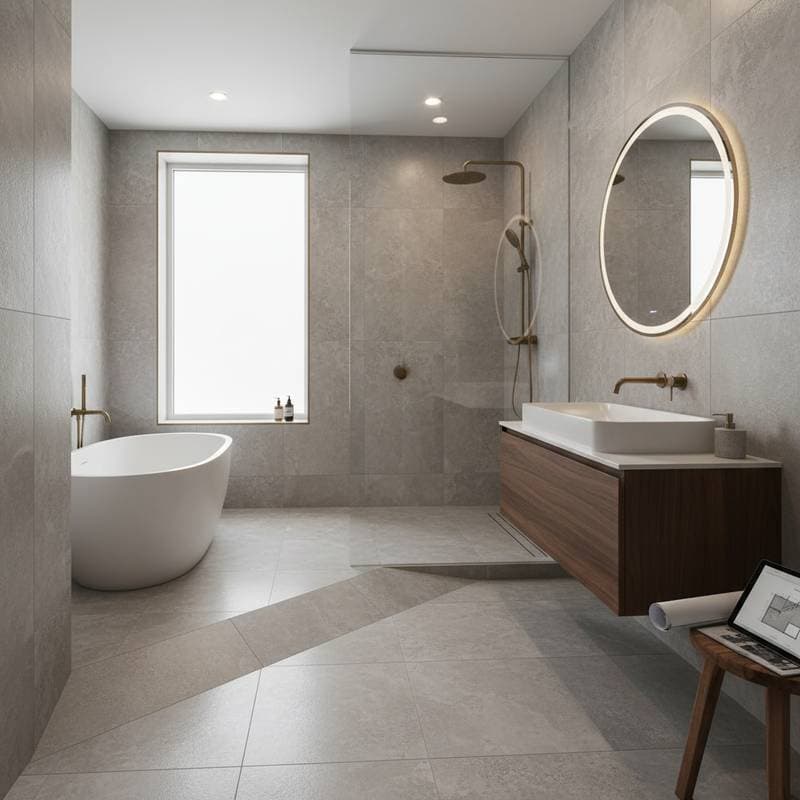
Entry configurations influence the room's ambiance. An open design maximizes the spa-like feel, though some opt for a single glass panel to mitigate spray while preserving spaciousness. Evaluate these elements against daily routines to ensure practicality.
Selecting Durable and Attractive Materials
Tiles define the wet room's visual appeal, yet functionality guides selection. Opt for non-slip porcelain or textured ceramics to address safety concerns. Polished surfaces, while elegant, pose risks when wet.
Recommended material options:
- Porcelain tiles, prized for their resilience and inherent water resistance.
- Epoxy-based grout over traditional cement varieties, offering superior resistance to stains and fractures.
- Underfloor heating systems to enhance comfort, accelerate drying, and integrate seamlessly.
Incorporate adequate, diffused lighting with IP-rated waterproof fixtures to illuminate without glare. Built-in niches or recessed shelves organize essentials efficiently, reducing clutter and improving usability. Such details elevate routine experiences.
Collaborating Effectively with Contractors
For those hesitant about technical aspects like tanking, professional contractors provide invaluable expertise. Clear communication forms the cornerstone: articulate your design preferences while heeding their insights on material performance in humid environments.
Inquire specifically about drain positioning, certification standards for waterproofing products, and ventilation strategies. Effective ventilation, such as a low-noise extractor fan, curbs mold growth and maintains air quality. Professionals anticipate structural quirks, like irregular floor levels or outdated plumbing, allowing proactive solutions.
View contractors as partners rather than performers; their capabilities depend on the existing framework. Early discussions prevent disruptions, ensuring smooth progress from preparation to completion.
Maintaining Your Wet Room Daily
Upon installation, the wet room delivers enhanced accessibility, simplified cleaning, and an expansive atmosphere. Regular upkeep sustains these advantages: clear drains periodically, reapply sealants to grout as wear appears, and promote airflow post-use.
In households with extended showers, prompt wiping prevents water migration. Strategic placement of absorbent mats at exits safeguards surrounding floors from moisture.
Realizing Long-Term Benefits
Embark on your wet room project with a detailed blueprint, rely on qualified experts for complex elements, and select materials aligned with practical needs. As the final touches set and water flows evenly, the investment yields a space that enriches daily life with luxury and ease.