
Waterproof Wet Rooms: 2025 Contractor Checklist
A well-designed wet room elevates the bathroom experience, offering the elegance of a spa without the limitations of traditional enclosures. Seamless integration of showers and open layouts demands meticulous attention to waterproofing details. Proper execution prevents common issues such as water pooling, mold development, and structural damage.
This checklist provides contractors with a structured approach to wet room installations. It emphasizes foundational assessments, material selection, and finishing techniques. Following these steps ensures durability and user satisfaction.
1. Assessing the Space
Initial evaluation sets the foundation for a successful wet room. Contractors must examine the subfloor, walls, and overall layout to identify potential challenges. Key factors include the existing slope, drainage capacity, and substrate integrity.
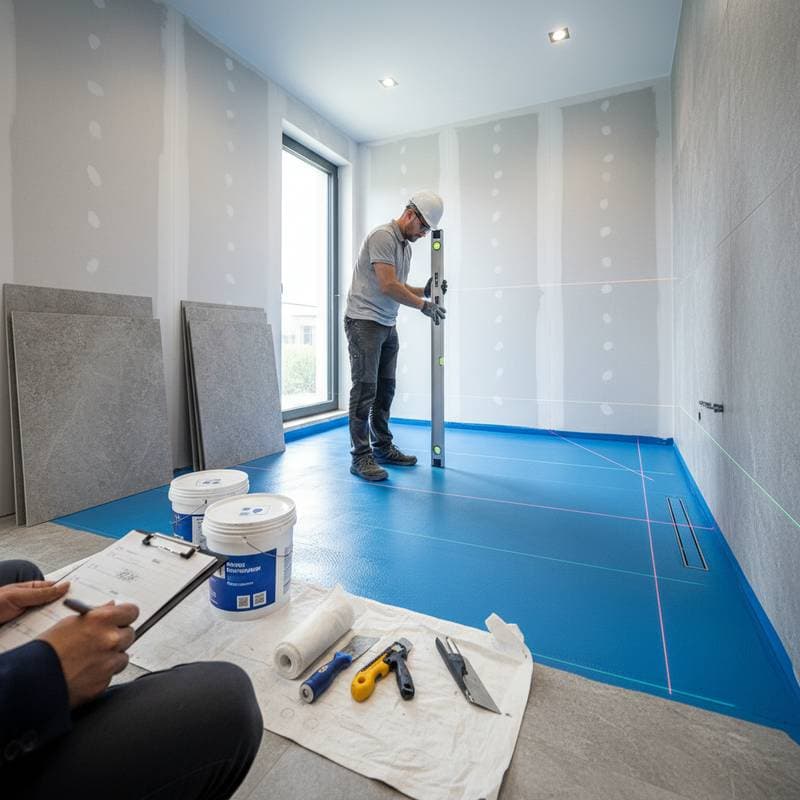
Verify that the subfloor withstands the weight of tiles, membranes, and underlayment without deflection. Measure the current floor gradient using a laser level to determine if adjustments are necessary for a minimum 1:40 slope toward the drain. Assess ventilation systems to confirm they meet building code requirements for moisture control, typically requiring at least 50 cubic feet per minute of airflow.
Document any irregularities, such as uneven joists or prior water damage, and plan remedial actions. This thorough inspection minimizes risks and informs the project timeline.
2. Choosing the Right Materials
Selecting appropriate materials forms the core of effective waterproofing. Opt for systems that create a robust, continuous barrier against moisture intrusion. Combine liquid-applied membranes with sheet underlayments for comprehensive protection.
Prioritize cementitious or polyurethane-based waterproof membranes rated for immersion, applied in multiple coats to achieve a thickness of at least 1.5 millimeters. Use tanking slurries on walls and floors to seal junctions, ensuring compatibility with tile adhesives. Choose flexible, epoxy-modified grouts that resist cracking under thermal expansion.
Incorporate a linear floor drain with an integrated water trap to block sewer gases, positioned centrally for optimal flow. Select porcelain or ceramic tiles with a dynamic coefficient of friction exceeding 0.6 for slip resistance. These choices enhance safety and longevity.
3. Planning a Curbless Shower
Curbless designs require precise gradient planning to direct water efficiently. The floor must slope uniformly from all points toward the drain, avoiding low spots that trap water. Achieve this through careful calculation and execution.
Calculate the required fall, aiming for a 1:40 to 1:60 ratio across the shower area, using self-leveling screed or pre-sloped foam boards. Integrate the shower zone seamlessly with the room floor by extending the membrane under all transitions. Perform a preliminary dry run with string lines to visualize water paths.
Conduct a flood test post-screeding but pre-tiling: fill the area to 25 millimeters deep and monitor for 24 hours. Address any leaks immediately by reapplying sealant or adjusting the slope. This verification step confirms the design's integrity.
4. Waterproofing the Details
Attention to fine details prevents water ingress at vulnerable points. Corners, pipe penetrations, and joint overlaps demand reinforced sealing. Neglect here leads to progressive failures.
Apply waterproofing tape with a butyl backing to all internal corners, embedding it into the wet membrane for a secure bond. Ensure membrane overlaps measure at least 50 millimeters, with heat-welded seams for sheet types. Seal penetrations around fixtures using pre-formed collars or liquid flashing compounds.
Inspect for gaps during application and apply a secondary topcoat for added assurance. These measures create a monolithic barrier that withstands daily exposure.
5. Finishing Touches and Functionality
Final assembly integrates aesthetics with performance. Align tiles precisely to maintain the slope, using leveling clips for even spacing. Apply silicone sealant in a consistent bead, tooling it smooth to eliminate voids.
If underfloor heating is included, position heating mats below the membrane and verify compatibility with waterproofing materials through manufacturer specifications. Install moisture-resistant electrical components, such as IP65-rated lights and outlets, positioned above splash zones.
Test all elements post-installation: run water for 15 minutes and check for deviations in flow or seepage. These checks ensure operational reliability.
Ensuring Long-Term Performance
A completed wet room demands routine care to preserve its condition. Wipe surfaces daily with a squeegee to prevent water spots and mineral buildup. Inspect silicone joints quarterly and reapply as needed to maintain seals.
Monitor for early signs of issues, such as persistent odors or discoloration, and address them promptly through professional inspection. This proactive approach extends the lifespan of the installation, delivering ongoing luxury and functionality.
By adhering to this checklist, contractors deliver wet rooms that meet high standards. Homeowners benefit from spaces that combine style with practicality, reducing maintenance needs over time.