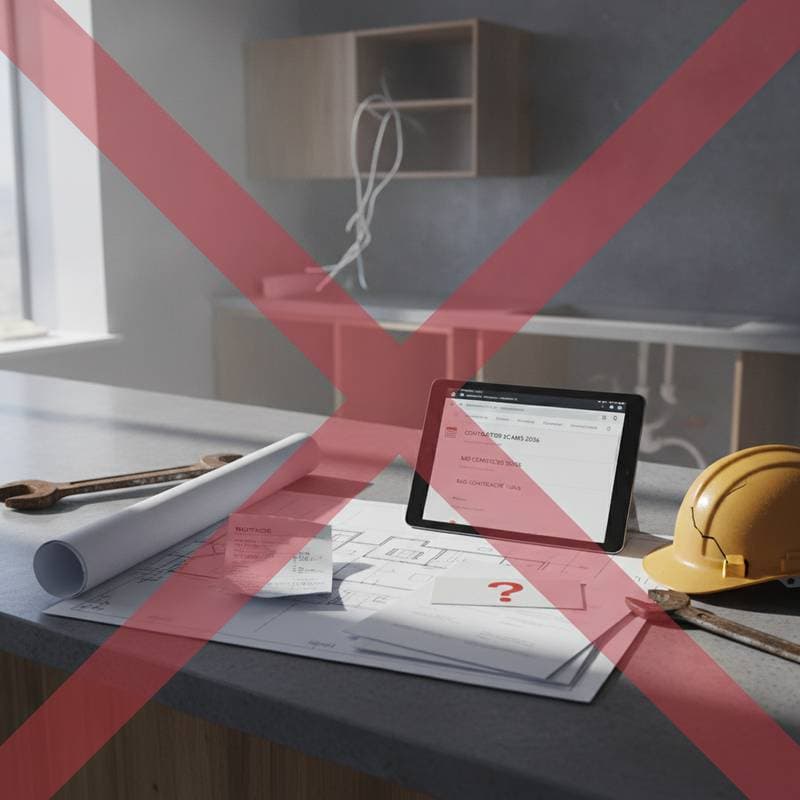


Avoid Costly Mistakes With These Contractor Red Flags
A recent HomeAdvisor survey shows that nearly 54 percent of renovation projects exceed their initial budgets. Contractor issues rank among the top three causes. The National Association of Home Builders reports that 41 percent of homeowners name poor communication and unexpected charges as their primary frustrations. These patterns confirm that selecting the wrong contractor ranks among the quickest routes to lost money, time, and peace of mind.
This guide outlines the primary contractor red flags that homeowners should identify before signing any agreement. It supplies concrete steps, cost control measures, and professional guidance to keep the next renovation on schedule and within budget.
No Written Contract or Vague Paperwork
An oral agreement may appear convenient, yet it places homeowners at substantial risk. The Better Business Bureau indicates that disputes lacking written contracts reach legal action three times more often.
A legitimate contractor always requires a written agreement that specifies scope, payment terms, and procedures for resolving disagreements. Resistance to documentation or reliance on incomplete forms points to disorganization or potential fraud.
Contracts protect both parties, noted David Norton, a licensed construction attorney with twenty years of experience. A missing or unclear contract represents more than sloppy practice. It frequently serves as the method by which unethical contractors alter project terms midway.
Elements of a Solid Contract
- Detailed scope of work with line item cost breakdowns
- Clear payment schedule linked to milestones
- Project timeline with start and completion dates
- Warranty or correction of work clause
- Written change order process
A professional contractor reviews each section with the homeowner and confirms mutual understanding before any deposit changes hands.
Large Upfront Deposits
Paying too much in advance leaves homeowners exposed if the contractor vanishes or stalls progress. Industry standards indicate that deposits should seldom surpass 10 to 15 percent of the total contract value.
Large deposits often come from contractors who lack sufficient operating capital. This pattern can indicate financial instability or poor management.
If someone requests half the project cost upfront, that request constitutes a major warning sign, stated Laura Jennings, a certified construction financial manager. Healthy firms rely on lines of credit and supplier relationships. They do not depend on client deposits to remain solvent.
Recommended Payment Practices
- Link payments to completed milestones rather than calendar dates
- Require written invoices before each payment
- Retain final payment until punch list items are finished and inspections pass
This approach preserves homeowner leverage and confirms that work quality meets expectations.
Absence of Local References or Recent Projects
A reliable contractor readily supplies recent local references. Hesitation or reliance on outdated examples may conceal problems with quality or reliability.
References permit verification of workmanship, schedule adherence, and professionalism. Without them, no evidence of prior performance exists.
Always speak with at least three former clients, advised Sandra Patel, a homeowner advocate and renovation consultant. Inquire about what succeeded, what failed, and whether they would hire the contractor again.
Questions for References
- Did the project finish on time and within budget?
- How did the contractor manage unexpected issues?
- Did the crew maintain professionalism and respect for the property?
Municipal building records can also confirm whether permits were obtained for past jobs.
No Building Permits or Code Knowledge
Permits ensure safety and regulatory compliance. Contractors who propose skipping permits to save time or money expose homeowners to serious legal and financial consequences.
Work completed without permits can void insurance coverage and lower property value. Municipalities may impose fines or demand expensive corrections.
Permits protect homeowners, explained Angela Freeman, an inspector with Metro Building Services. They verify that work satisfies safety codes and receives inspection at critical stages.
Permit Management Steps
- Confirm required permits for the specific project type
- Require the contractor to obtain all permits
- Retain copies of approvals and inspection reports
Professional contractors treat permits as routine operational requirements rather than obstacles.
No Physical Office or Business Presence
Contractors lacking a stable business address, website, or professional email often function informally. This absence complicates dispute resolution when problems occur.
A verifiable business presence signals legitimacy, stability, and accountability. Operators who move frequently tend to disappear when difficulties arise.
Meet at their office when feasible, recommended Caroline Brooks, owner of Brooks Home Consulting. Observe whether staff, equipment, and insurance certificates are present. A stable operation generates a clear record of activity.
Verification Actions
- Search state business registration records
- Confirm the physical address through maps or directories
- Review professional listings and digital presence
A contractor who operates transparently is far less likely to abandon a project midway.
Protect Your Renovation Investment
Every renovation choice carries financial weight. The right contractor safeguards the investment, maintains timelines, and delivers cost transparency from the outset. Early recognition of these red flags prevents financial strain and prolonged conflicts.
Before signing any contract, complete thorough due diligence. Verify credentials, contact references, and examine bids carefully. For large projects, consider engaging a construction manager or independent consultant. Their involvement frequently recovers more than their fee by identifying inefficiencies and preventing scope expansion.
Treat contractor selection as a financial transaction. A dependable contractor welcomes scrutiny, supplies detailed documentation, and maintains clear communication throughout. Insist on professionalism, transparency, and accountability to safeguard both the home and the budget.