Top Moisture Proof Materials Every Contractor Needs for 2026
Moisture damage remains one of the most common reasons for costly remodel repairs. It is also one of the easiest problems to prevent when the right materials are selected. Product searches related to moisture resistant materials have increased on professional networks. This trend shows growing awareness among contractors and homeowners. Construction professionals now prioritize long term durability, indoor air quality, and healthier environments.
This guide presents the leading moisture proof materials every contractor should specify. Each entry explains what makes the product effective, where it performs best, and how it supports mold prevention along with structural longevity.
Fiber Cement Siding
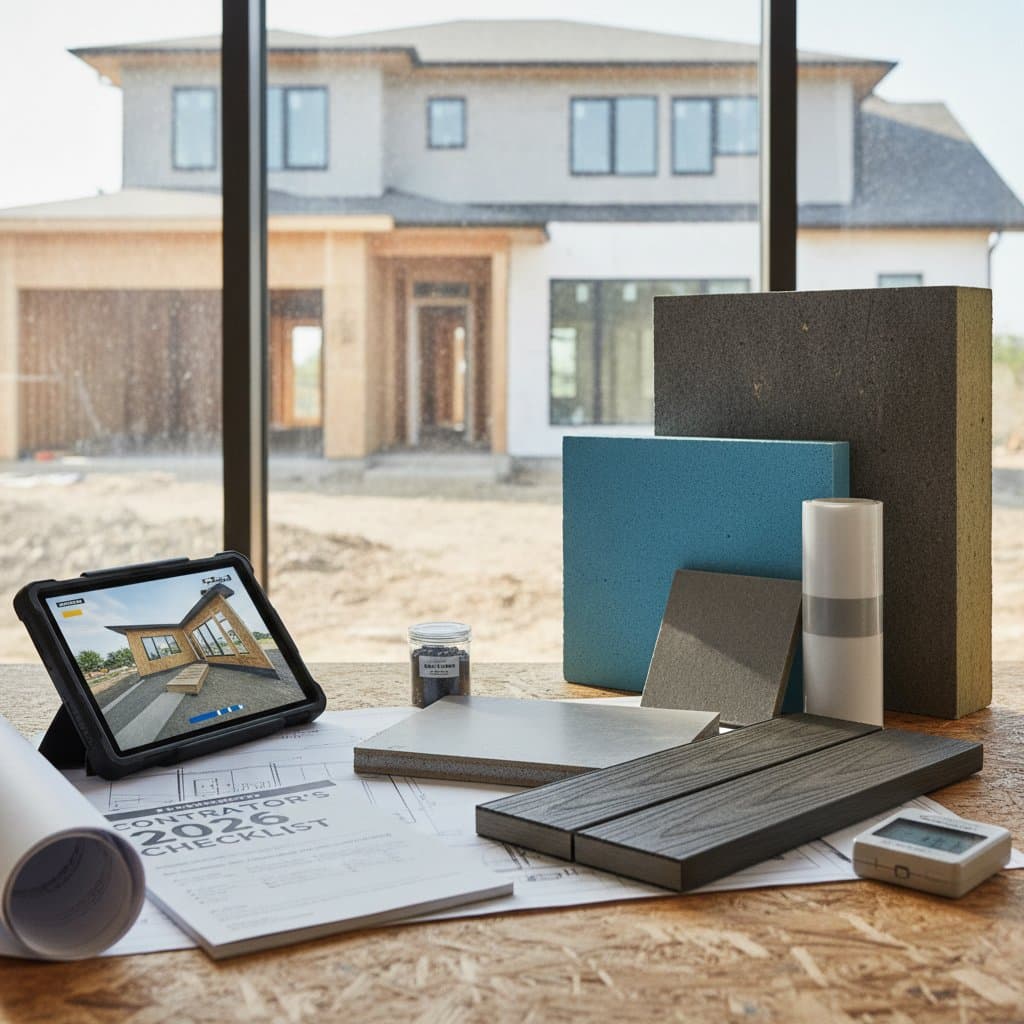
Few exterior materials perform as consistently as fiber cement siding. On a modern farmhouse outside Austin, smooth gray planks run horizontally. They catch light like brushed stone while repelling rain. Architects specify this material for exterior cladding in variable climates. It consists of cement, sand, and cellulose fiber composite.
The dense composition prevents water penetration and resists warping from seasonal expansion. It protects framing from rot and keeps exteriors low maintenance for decades. The finish mimics painted wood yet remains stable through storms and sun exposure. With proper priming and coating, fiber cement siding lasts for decades without peeling or blistering.
Luxury Vinyl Plank Flooring
Flooring receives the brunt of water exposure from spills and humidity changes. Luxury vinyl plank has evolved into one of the most reliable moisture resistant floor options. In a kitchen renovation in Portland, wide oak toned planks stretch seamlessly from entry to pantry. They feel warm underfoot yet remain waterproof to the core.
This flooring appears often in kitchens, basements, and rental units. It features a rigid core vinyl with a polyurethane wear layer and click lock edge system. The interlocking design prevents water from seeping between boards. The wear layer shields against scratches. It withstands spills, pet accidents, and mopping without warping. Luxury vinyl plank combines style and practicality for property managers who need durability without sacrificing beauty.
Cementitious Backer Board
Behind every tiled wall or floor, a stable moisture resistant substrate is essential. Cementitious backer board provides that solid foundation. In a spa bathroom in Chicago, large format marble tiles rest on gray cement board underlayment that never swells or softens. It is used under tile in showers, tub surrounds, and floors. The material consists of Portland cement reinforced with fiberglass mesh.
The inorganic composition prevents decay and maintains dimensional stability. It supports tile adhesion and prevents cracking caused by moisture expansion. This material has replaced traditional plywood underlayments in wet zones. It offers unmatched durability and mold resistance.
Epoxy Floor Coatings
Garage floors, workshops, and utility spaces face constant exposure to moisture and chemicals. Epoxy coatings create a seamless impermeable surface that protects concrete from deterioration. A high gloss gray garage floor reflects natural light. It feels smooth as glass and stays impervious to oil or water. These coatings appear in garages, basements, and commercial kitchens. They consist of two part epoxy resin with quartz aggregate.
The cured surface forms a dense barrier that prevents water intrusion and resists abrasion. Epoxy simplifies cleaning, prevents concrete dusting, and extends floor life. Systems can be tinted or flaked for decorative finishes. This approach blends performance with design flexibility.
Composite Decking
Outdoor living spaces demand materials that handle rain, sunlight, and temperature changes without warping or splintering. Composite decking answers that call. A backyard deck in Nashville features deep brown planks with subtle grain patterns. The surface stays cool underfoot after a summer shower. It suits residential patios, pool surrounds, and docks. The material blends recycled wood fibers with polyethylene resin.
The composite formula resists moisture absorption and fading. It requires low maintenance and eliminates the need for yearly sealing or staining. Composite decking offers a natural wood appearance that stays consistent through the seasons. It represents one of the clearest examples of sustainable moisture resistant innovation in construction materials.
Vapor Barriers and Underlayments
No moisture control plan is complete without a proper vapor barrier. These thin layers deliver outsized protection. In a crawl space renovation, a clear polyethylene sheet stretches tightly across the ground. It is sealed at seams like a protective cocoon. Vapor barriers are placed under slabs, beneath flooring, or within wall assemblies. They block ground moisture from entering living spaces and reduce the risk of condensation within assemblies.
Selecting Materials for Long Term Performance
Contractors achieve the best results when they match each material to the specific exposure conditions of the project. Proper installation remains essential for realizing the full moisture resistance of every product listed. These choices reduce repair costs, support healthier indoor environments, and extend the service life of the structure.