Reface vs. Replace: A Detailed Kitchen Cabinet Cost Comparison
Home renovation trends indicate that kitchen cabinet updates rank highly among popular projects, particularly those that combine affordability with modern aesthetics. Many homeowners evaluate refacing existing cabinets against complete replacement to determine the most effective path to a refreshed kitchen. Recent data reveals that refacing often costs less than half the price of a full replacement, providing substantial savings while achieving noticeable improvements. The decision hinges on factors such as the current cabinet condition, desired layout changes, and overall budget constraints.
This comprehensive guide examines the processes involved in both options, presents a clear cost analysis, and explores design approaches recommended by professionals. By understanding these elements, readers can make informed choices that enhance kitchen functionality and visual appeal without unnecessary expense.
Understanding Cabinet Refacing
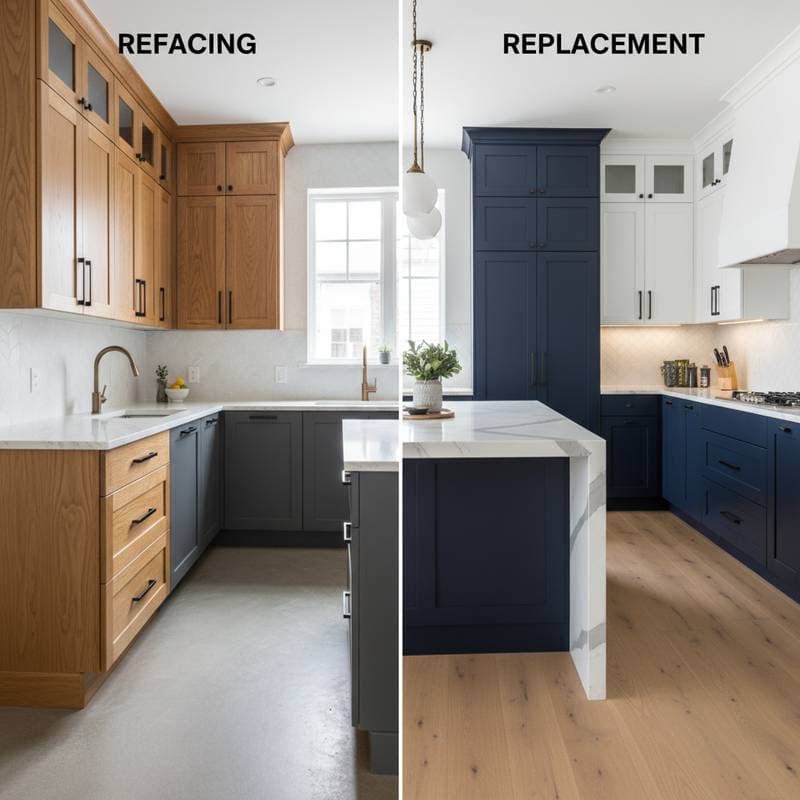
Cabinet refacing involves applying new veneers, doors, and hardware to existing cabinet boxes, preserving the underlying structure. This method suits kitchens where the cabinets remain sturdy but appear outdated due to worn finishes or mismatched styles. Professional refacing typically requires one to two weeks, minimizing disruption compared to extensive demolition.
Costs for refacing range from $4,000 to $8,000 for an average-sized kitchen, depending on materials like laminate, wood veneer, or thermofoil. Labor accounts for about 60 percent of the total, with additional expenses for custom sizing or specialty finishes. Homeowners benefit from this approach when time and budget limitations prevent a full overhaul, yet a fresh look remains essential.
Key Advantages:
- Reduced waste and environmental impact through material reuse.
- Quick installation that allows continued kitchen use during the project.
- Compatibility with minor updates, such as new countertops or backsplashes.
The Case for Full Cabinet Replacement
Full replacement entails demolishing old cabinets and installing new units, offering opportunities for layout modifications and advanced features. This option proves ideal when structural issues, such as water damage or inadequate storage, compromise the existing setup. It also supports integration with broader remodels, including appliance upgrades or flooring changes.
Designer Lydia Chen of Studio Kettle notes that replacement projects frequently arise from needs like extending cabinets to the ceiling or optimizing island configurations for improved traffic flow. Materials such as painted oak or rift-cut white oak veneer enable transitions from standard builder-grade designs to personalized, high-end results.
Average replacement costs span $12,000 to $25,000, influenced by cabinet quality, size, and any required adjustments to plumbing or electrical systems. While initial outlays exceed refacing by two to three times, the investment often yields higher resale value through enhanced functionality and modern design.
Primary Benefits:
- Total customization, including soft-close mechanisms and integrated lighting.
- Enhanced storage options like pull-out shelves and corner carousels.
- Improved ergonomics that support daily cooking and entertaining routines.
Cost Comparison and Savings Strategies
Direct comparisons highlight refacing as the more economical choice for cosmetic updates. For a 10-by-10-foot kitchen, refacing might total $6,000, while replacement could reach $18,000, illustrating the potential for 50 to 70 percent savings with refacing. These figures account for 2025 material price increases due to supply chain factors, yet both options remain accessible with professional planning.
To maximize value, obtain multiple quotes from certified installers and consider semi-custom lines that blend affordability with durability. Factor in long-term maintenance: refaced surfaces may require touch-ups every five years, whereas new cabinets often come with 10-year warranties. Budget-conscious homeowners can phase projects, starting with refacing and upgrading to replacement later if needed.
Innovative Design Examples for Inspiration
Professional designs demonstrate how refacing and replacement adapt to diverse spaces and preferences, delivering style without excess spending.
Reviving with Light Woods
In a compact Seattle bungalow, Ellis & Gray Design applied natural ash veneer to existing cabinets during a refacing effort. The light grain reflected ambient light effectively, expanding the perceived size of the area. Complementary elements included matte black hardware and a honed quartz surface, fostering a serene Scandinavian influence blended with cozy American elements.
Creating Contrast with Two Tones
Harbor Studio Interiors in Dallas transformed a standard kitchen by refacing lower cabinets in navy lacquer and uppers in white laminate. This tonal shift provided visual stability, countering high ceilings without overwhelming the room. Brass bar pulls unified the palette, adding subtle elegance to the overall composition.
Elevating Through Custom Replacement
For a historic Boston townhouse, Mason & Frame Design opted for walnut replacement cabinets with seamless integrated handles. The consistent wood grain enveloped the space, underscoring artisanal quality. Concealed drawers optimized utensil organization, streamlining workflows while maintaining a clutter-free appearance.
These case studies illustrate the versatility of both methods. Refacing excels in rapid, cost-effective renewals, whereas replacement facilitates profound spatial and stylistic evolutions.
Maintaining Your Kitchen Investment
Post-installation care ensures longevity and sustained performance for either option. Clean refaced surfaces using a soft cloth and mild soap solution, avoiding abrasive cleaners that could dull finishes. For replacement cabinets in solid woods, apply conditioning oils annually to prevent drying and cracking.
Drawing from personal experience in a compact galley kitchen, a simple refacing with matte white fronts dramatically improved natural light diffusion, even during overcast weather. Updating hardware to brushed nickel accents that echoed the existing faucet further amplified the cohesive feel.
Collaborate with skilled craftsmen or design firms to align selections with your lighting conditions and lifestyle demands. By prioritizing durable materials and thoughtful planning, your kitchen will deliver enduring satisfaction, blending form, utility, and economic wisdom for years ahead.