Barrier-Free Wet Rooms: Contractor Essentials for 2026
Imagine a bathroom where porcelain tiles extend unbroken from wall to wall, water flows toward discreet drains without interruption, and the entire space invites effortless movement. This describes the essence of a barrier-free wet room, a design approach that combines contemporary style with universal accessibility. Homeowners increasingly request these remodels to create environments suitable for diverse needs, from young families to aging individuals. Contractors who master this process deliver projects that enhance daily life while minimizing future maintenance challenges.
Core Principles of Barrier-Free Design
Barrier-free wet rooms eliminate conventional shower enclosures and elevated sills, integrating the shower zone directly into the floor plane. This results in an unobstructed surface that promotes spatial continuity and reduces risks of stumbling. Water management relies on a subtle gradient, typically sloping toward integrated drains, which supports both hygiene and visual simplicity. Such designs excel in compact powder rooms or expansive master suites, adapting to various architectural contexts.
Success demands attention to structural integrity, moisture control, and air circulation. Neglecting these elements invites water damage, microbial growth, or structural compromise. Contractors benefit from consulting building codes early, especially regarding load-bearing capacities and ventilation requirements, to ensure compliance and longevity.
1. Prepare the Subfloor Thoroughly
Subfloor readiness forms the bedrock of any wet room installation. Begin by assessing the existing structure for levelness, stability, and moisture content using a moisture meter and laser level. For timber subfloors, reinforce underlying joists with metal straps or additional supports, then install cement backer board secured with thin-set mortar and screws spaced every six inches. Concrete subfloors may require shot-blasting or diamond grinding to remove imperfections, followed by self-leveling compound to establish the initial slope.
Position drainage early in the planning phase. Opt for a linear drain positioned parallel to the longest wall to simplify sloping calculations and enhance visual flow. Central point drains suit symmetrical layouts but demand precise fall distribution across multiple directions. Verify that the subfloor can accommodate a minimum fall of one-eighth inch per foot without compromising headroom or door clearances.
2. Implement Robust Waterproofing Measures
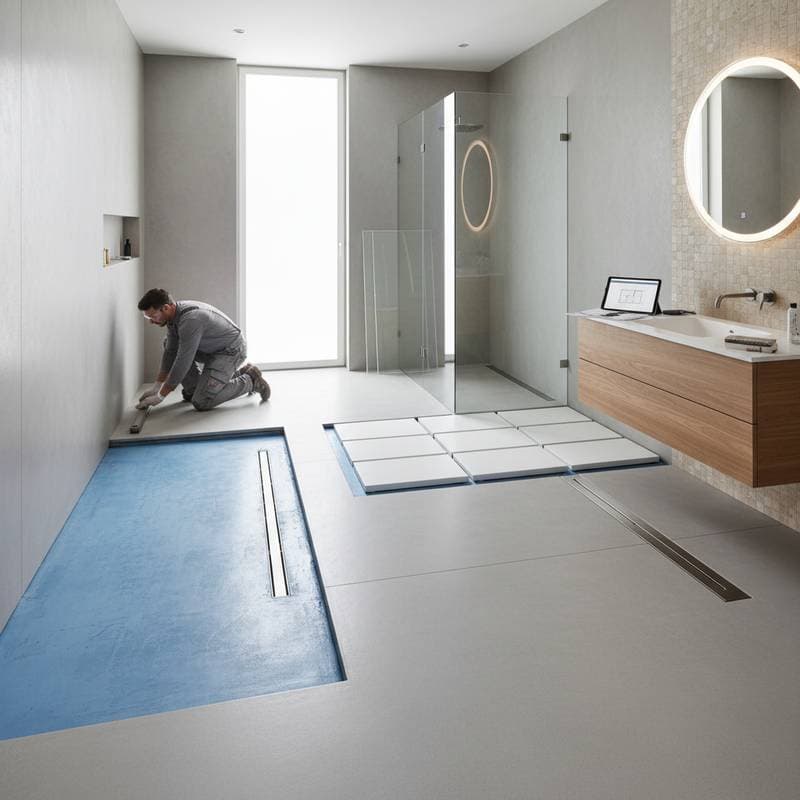
Waterproofing safeguards the entire assembly against infiltration. Select a certified tanking kit comprising a liquid-applied membrane, pre-formed corner pieces, and joint-sealing bands. Apply the membrane in multiple coats, starting from the floor and extending 150 millimeters up adjacent walls, using a roller for even coverage and a brush for edges. Seal all penetrations, such as pipe entries, with compatible waterproof plugs, and allow each layer to cure fully as per product specifications, often 24 to 48 hours.
Test the system before tiling by flooding the area with water for several hours and monitoring for seepage. Extend protection to include wall boards rated for wet environments, ensuring overlaps exceed 50 millimeters. This comprehensive approach prevents delamination and preserves the integrity of underlying materials over decades.
3. Choose Durable, Slip-Resistant Flooring Options
Flooring selection influences both safety and aesthetics in wet conditions. Prioritize porcelain or ceramic tiles with a dynamic coefficient of friction exceeding 0.42 for wet surfaces, verified through standardized testing. Large-format tiles, measuring 24 by 48 inches or larger, minimize grout joints, facilitating quicker drainage and simpler maintenance with standard cleaners.
For texture, select matte or lightly etched finishes that provide grip without trapping dirt. Stone-inspired porcelain offers organic patterns and thermal mass for underfloor heating compatibility, while polished concrete-look tiles deliver an industrial edge. Install tiles with rectified edges for tighter joints, using a modified thin-set adhesive formulated for wet areas, and maintain consistent slope alignment during layout.
4. Incorporate Advanced Drainage Systems
Effective drainage ensures water evacuates promptly, preserving dryness. Modern options include slim linear channels with adjustable grates, wall-hung point drains for corner installations, or fully recessed square drains that align flush with tiles. Calculate slopes meticulously: aim for a quarter-inch drop per linear foot toward the drain, achieved through tapered screeds or adjustable leveling systems.
Select materials like brushed stainless steel or matching tile inserts for grates to avoid visual disruption. Integrate debris traps within the drain body to prevent clogs from hair or soap residue. For high-traffic homes, choose channels with higher flow rates, rated at least 30 liters per second, to handle multiple users efficiently.
5. Enhance Accessibility and User Comfort
Accessibility elevates a wet room from functional to inclusive. Allocate at least 30 by 30 inches of clear floor space adjacent to the shower for wheelchair access, positioning controls within 48 inches of the floor. Install reinforced grab bars at 33 to 36 inches height, anchored into wall studs, and opt for thermostatic mixer valves to prevent scalding.
Incorporate a teak or composite folding seat at 17 to 19 inches high for seated showering, paired with a slide-bar mounted rainfall head. Underfloor heating mats, wired to a programmable thermostat, mitigate cold surfaces, particularly beneficial in cooler climates. These features support aging in place without sacrificing design elegance.
6. Harmonize Materials and Finishing Touches
Material coordination creates a polished, unified appearance. Employ light-colored grout and tiles in smaller spaces to amplify perceived volume through reflection. Match brushed nickel or matte black accents across faucets, drains, and towel rails for subtle luxury.
Integrate functional elements like LED-lit wall niches for shampoo storage or frameless glass panels for optional enclosure. Select ventilation fans with humidity sensors to maintain air quality automatically. These details refine the space, blending practicality with sophisticated appeal.
Achieving Enduring Performance in Wet Room Projects
A well-executed barrier-free wet room delivers ongoing benefits, from simplified upkeep to enhanced property value. Residents enjoy intuitive navigation and restorative ambiance, while the design accommodates evolving needs seamlessly. Contractors who prioritize precision in every phase produce installations that withstand daily use and time.
Focus on documentation, including as-built drawings and maintenance schedules, to empower homeowners. This forward-thinking approach solidifies reputation and encourages repeat business in the competitive remodeling market.