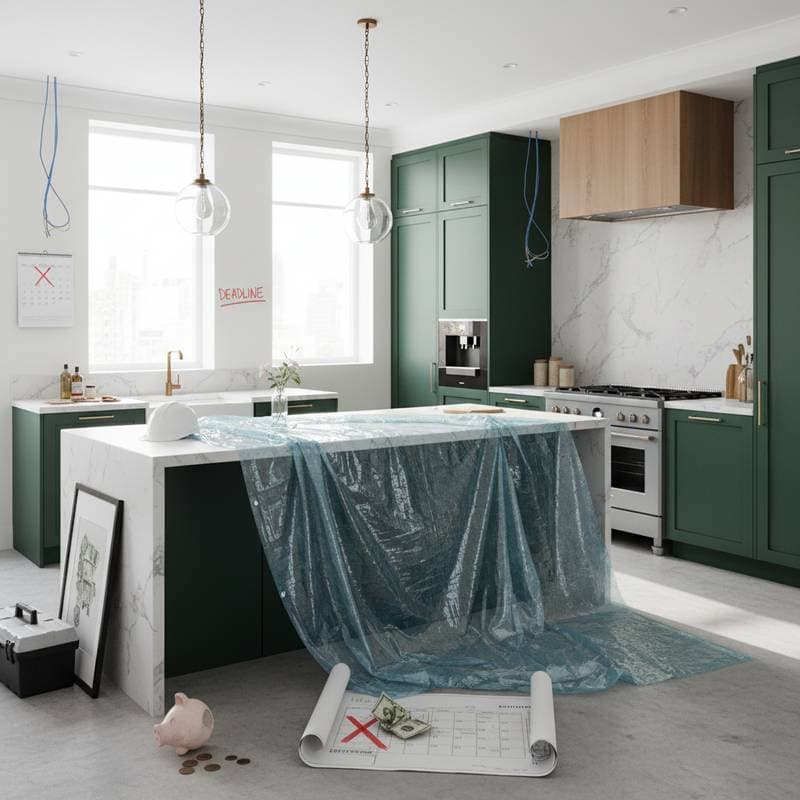
Common Kitchen Remodel Budget Traps to Avoid
Kitchen remodels often exceed budgets due to hidden costs, underestimated labor, and poor planning. This guide exposes the most common financial traps and offers expert strategies to forecast expenses, manage contingencies, and protect your investment.
According to recent industry surveys, nearly 42 percent of homeowners exceed their kitchen remodel budgets. Another 29 percent underestimate labor costs before work begins. The kitchen remains the most popular renovation project, yet it is also the one most prone to financial missteps. When costs spiral, the issue is rarely the design itself. Instead, problems arise from weak cost forecasting, limited contractor oversight, and hidden conditions.
Overlooking Structural and Electrical Upgrades
Older homes often hide costly surprises behind walls. Outdated wiring, undersized electrical panels, or unlevel floors can derail even the tightest budget. Unplanned structural or electrical work adds an average of 15 to 25 percent to total renovation costs.
Building codes now require dedicated electrical circuits for major appliances, GFCI protection, and specific lighting standards. Meeting these requirements means rewiring or upgrading service panels, which can cost between 2,000 and 6,000 dollars.
Every kitchen remodel should start with a professional inspection. Homeowners often plan for finishes but forget that modern appliances demand more power than older homes can safely handle.
Include a contingency of at least 15 percent in your initial cost estimates for hidden repairs. A pre-construction inspection by a structural engineer or building inspector provides early warnings that can save thousands later.
Ignoring Supply Chain and Lead Time Delays
Global supply chain disruptions have made appliance and cabinet lead times unpredictable. Many homeowners fail to factor these delays into budgets. They assume that time equals inconvenience rather than money. In reality, each week of delay adds labor overhead, temporary kitchen setup costs, and potential rent or dining expenses.
Every week of project extension can cost between 500 and 1,000 dollars in indirect expenses. Create a procurement schedule before demolition begins. Ask each supplier for confirmed delivery dates and penalties for late shipments. Consider local manufacturing or ready-to-assemble options to reduce risk.
Timeline management is as much a financial discipline as it is a scheduling task. Projects that exceed six weeks tend to experience compounding costs because subcontractors have to reallocate labor slots.
Underbudgeting for Contingencies
Even the most detailed budgets fail without a contingency buffer. The American Institute of Architects recommends a minimum contingency of 10 to 20 percent for residential remodels. Yet many homeowners skip it, assuming their contractor quote already includes everything.
Unexpected conditions, design changes, or material price increases can quickly deplete reserves. Without contingency funds, homeowners often resort to lower-quality substitutes or incomplete finishes.
Every project has unknowns, even with perfect plans. A proper contingency is not excess. It is protection against inflation, errors, and change orders that are outside the contractor control.
Treat contingency as a fixed cost, not an optional reserve. Include it in your financing model from the start.
Forgetting Post-Completion Costs
Once the kitchen is complete, additional expenses often appear. Final cleaning, appliance installation, and small punch-list repairs can add another 2 to 5 percent to the total cost.
Plan for post-completion expenses in your financing schedule. This ensures the remodel ends cleanly without lingering bills or incomplete work.
Protecting Long-Term Value
A kitchen remodel can yield a return of 60 to 80 percent of its cost when completed strategically. The key is disciplined financial planning and transparent project management. When you treat your kitchen remodel as a financial project instead of a design experiment, you gain control over both cost and outcome. The most successful homeowners approach renovation with the same discipline investors apply to portfolio management.