Budgeting for 2025 Open-Concept Kitchen Transformations
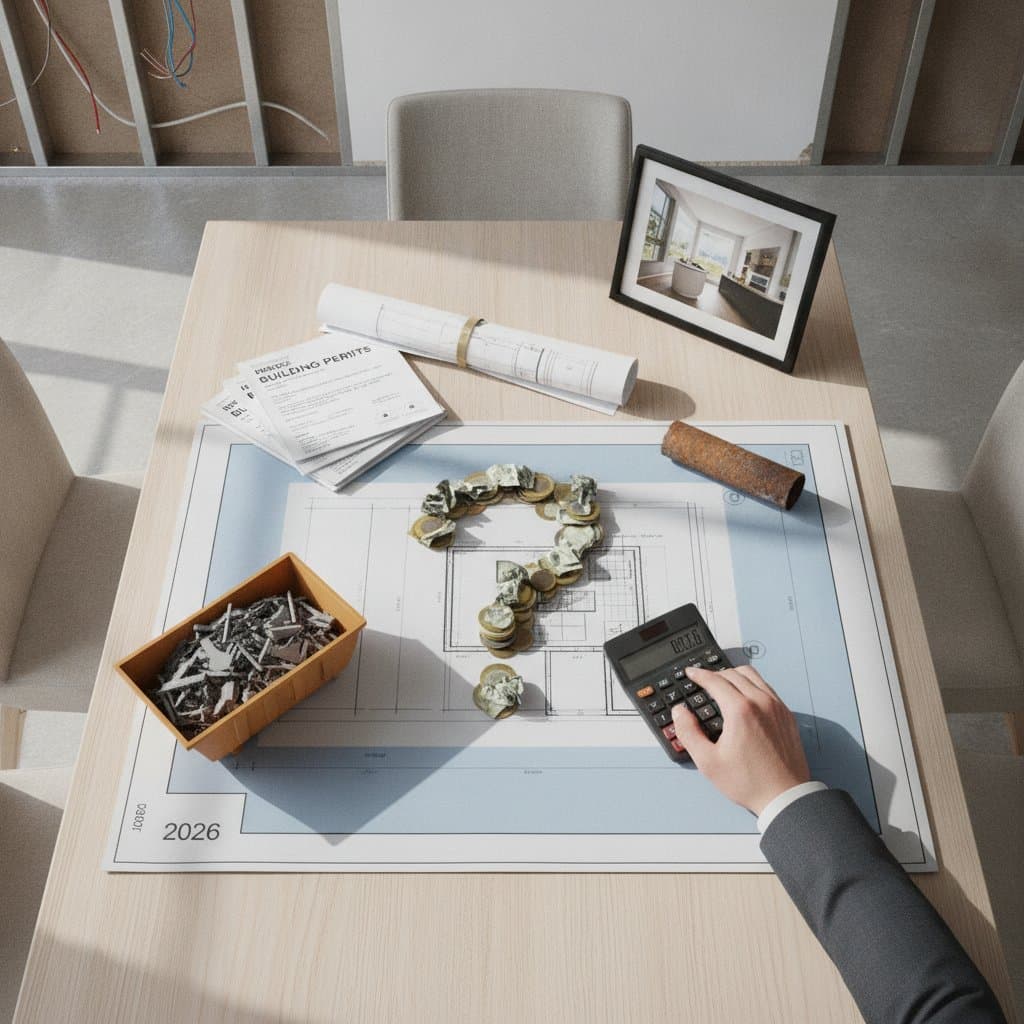
Open-concept kitchens remain a top choice in 2025, frequently featured in popular design inspirations on platforms like Houzz and Pinterest. Homeowners value the seamless flow, abundant natural light, and enhanced connectivity these spaces provide. The design creates an environment that supports social interaction while maintaining practicality. However, the process of removing walls often reveals unexpected expenses. By identifying key cost drivers, prioritizing elements with the greatest impact, and evaluating trade-offs, you can achieve a remodel that aligns with your vision and finances.
From my experience as a designer in a compact bungalow with a family and a love for hands-on projects, blending creativity with fiscal planning proves essential. Start by outlining your goals, then allocate funds strategically across structural changes, materials, and details. The following sections detail critical components, from initial demolition to final accents, with specific strategies to optimize your investment.
1. Wall Removal and Structural Changes
Hook
Removing interior walls opens up your space but introduces structural considerations that demand careful planning.
Context and Cost
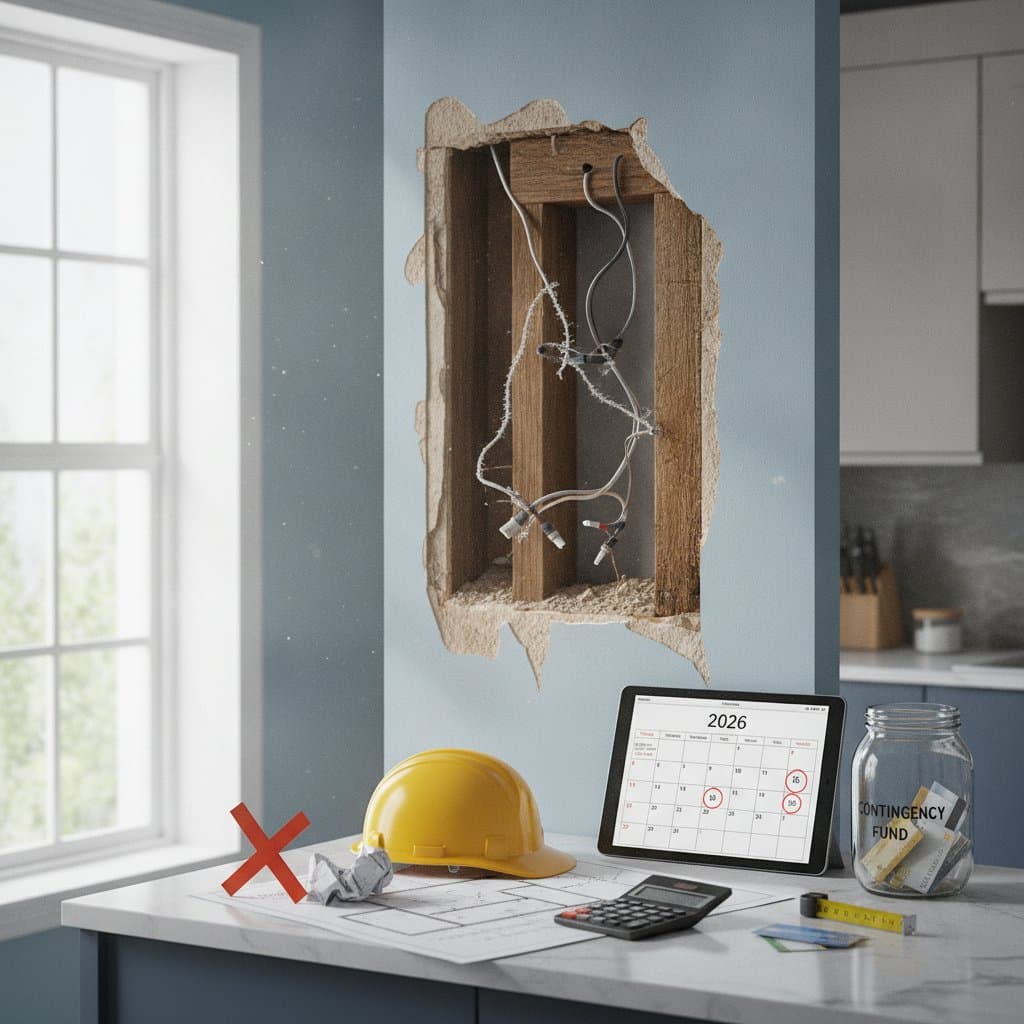
Non-load-bearing walls cost between $1,500 and $4,000 to remove, including permits and minor framing adjustments. Load-bearing walls require engineering assessments and beam installations, pushing expenses to $5,000 or more. Factor in dust control, temporary supports, and potential HVAC or plumbing rerouting during this phase.
Materials and Design Strategy
Consult a structural engineer early to confirm load paths. Designer recommendations include installing a steel beam concealed within a bulkhead for minimal visual disruption. Opt for clean drywall finishes post-removal to ensure smooth transitions between zones.
Functionality and Visual Impact
This step expands the footprint, fostering a sense of unity and allowing light to penetrate deeper into the home. It eliminates barriers, improving traffic flow for daily living and entertaining. Proper execution prevents sagging ceilings or uneven floors, preserving long-term integrity.
2. Flooring Continuity
Hook
With walls gone, flooring differences stand out, demanding a unified approach to maintain harmony.
Context and Cost
Transitioning from kitchen tile to living room hardwood might require full replacement across 400 square feet, costing $8 to $15 per square foot for materials and installation. Refinishing existing floors offers a budget-friendly alternative at $3 to $6 per square foot.
Materials and Design Strategy
Elise Park of Park Interiors suggests wide-plank oak with a matte water-based sealant for durability and a natural look. On limited budgets, select luxury vinyl plank that replicates wood textures while handling spills effectively.
Functionality and Visual Impact
Unified flooring enlarges the perceived space and promotes tranquility. It eases maintenance and supports flexible furniture arrangements. Choose mid-tone shades that complement cabinetry and upholstery for overall cohesion.
3. Kitchen Island Power
Hook
The island serves as the heart of open-concept designs, blending utility with aesthetic appeal.
Context and Cost
Basic islands start at $3,000, while larger units with sinks or appliances reach $10,000. Countertop choices like granite add $50 to $100 per square foot, and electrical upgrades for outlets contribute another $500 to $1,500.
Materials and Design Strategy
Rafael Soto of Studio RS pairs quartz surfaces with painted maple bases for resilience and customization. Incorporate undermount sinks or induction elements to expand functionality without overwhelming the layout.
Functionality and Visual Impact
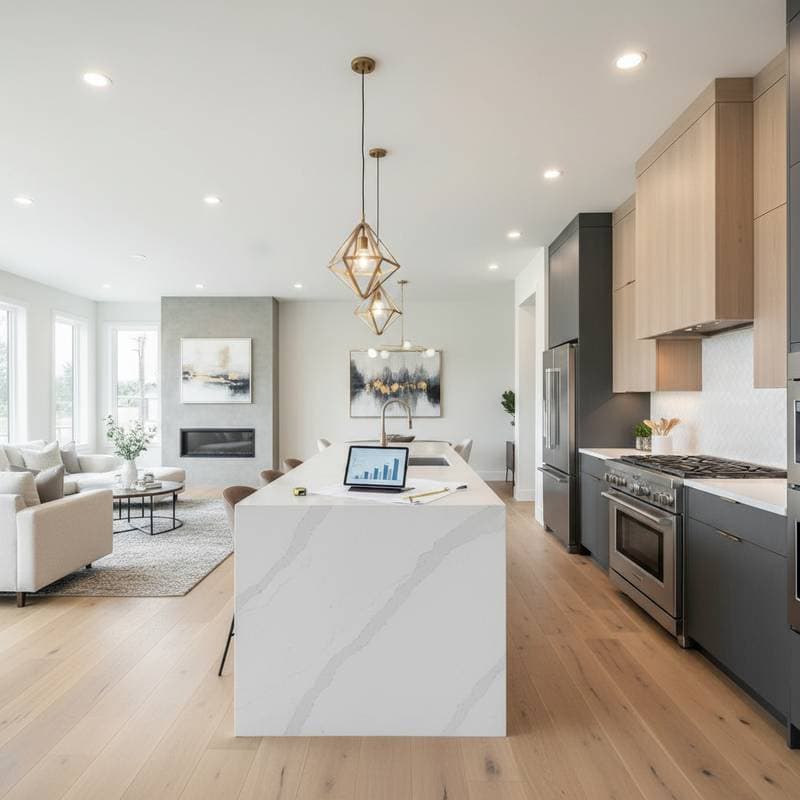
Positioned strategically, the island delineates the kitchen area while upholding openness. It facilitates collaborative meal prep and provides hidden storage. A waterfall design adds elegance, turning it into a focal point that enhances the room's rhythm.
4. Lighting Layers
Hook
Effective lighting in open spaces sculpts ambiance and functionality without imposing divisions.
Context and Cost
Rewiring after wall removal averages $2,000 to $5,000. Add $500 for recessed cans, $300 to $800 per pendant, and $200 for under-cabinet LEDs, depending on fixture quality.
Materials and Design Strategy
Mia Chen of LightForm Studio layers brushed brass pendants over islands with recessed LED panels in ceilings. Integrate warm, dimmable bulbs to adapt from bright task lighting to cozy gatherings.
Functionality and Visual Impact
Multiple layers banish dark spots and link zones visually. Pendants guide sightlines and introduce pattern. This setup transforms overhead light into an inviting glow that supports varied activities.
5. Cabinetry Choices
Hook
Cabinetry anchors storage needs while shaping the overall style, often claiming the biggest budget share.
Context and Cost
Semi-custom options range from $10,000 to $25,000 for a standard kitchen, with custom builds exceeding $40,000. Trends favor flat-panel doors and integrated hardware for a sleek profile.
Materials and Design Strategy
Alana Reed of Reed Interiors employs rift-cut white oak with matte black accents for organic texture. Budget alternatives include painted MDF in neutral tones like soft gray for comparable elegance at reduced expense.
Functionality and Visual Impact
Strategic layouts optimize accessibility and reduce clutter. Vertical pantries beside appliances maximize efficiency, while open shelving adds personality. Consistent finishes promote fluid visual movement across the expanse.
6. Countertop Balance
Hook
Countertops endure heavy use, so they must harmonize durability with design across the open area.
Context and Cost
Quartz installations cost $60 to $120 per square foot installed, while natural stone like marble runs $80 to $150 but needs periodic sealing. Engineered options provide consistent pricing and low maintenance.
Materials and Design Strategy
Camila Torres of Atelier C selects engineered quartz in veined white, accented by matte black fixtures. This versatile pairing works with wood tones or metallic elements seamlessly.
Functionality and Visual Impact
Reflective tops amplify light distribution, brightening the entire layout. Waterfall extensions create depth and interest. Uniform materials reinforce connectivity between prep and social areas.
7. Appliance Integration
Hook
Appliances contribute to the aesthetic narrative in visible open designs, requiring thoughtful placement.
Context and Cost
Built-in units add $2,000 to $5,000 per appliance over freestanding models. Panel-ready fronts for refrigerators and dishwashers ensure a cohesive front, with total kitchen appliance budgets hitting $10,000 to $20,000.
Materials and Design Strategy
Leo Daniels of Daniels Home Studio integrates stainless steel ranges with concealed vent hoods in cabinetry. Panel-matching hides bulkier items, preserving clean lines.
Functionality and Visual Impact
Seamless integration minimizes distractions, allowing focus on architecture. Polished surfaces bounce light effectively. Energy-efficient choices lower utility bills over time, enhancing practicality.
8. Finishing Touches
Hook
Final details polish the space, adding personality after core construction completes.
Context and Cost
Backsplashes range from $20 to $50 per square foot, paint jobs $500 to $1,500, and hardware $200 to $800. Source from trade shows or online for savings without sacrificing quality.
Materials and Design Strategy
Priya Mehta of Studio P installs hand-glazed ceramic tiles near cooking areas for subtle pattern, paired with satin brass pulls. Neutral paints recede, highlighting structural elements.
Functionality and Visual Impact
These elements influence daily comfort and usability. Textural tiles enhance light play, while durable hardware withstands wear. Thoughtful selections create a space that feels uniquely yours.
9. Planning the Budget
Hook
A detailed financial plan guides your project from concept to completion.
Context
Distribute funds as follows: 40 percent for cabinetry and counters, 20 percent for demolition and structural work, 15 percent for appliances, 10 percent for lighting, and 15 percent for finishes plus a 10 percent contingency.
Strategy
Build a spreadsheet tracking vendor quotes and adjustments. For example, opting for laminate counters could redirect savings to premium flooring. Review allocations quarterly to adapt to changes.
Functional Benefit
This framework prevents overspending and maintains focus on priorities. It streamlines decisions, ensuring the final design reflects your original intent without unnecessary cuts.
Maximizing Your Open-Concept Investment
Once complete, your open-concept kitchen invites effortless living. Regular maintenance, such as sealing counters annually and dusting fixtures, preserves its appeal. Consider how the space evolves with your needs, perhaps adding modular elements for future flexibility. This thoughtful approach not only boosts home value but also enriches daily routines with convenience and joy.