
Planning Safe Wall Removal for an Open Kitchen
Open-concept kitchens remain a top choice in modern home design, drawing widespread interest on platforms dedicated to interior inspiration. Homeowners seek greater connectivity, natural illumination, and effortless movement within their living spaces. Removing a wall stands out as one of the most impactful modifications to realize these goals, whether in a cozy bungalow requiring more openness or a family home undergoing renewal. However, envisioning a unified expanse requires meticulous preparation and expert guidance to avoid structural risks.
This resource outlines a step-by-step approach to wall removal, emphasizing structural evaluation, seamless design incorporation, and practical outcomes. Readers gain insights into pre-demolition verifications, support system planning, and strategies to foster a harmonious, inviting environment that preserves both warmth and personality.
Navigating Permits and Expert Involvement
Most wall removal projects, regardless of scale, necessitate a building permit from local authorities. These regulations safeguard occupant safety and align with established structural guidelines. Obtaining a permit also creates documentation that may enhance property value during future sales.
Key Professionals to Engage
- Structural Engineer: Evaluates load distribution, determines appropriate beam dimensions, and supplies certified engineering plans.
- Licensed Contractor: Manages the demolition phase and installs support elements in line with approved designs.
- Electrician and Plumber: Relocates wiring, pipes, or ventilation systems embedded in the wall.
- Building Inspector: Reviews completed work to confirm adherence to code standards.
Each specialist contributes uniquely to the project. Overlooking any role invites potential hazards and regulatory issues.
Pre-Demolition Checklist: Step-by-Step Preparation
Converting a enclosed kitchen into an open layout demands systematic organization across all stages. This checklist aligns efforts to minimize disruptions and unforeseen expenses.
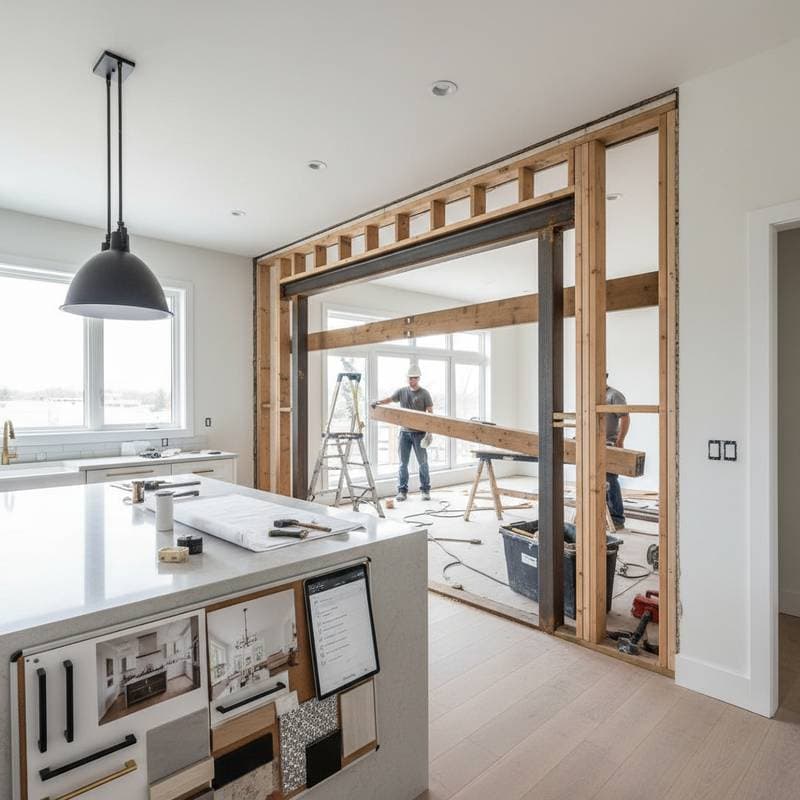
- Assess Structural Integrity: Engage a structural engineer to inspect the wall, verify load-bearing status, and recommend support solutions such as beams or columns.
- Obtain Necessary Permits: Submit applications to local building departments, including engineer drawings, well in advance of starting work.
- Map and Relocate Utilities: Locate and safely redirect electrical conduits, plumbing lines, or HVAC ducts within the wall to prevent service interruptions.
- Budget Comprehensively: Factor in costs for materials like steel beams, labor from multiple trades, permit fees, and potential contingency funds for surprises.
- Safeguard Surrounding Areas: Cover floors, furniture, and adjacent rooms with protective sheeting and drop cloths to contain dust and debris.
- Choose Beam Aesthetics: Select whether the support beam remains concealed within the ceiling, receives a painted finish, or stays exposed as a design feature.
- Align Design Components: Plan unified flooring transitions, color schemes, and lighting fixtures to ensure visual continuity across the expanded space.
- Arrange Phased Inspections: Coordinate reviews after key milestones, such as post-demolition and final installation, to verify code compliance.
Adhering to this sequence promotes efficiency and reduces the likelihood of delays or budget overruns.
Integrating Function and Spatial Flow
An effective open kitchen extends beyond mere visual breadth; it optimizes daily activities like cooking, socializing, and navigation.
Optimizing Movement: Position islands or dining areas to allow a minimum of three feet of clearance around primary workstations. This design choice facilitates smooth passage and prevents congestion during meal preparation or gatherings.
Managing Sound Levels: Wall removal often intensifies echoes throughout the space. Incorporate sound-absorbing materials, such as upholstered seating, layered rugs, or specialized panels, to create a more comfortable acoustic environment.
Maximizing Storage Solutions: The elimination of wall surfaces reduces opportunities for traditional cabinets. Offset this by installing expansive lower drawers, integrated seating with hidden storage, or tall, narrow pantry units that utilize vertical space efficiently.
Defining Activity Zones: Open plans benefit from subtle divisions to clarify functions. Employ variations in ceiling elevations, textured rugs, or furniture arrangements to delineate cooking areas from relaxation zones without imposing barriers.
These considerations ensure the layout supports lifestyle needs while enhancing overall usability.
Sustaining Your Open Kitchen Over Time
After construction concludes, the renovated space reshapes everyday home experiences. Natural light floods the kitchen during mornings, family interactions become more spontaneous, and hosting guests occurs with greater ease.
To preserve both structural reliability and visual appeal, conduct regular inspections of support beams and columns, particularly if visible. Maintain uniformity in surface treatments across connected rooms, and apply fresh coats of paint or protective sealants periodically to uphold the design's freshness.
Advancing Your Renovation Project
Embark on your wall removal with the assurance provided by thorough planning and professional collaboration. This approach not only secures the home's foundation but also unlocks a vibrant, interconnected living area tailored to your vision. Consult local experts early to customize these steps to your specific property and aspirations.