
2025 Mudroom Design Strategies: Reduce Costs Through Intelligent Layouts
A mudroom serves as an essential transition zone between outdoor elements and indoor comfort. Many homeowners view it as an extravagant addition suited only to large estates. In practice, a thoughtfully designed mudroom enhances daily routines without excessive expenditure, provided the layout prioritizes efficiency.
Effective mudroom planning focuses on functionality over opulence. Homeowners often face challenges with cluttered entryways where wet gear accumulates and items go missing. Strategic design resolves these issues by incorporating zones for storage and drying, ensuring the space withstands regular use while remaining inviting.
Balancing Ideal Visions with Everyday Realities
Magazine features showcase mudrooms with custom cabinetry and polished surfaces. Real households contend with mud, pets, and hurried mornings. The goal lies in bridging this gap through layouts that endure wear while appearing deliberate.
Layout choices exert the greatest impact on overall expenses. An optimized arrangement elevates basic components, whereas flawed planning undermines premium selections. Prioritize practical configurations to achieve both durability and visual coherence.
1. Prioritize Entry Flow
Assess primary access points to the home, such as the back door or garage entrance. Trace the path taken while carrying groceries or managing children to identify natural drop zones. Position core elements like benches or hooks along this route to form the mudroom's central axis.
Relocating a doorway by a short distance can align storage linearly, avoiding the need for bespoke units. This adjustment streamlines movement and reduces custom fabrication costs.
Actionable Tip: Sketch the layout on graph paper or mark it with floor tape prior to construction. Such previews prevent costly alterations.
2. Implement Modular Storage Systems
Custom cabinetry impresses but inflates budgets rapidly. Modular options provide adaptability at lower prices, allowing combinations of standard pieces with minor customizations.
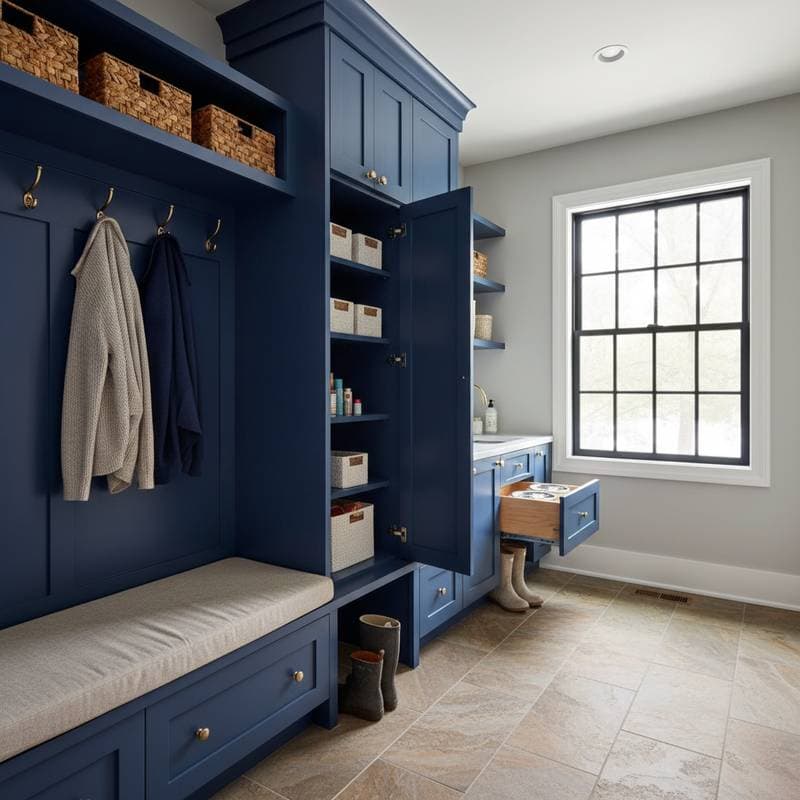
Select flat-pack benches and enhance them with a solid wood surface or coordinated paint. Arrange wall shelves to mimic built-in cubbies, supplemented by hooks and labeled bins for organization.
Repurpose kitchen cabinets as benches with concealed compartments for footwear. This approach delivers hidden storage economically.
Professional Advice: Maintain a consistent color or material across modules to foster a unified appearance, controlling costs effectively.
3. Ensure Proper Ventilation and Illumination
Inadequate airflow turns a mudroom into a humid storage area prone to odors. Maximize existing windows for natural circulation, or install a compact extractor fan and vented panels.
Locate drying zones near heat sources like radiators. A retractable clothesline above the bench facilitates efficient air drying.
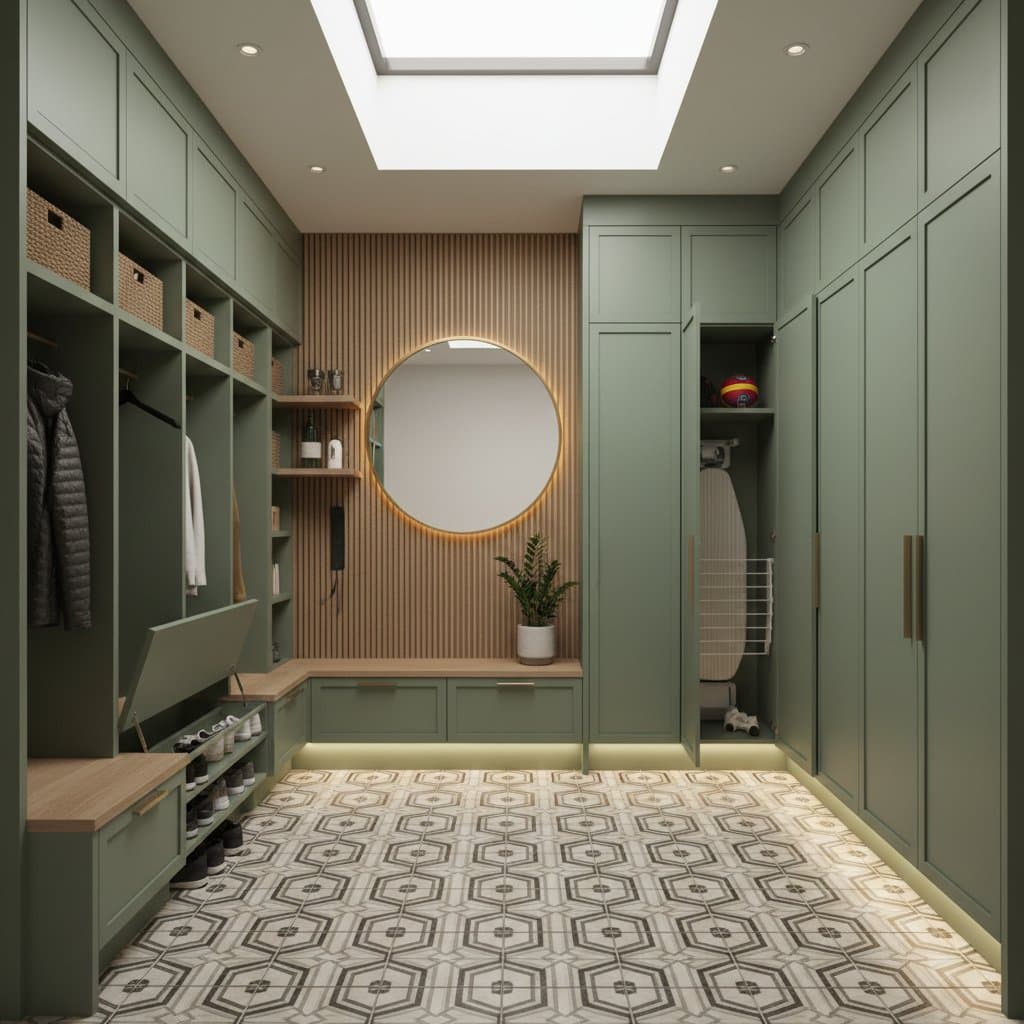
Illumination prevents dim corners from feeling confined. Install under-cabinet LED strips or a simple overhead fixture to brighten the space. Vintage-style pendants add character without high costs.
4. Select Resilient Flooring Options
Premium materials like natural stone demand significant investment and upkeep. Opt for ceramic tiles or vinyl that resist moisture and dirt with minimal maintenance.
For a wood-like warmth, choose waterproof laminate or luxury vinyl tiles that replicate grain patterns effectively. These require only routine cleaning.
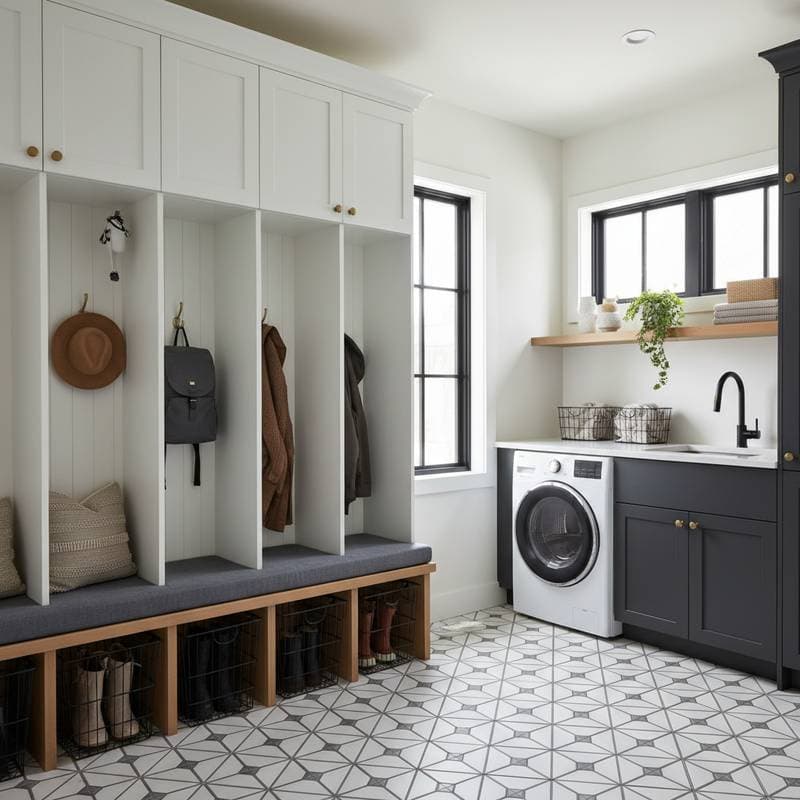
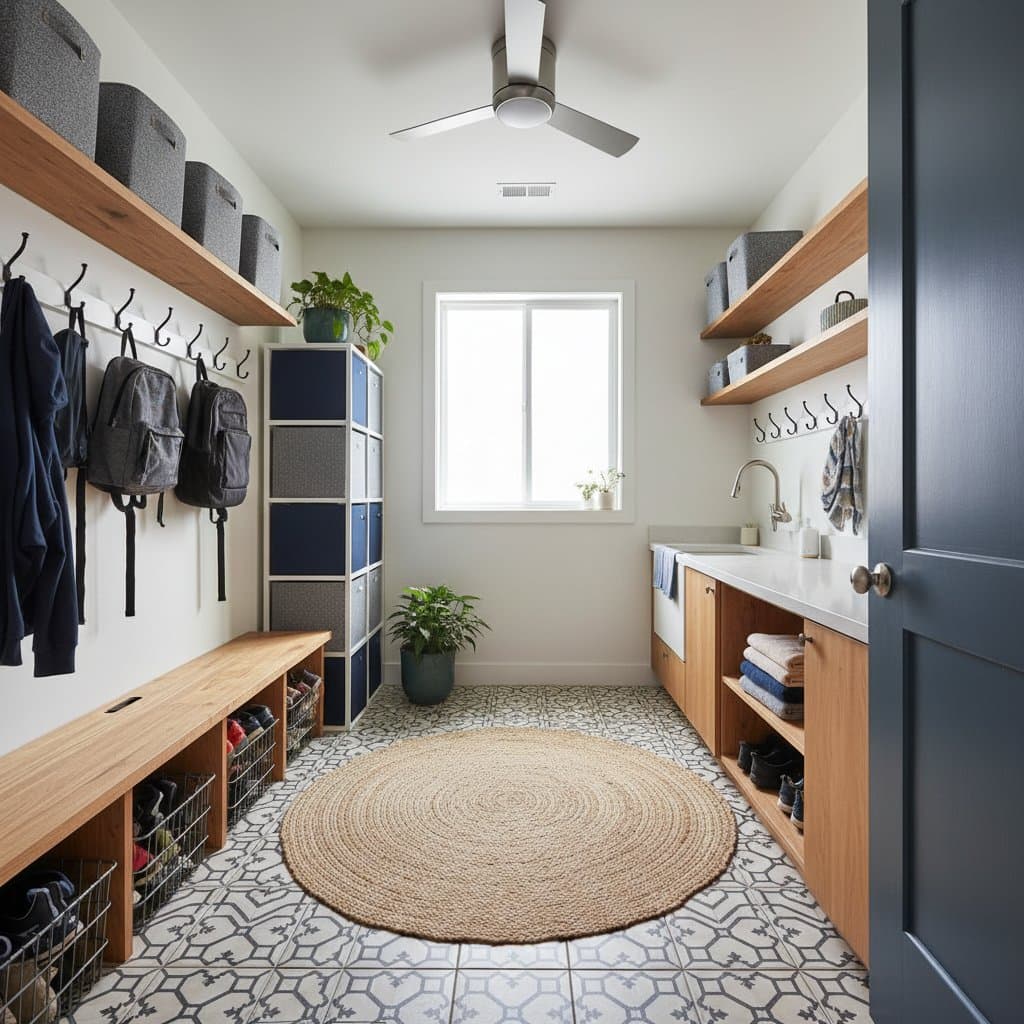
Incorporate a removable area rug for added comfort and style, avoiding permanent high-end flooring commitments. Patterned porcelain tiles offer aesthetic variety at reduced prices compared to authentic encaustic designs.
5. Design Multi-Functional Zones
Versatile mudrooms accommodate coats, bags, pet supplies, and laundry without dedicated areas for each. This multi-tasking reduces the quantity of required furnishings, curbing expenses and clutter.
A bench might incorporate shoe storage and serve as a sorting surface. Tall cabinets can conceal vacuums alongside pet food containers.
Peg rails above shelves adapt seasonally, holding winter gear or summer baskets.
Layout Blueprint:
- Top section: Install hooks, shelves, or cubbies for accessories like hats.
- Middle section: Provide bench or counter space for seating and tasks.
- Bottom section: Use trays, baskets, or drawers for ground-level items.
Simplicity in zoning promotes tranquility amid busy routines.
6. Maximize Wall Utility
Walls offer vertical storage opportunities that preserve floor area and limit spending. Pegboards or rail systems convert blank surfaces into dynamic organizers.
Apply protective tiles behind coat hooks to shield against moisture. Select durable, scuff-resistant paints in neutral tones for easy maintenance.
Darker shades like sage green conceal marks better than light colors, integrating seamlessly with surrounding views.
7. Allocate Budget for Key Enhancements
Identify focal points for investment amid cost-saving measures. A sturdy hook rail or padded bench elevates the overall impression.
Direct funds toward high-traffic elements like quality finishes or mats. Handcrafted hardware, such as ceramic knobs, provides enduring satisfaction.
These targeted upgrades enhance usability without derailing financial plans.
8. Embrace Simplicity for Maximum Savings
Intricate designs necessitate additional structural modifications, increasing labor and material fees. Align fixtures with existing utilities to minimize new installations.
Position any sinks near kitchen plumbing and leverage current electrical setups. Resist unnecessary relocations of doors or windows unless they substantially improve workflow.
Basic configurations, supplemented by portable tools like buckets, deliver practicality without excess.
9. Infuse Warmth and Functionality
Avoid stark utility by incorporating welcoming elements. A timer-equipped lamp ensures evening visibility, while a small mirror expands perceived space and aids quick preparations.
Display artwork or photos to personalize the area. Cushions on benches add comfort at negligible cost.
These accents integrate the mudroom into the home's aesthetic.
10. Accommodate Household Dynamics
Tailor the space to residents, including children and pets. Install low hooks and washable surfaces to handle active use.
Designate drawers with liners for toys or gear, and use magnetic boards for essentials like keys.
Anticipate disorder by building in forgiving features, ensuring the mudroom supports real-life demands.
Adapting to Seasonal Shifts
A flexible layout allows reconfiguration as needs evolve. Storage adjusts from heavy coats to lightweight items, maintaining efficiency year-round.
Regular evaluation ensures the space remains responsive, delivering sustained value through practical design.