
Anticipating Hidden Costs in 2026 Kitchen Remodels
Examine ten newly remodeled kitchens, and each displays a unique style. Some feature sleek, minimalist designs, others embrace warm, traditional aesthetics, and a few incorporate bold, innovative materials. Regardless of the aesthetic choices, fundamental principles and cost factors persist across all projects. Homeowners typically approach a remodel with defined objectives, yet unforeseen expenses frequently accumulate and disrupt financial plans. The positive aspect lies in preparation: armed with appropriate insights, individuals can foresee these issues and address them proactively to safeguard the budget.
As an architect with experience overseeing numerous kitchen renovations, the author observes recurring cost surprises in every project. The guidelines below detail locations where these hidden expenses emerge, explanations for their occurrence, and methods to circumvent them. Each guideline derives from practical applications and emphasizes design that prioritizes functionality.
Guideline 1: Electrical Updates Beyond Initial Expectations
Problem: Homeowners often overlook the fact that aging electrical wiring seldom accommodates the demands of contemporary kitchen appliances.
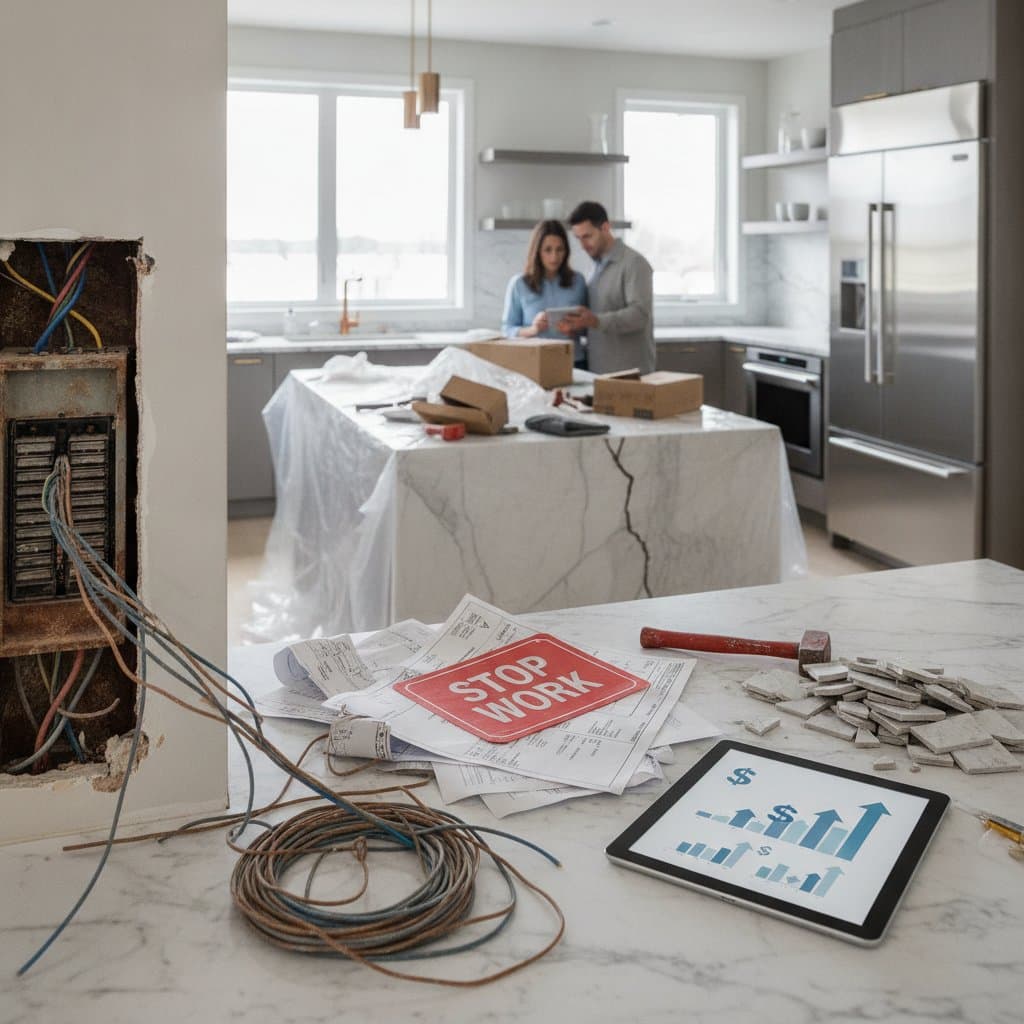
Context: Modern kitchens necessitate multiple dedicated circuits to power appliances, lighting fixtures, and outlets. During renovation, electricians commonly identify outdated wiring that fails to comply with current building codes.
Solution: Schedule a comprehensive electrical evaluation prior to commencing construction. Allocate funds for new circuits, a grounded electrical system, and sufficient outlets positioned in accordance with regulatory standards.
Technical Detail: Anticipate the installation of at least two 20-amp circuits for countertops, a dedicated circuit for the dishwasher, and potentially a subpanel if the primary electrical service proves inadequate for the load.
Benefit: Early upgrades to the electrical infrastructure minimize risks of circuit overloads, enhance overall safety, and guarantee that the kitchen supports power-intensive appliances reliably.
Guideline 2: The True Expense of Custom Cabinetry
Problem: Individuals frequently misjudge the sharp increase in pricing when transitioning from stock cabinets to semi-custom or fully custom configurations.
Context: Consider a scenario where a client requests cabinets extending to the ceiling, complete with integrated lighting and an angled corner pantry. Such complexities can elevate cabinetry expenses by a factor of two.
Solution: Begin by assessing specific storage requirements. If standard cabinet dimensions satisfy the majority of needs, incorporate fillers or trim elements to simulate a seamless, built-in appearance rather than pursuing complete custom fabrication.
Technical Detail: Stock cabinets represent a small percentage of the cost associated with custom options. Custom millwork demands significant design hours, specialized shop fabrication, and additional finishing labor.
Benefit: Combining select custom features with standard components delivers a premium aesthetic while preserving budgetary constraints.
Guideline 3: Lighting Expenses Exceeding Projections
Problem: Lighting selections receive insufficient attention early on, resulting in inadequate illumination and subsequent modifications to electrical setups.
Context: Elements such as recessed fixtures, under-cabinet illumination, and pendant lights each demand independent circuits and control mechanisms. Introducing these features late in the process requires electricians to access completed drywall areas.
Solution: Develop a detailed lighting plan at the outset. Implement layered illumination comprising ambient, task, and accent varieties. Select specific fixtures and dimmer switches before the rough-in phase begins.
Technical Detail: Every recessed fixture requires adequate clearance from insulation materials, while under-cabinet lighting necessitates low-voltage transformers or concealed wiring pathways.
Benefit: Thoughtful lighting design elevates usability, refines the atmosphere, and eliminates the need for costly alterations during the final stages.
Guideline 4: Permit and Inspection Fees Accumulating Unexpectedly
Problem: Certain homeowners bypass permits in an effort to reduce immediate costs, only to encounter complications during property sales or refinancing.
Context: Permits become mandatory for even superficial remodels if alterations involve wiring, plumbing, or structural components. Penalties for unpermitted work often surpass the fees for obtaining proper approvals.
Solution: Consult the local building authority at the project's inception. Incorporate permit expenses, plan examinations, and mandatory inspections into the overall timeline and budget.
Technical Detail: Fees for permits differ by locality and project scope. Numerous jurisdictions mandate detailed blueprints authenticated by a licensed professional.
Benefit: Adhering to permitting protocols preserves property marketability and confirms compliance with essential safety regulations.
Guideline 5: Finishing Details Driving Up Total Costs
Problem: Participants in the project tend to disregard the rapid escalation of expenses from minor enhancements. Items like hardware pulls, decorative backsplash elements, and trim accents can substantially inflate finishing budgets.
Context: In one instance, a client opted for handmade ceramic tiles in place of standard subway patterns and bronze hardware instead of brushed nickel finishes. These adjustments augmented the concluding invoice by several thousand dollars.
Solution: Establish priorities for finishes at an early stage and identify areas for potential concessions. Categorize materials according to importance and evaluate physical samples collectively prior to procurement.
Technical Detail: Premium finishes typically involve extended delivery periods and demand meticulous installation techniques, thereby increasing both material and labor expenditures.
Benefit: Defined choices regarding finishes curb spontaneous modifications and maintain a consistent project schedule.
Implementing a Budget-Conscious Renovation Plan
To execute a kitchen remodel that aligns with financial goals, integrate these guidelines into the planning phase. Consult professionals early to conduct thorough assessments of existing infrastructure. Develop a detailed budget that allocates reserves for contingencies, typically 10 to 20 percent of the total estimate. Track progress with regular reviews to address deviations promptly. By prioritizing functionality and foresight, homeowners secure a space that enhances daily life while avoiding the pitfalls of unanticipated costs.