

Maximize Savings on Your 2026 Remodel: HELOC or Cash-Out Refinance?
Imagine standing in your outdated kitchen, envisioning sleek new countertops, modern cabinetry, and an inviting island for family gatherings. The excitement builds, yet funding this transformation raises essential questions. How can you finance the project without straining your finances?
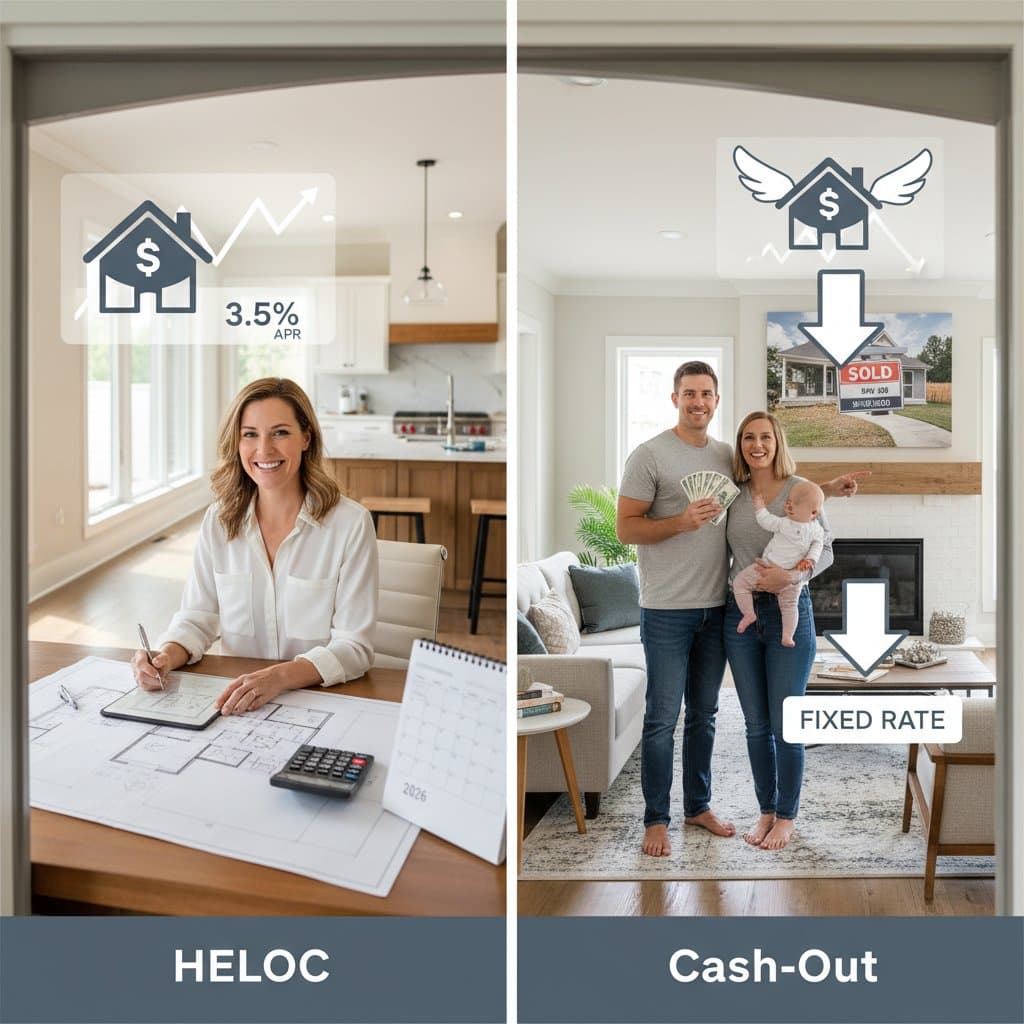
Homeowners frequently turn to home equity for remodel funding, as it leverages the value accumulated in their property. Two primary methods stand out: a Home Equity Line of Credit (HELOC) and a cash-out refinance. Each approach accesses equity differently, impacting costs, flexibility, and overall savings. By evaluating these options against your specific needs, you position yourself to reduce expenses by thousands while elevating your home's functionality and market appeal.
Understanding the Home Equity Line of Credit (HELOC)
A HELOC operates similarly to a revolving credit card secured by your home's equity. Lenders approve you for a credit limit based on your property's value and your financial profile, but you borrow only as required.
Key Mechanics of a HELOC
- Draw Period Flexibility: Borrow funds incrementally over a set period, typically five to ten years, for ongoing needs.
- Interest on Usage Only: Calculate interest solely on the borrowed amount, minimizing costs if you draw sparingly.
- Revolving Access: Repay principal to restore available credit, enabling repeated use during the draw phase.
This structure suits remodels executed in phases, such as updating appliances first, then tackling structural changes later. Homeowners gain control over cash flow, drawing funds precisely when contractors invoice or suppliers deliver.
Advantages of Choosing a HELOC
- Phased Funding Alignment: Ideal for projects with variable timelines, allowing draws for each stage without excess borrowing.
- Reduced Closing Expenses: Expect fees around 1-2% of the credit line, far below full refinance costs, preserving upfront savings.
- Potential Interest Efficiency: With average rates near 8-9% in recent years, paying only on used funds can lower total interest compared to a lump-sum loan.
Potential Drawbacks to Consider
- Rate Fluctuations: Variable rates, often tied to the prime rate, may rise, increasing monthly obligations unexpectedly.
- Spending Oversight Needed: The open-ended nature requires strict budgeting to avoid dipping into funds for non-essential purchases.
- Transition to Repayment: After the draw period, shift to principal-plus-interest payments over 10-20 years, potentially raising installments.
For those prioritizing adaptability and confident in financial discipline, a HELOC provides an efficient tool for targeted remodel financing.
HELOC Versus Cash-Out Refinance: A Direct Comparison
Both financing methods utilize home equity, yet their designs affect remodel execution and cost management profoundly.
| Feature | HELOC | Cash-Out Refinance |
|---|---|---|
| Funding Mechanism | Revolving credit line | Lump-sum cash via new mortgage |
| Rate Structure | Variable, adjustable | Fixed, predictable |
| Ideal Project Type | Phased or ongoing renovations | Comprehensive, one-time overhauls |
| Initial Fees | Low, 0-2% of line | Higher, 2-5% of loan amount |
| Payment Schedule | Interest-only initially, then full amortization | Consistent principal and interest from start |
Select based on project scope. A HELOC excels for iterative work where needs evolve, offering agility without commitment to the full amount upfront. In contrast, a cash-out refinance delivers a single infusion, ideal for immediate, large-scale changes like full-room rebuilds, with the stability of fixed rates.
Factors to Guide Your Decision for a 2026 Remodel
Align your choice with personal circumstances to optimize savings and minimize risks.
1. Project Timeline and Scope
For segmented renovations, such as kitchen updates followed by bathroom refreshes over six months, a HELOC's draw flexibility prevents idle funds and accrued interest. A cash-out refinance streamlines funding for urgent, all-at-once projects, avoiding multiple transactions.
2. Current Mortgage Interest Rate
Retain a low existing rate (below 4%) by layering a HELOC atop your mortgage, accessing equity without disruption. If market rates have fallen below your current one (say, from 6% to 5%), a cash-out refinance replaces the old loan, potentially cutting overall interest while providing remodel capital.
3. Financial Discipline and Predictability
The HELOC's accessibility demands vigilant tracking to stay within budget; use apps or spreadsheets to monitor draws. Opt for cash-out refinance if you favor defined limits and uniform payments, which safeguard against unplanned borrowing and simplify monthly planning.
4. Long-Term Homeownership Intentions
Plan to reside in the home beyond a decade? A cash-out refinance's fixed terms offer enduring cost certainty. Anticipating a sale within five years? A HELOC avoids extending mortgage duration, preserving equity for future moves.
Implementing Your Financing Strategically
After selecting your path, integrate it seamlessly into the remodel process. Maintain meticulous documentation of expenditures, including bids, payments, and material purchases, to monitor progress and support potential tax deductions for home improvements.
Allocate 10% of your budget as a contingency reserve for unforeseen issues, like hidden wiring problems or material price hikes. This buffer ensures smooth execution without resorting to additional debt.
Consult a financial advisor or lender early to prequalify and estimate personalized rates, ensuring your choice aligns with credit score, debt-to-income ratio, and equity levels (typically requiring at least 15-20% ownership stake).
Achieve Your Remodel Vision with Confidence
Transforming your home through a 2026 remodel unlocks greater enjoyment and equity growth. A HELOC offers versatile funding for evolving plans, while a cash-out refinance provides structured support for bold undertakings. By matching the right option to your timeline, budget, and objectives, you secure substantial savings and craft a living space tailored to your future.