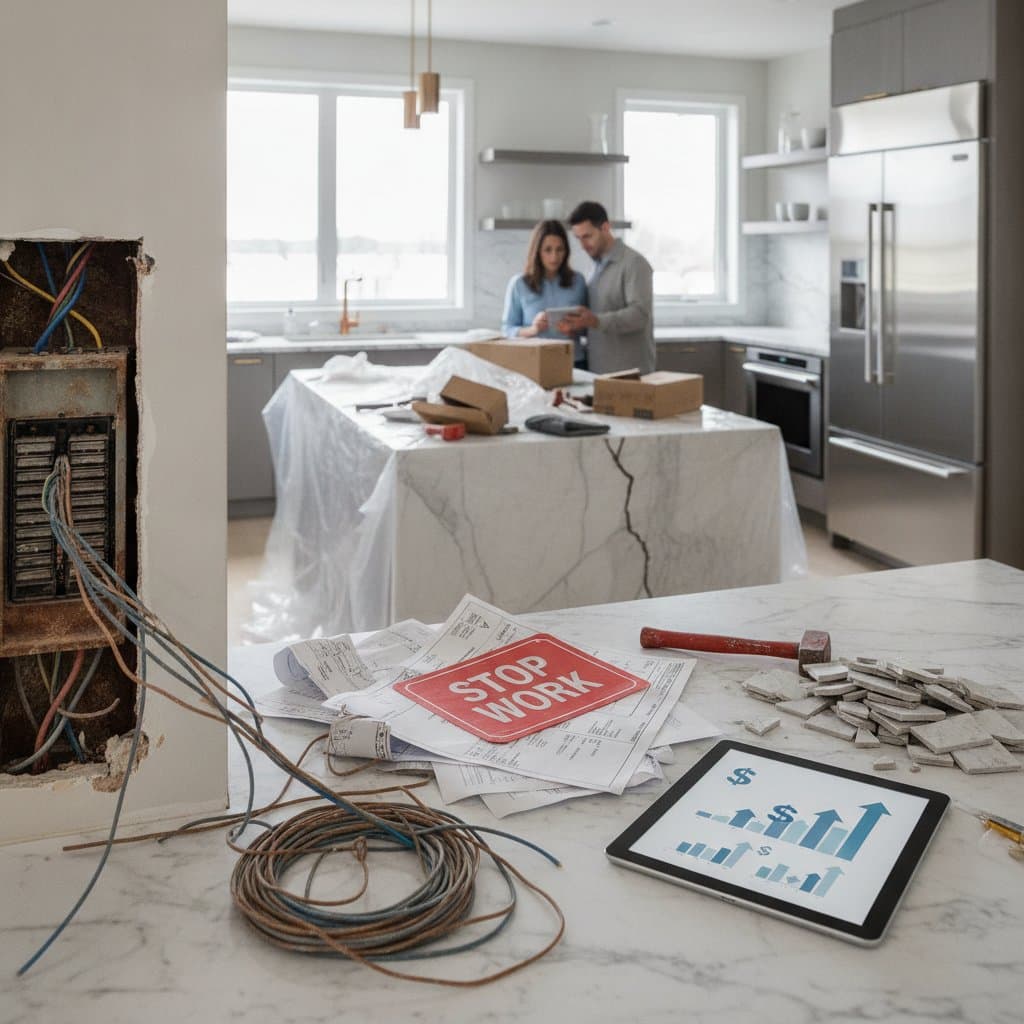
Budget Killers: 2026's Hidden Remodel Costs Exposed
Imagine the moment you commit to remodeling your kitchen, envisioning sleek countertops and updated appliances. You select finishes with care and prepare for temporary inconveniences. Yet, the initial bill arrives with unforeseen charges for permits, material increases, and structural needs, transforming enthusiasm into concern.
A national home improvement survey reveals that nearly two-thirds of homeowners surpass their renovation budgets by at least 20 percent. These overruns stem not solely from inadequate preparation but from subtle expenses that accumulate unnoticed. This guide reveals ten prevalent hidden costs in 2026 remodels, paired with professional strategies to identify and mitigate them, ensuring your project remains financially viable and enjoyable.
1. Permits and Inspections
Quick answer: Local regulations require permits for most structural changes, with fees and inspections adding thousands to initial estimates.
Homeowners often underestimate the bureaucratic layer of renovations. Permits ensure compliance with building codes, but obtaining them involves application fees, plan reviews, and multiple inspections. "Permits can range from a few hundred dollars for minor work to over five thousand for extensive projects," notes city inspector Elena Vargas. Delays in approval processes further inflate costs through extended contractor timelines.
Preparation steps:
- Consult local building departments early to list required permits.
- Factor in 5 to 10 percent of your budget for fees and potential revisions.
- Schedule inspections proactively to avoid project halts.
Addressing these upfront prevents surprises and maintains momentum.
2. Material Price Fluctuations
Quick answer: Supply chain disruptions and demand surges cause material prices to rise rapidly, potentially increasing costs by 25 percent or more.
Enthusiasm for selecting tiles or cabinets can overshadow the reality of volatile markets. Lumber, metals, and finishes experience sharp increases due to global events and seasonal demands. Project estimator Sheryl Tran of Greenline Builders observes, "Clients secure quotes only to face hikes of hundreds of dollars per item after delays."
Even modest per-unit rises compound in sizable projects. Proactive monitoring safeguards against erosion of your budget.
Smart moves:
- Obtain refreshed quotes biweekly throughout the planning phase.
- Negotiate with suppliers for price locks valid for 30 to 60 days.
- Explore comparable alternatives that maintain aesthetics while stabilizing expenses.
3. Demolition and Waste Disposal
Quick answer: Removing old structures generates debris removal fees, equipment rentals, and potential hazard remediation costs.
The excitement of revealing a fresh canvas often conceals the labor-intensive demolition phase. Beyond basic teardown, costs arise from hauling waste, renting dumpsters, and addressing surprises like asbestos in older homes. Contractor Alex Patel explains, "A standard kitchen demo might cost one thousand dollars, but hazardous materials can triple that figure."
These expenses ensure safe and clean worksites but catch many off guard.
Mitigation tactics:
- Include detailed demo assessments in pre-contract bids.
- Recycle salvageable items to reduce disposal fees.
- Budget for specialized handling if your home predates 1980.
Planning here streamlines the transition to construction.
4. Electrical and Plumbing Upgrades
Quick answer: Legacy systems in older residences frequently demand full overhauls to accommodate contemporary appliances and ensure safety.
Modern fixtures like high-powered ranges or luxury showers strain outdated infrastructure. Electrical panels from earlier eras lack amperage for current standards, while aging pipes risk leaks under increased demands. Licensed electrician Marco Ruiz of BrightCurrent Services states, "Code requirements often necessitate complete rewiring once we inspect during fixture installation."
Neglecting these upgrades compromises safety and functionality.
What to expect:
- Electrical work spans two thousand to ten thousand dollars based on extent.
- Plumbing runs fifty to two hundred dollars per linear foot.
- Mandate thorough system evaluations at project outset.
View these as essential foundations for your enhanced living areas.
5. HVAC and Ventilation Adjustments
Quick answer: Renovations altering layouts or adding features require ductwork modifications or new systems, costing thousands in unseen expenses.
Changes to room configurations disrupt airflow, necessitating updates to heating, cooling, and exhaust systems. Kitchens with range hoods or bathrooms with steam showers demand enhanced ventilation to prevent moisture issues. HVAC specialist Jordan Lee notes, "A simple layout shift can require rerouting ducts, adding fifteen hundred dollars or more to the bill."
Proper climate control preserves air quality and energy efficiency.
Proactive measures:
- Integrate HVAC reviews into initial architectural plans.
- Opt for energy-efficient components to offset long-term costs.
- Verify zoning compliance for any spatial reconfigurations.
These investments enhance comfort without future disruptions.
6. Design Changes Mid-Project
Quick answer: Alterations during construction trigger additional labor, materials, and permit adjustments, amplifying expenses exponentially.
Initial visions evolve upon seeing progress, leading to requests for tweaks like color shifts or layout adjustments. Each modification disrupts workflows and incurs overtime or reorder fees. Electrician Marco Ruiz comments, "Change orders create cascading effects, often doubling labor for affected areas."
Maintaining discipline preserves both budget and schedule.
Avoid the trap:
- Lock in selections prior to breaking ground.
- Utilize 3D models for precise pre-construction visualization.
- Restrict revisions to one essential round per project stage.
Balance adaptability with commitment for optimal results.
7. Unexpected Structural Issues
Quick answer: Concealed problems such as rot, foundation cracks, or load-bearing modifications emerge during work, demanding immediate and costly repairs.
Beneath surfaces lie potential vulnerabilities exposed only through demolition. Termite damage, water intrusion, or non-compliant framing require reinforcements before proceeding. Structural engineer Mia Chen advises, "Budget an extra ten percent for discoveries; they affect one in four projects."
Swift resolution averts larger complications down the line.
Defensive strategies:
- Commission a professional structural survey before finalizing plans.
- Secure contingency funds specifically for unforeseen repairs.
- Document issues promptly to negotiate with insurers if applicable.
This foresight fortifies your home's integrity.
8. Contractor Premiums and Schedule Delays
Quick answer: Extended timelines from external factors incur premium labor rates, rescheduling charges, and opportunity costs for living disruptions.
Skilled worker shortages and unpredictable elements like weather extend projects beyond estimates. Holding crews or expediting trades escalates fees significantly. Estimator Sheryl Tran emphasizes, "Delays compound as one phase stalls the next, often adding twenty percent to labor totals."
Efficient management controls these variables.
To minimize delays:
- Establish feasible schedules with verified trade availability.
- Submit deposits on time to prioritize your slot.
- Eliminate late alterations that necessitate rework.
Clear protocols keep progress steady.
9. Appliance and Fixture Surprises
Quick answer: Delivery delays, installation complexities, or upgrades to meet codes inflate costs for integrated elements like cabinets and lighting.
Selections for built-ins overlook custom fittings or utility connections. High-end choices may demand reinforced supports or specialized wiring. Designer Liam Hughes shares, "Clients frequently upgrade mid-selection, unaware of the hidden integration fees."
Thorough vetting aligns expectations with reality.
Selection tips:
- Confirm measurements and compatibility during procurement.
- Allocate buffer for delivery setbacks in your timeline.
- Prioritize code-compliant options to sidestep retrofits.
These choices integrate seamlessly into your vision.
10. Post-Project Touch-Ups and Maintenance
Quick answer: Settling, minor defects, and initial wear necessitate final adjustments and ongoing care after occupancy.
Daily use reveals subtle flaws like uneven doors or surface marks overlooked in haste. Reserving funds covers these refinements without straining resources. Designer Liam Hughes recommends, "Dedicate one to two percent of the budget for year-one upkeep."
Polished completion sustains satisfaction.
Smart follow-up:
- Conduct a detailed walkthrough before releasing final payment.
- Compile a punch list for prompt resolutions.
- Plan routine checks to address emerging needs.
This phase secures lasting value.
Safeguarding Your Renovation Budget
Hidden costs represent more than incidental hurdles; they define the boundary between success and strain. Forward-thinking homeowners incorporate buffers, seek detailed quotes, and guard reserves diligently. Pose direct inquiries to contractors regarding inclusions and exclusions.
Incorporate a 15 to 20 percent contingency from the outset, reserving it for essentials until completion. This approach transforms potential pitfalls into manageable aspects. As you embark, prioritize these preparations to relish the rewards of a revitalized space, equipped with insights that inspire confidence.